Before You Arrive at the Yard
Give us a call or send your collection details ahead of time, especially if you are loading generators, compactors, scaffolding or heavier event items. Tell us what vehicle you are bringing, whether it is a bakkie, trailer or truck and if you need help with lifting points or stacking. That lets our team have the order ready and it cuts down waiting time in Beacon Bay, East London and nearby areas.
Check that your vehicle is fit for the job. The load bed must be clean, dry and free of loose rubble, oil or old nails. Make sure you have enough space for the full load plus straps, blankets and timber packers if needed. If you are collecting for a coastal site, think about wind, salt air and rough roads because an item that looks fine in the yard can move about badly on the N2 or smaller access roads.
Match the Equipment to the Right Vehicle
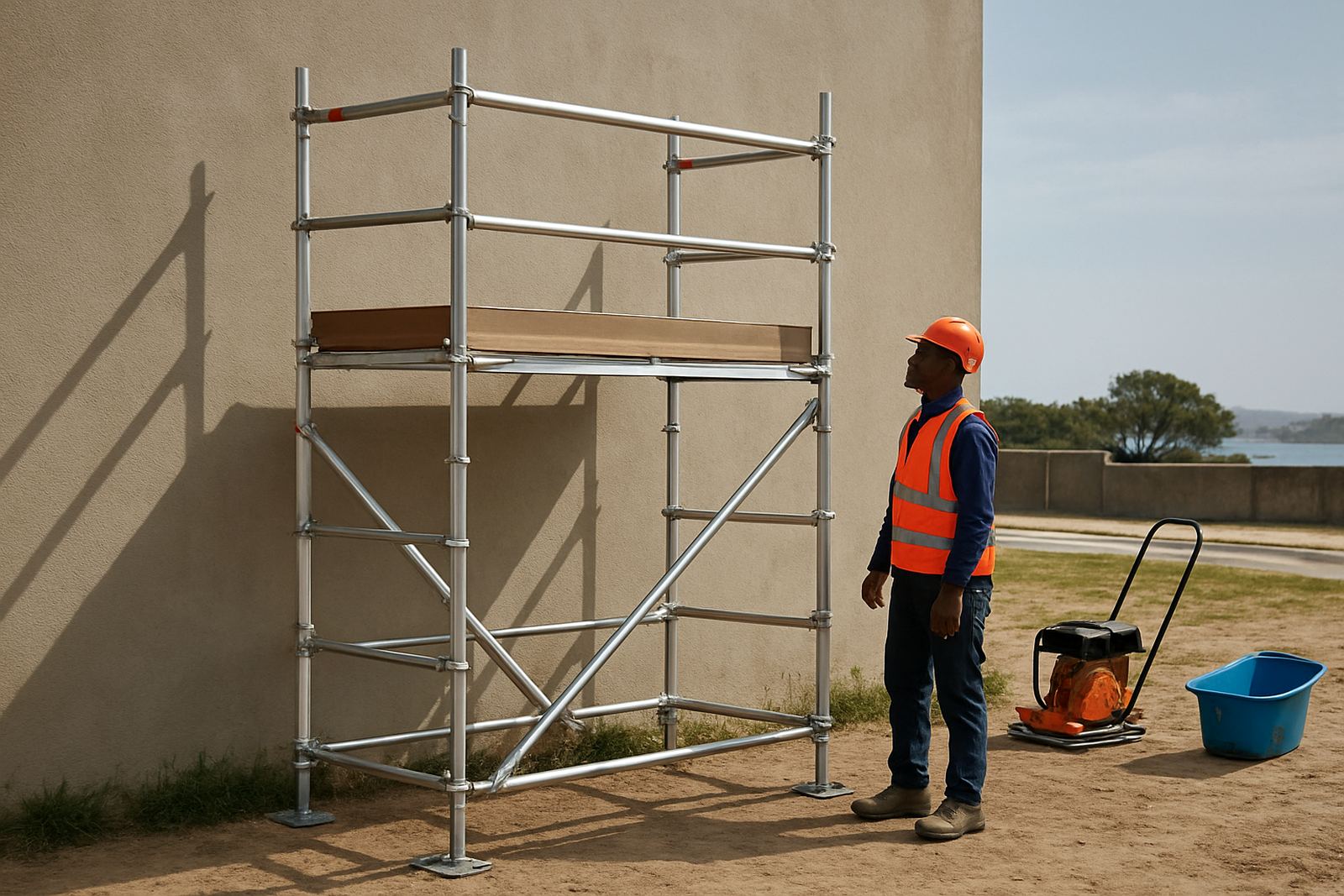
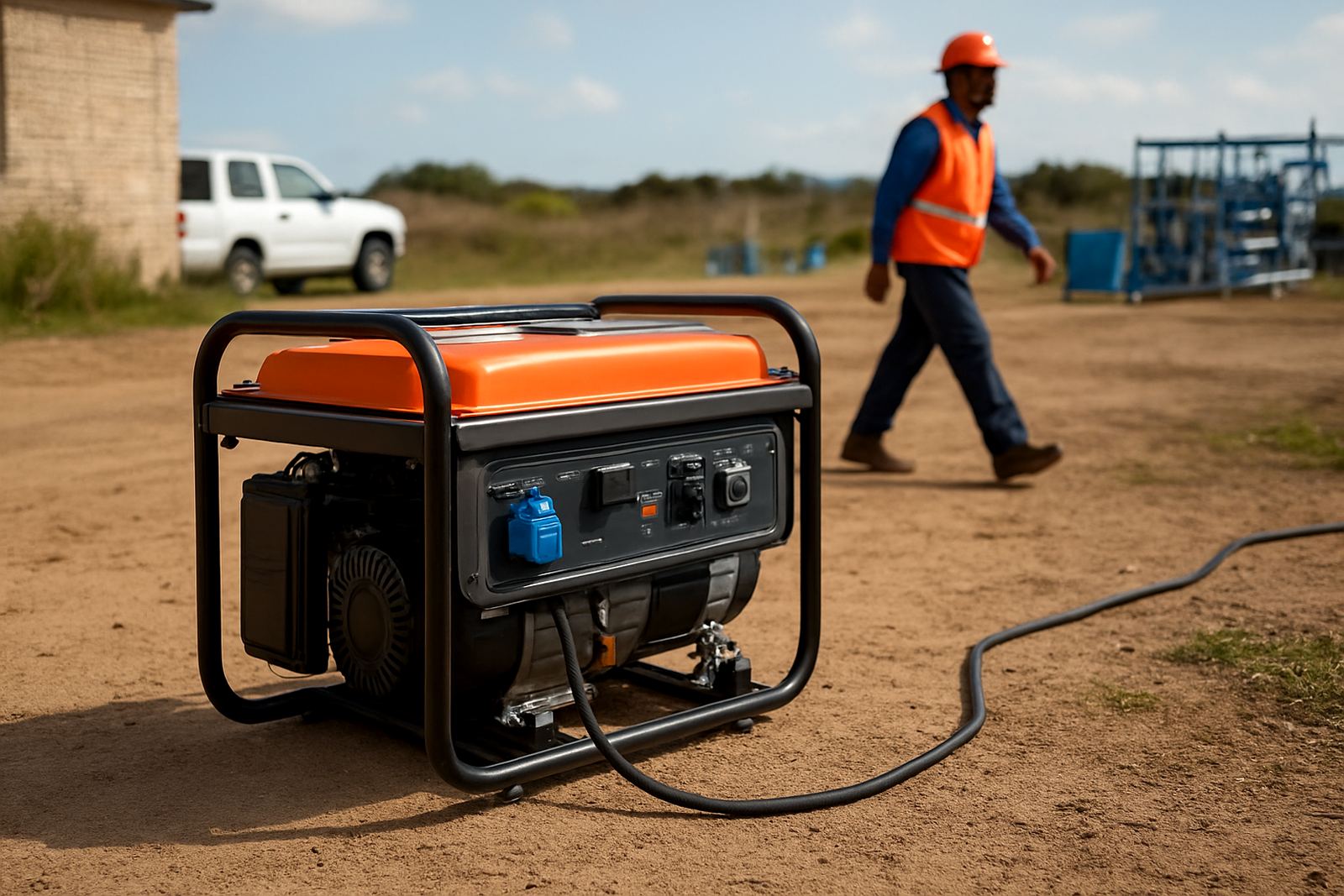
Different hire items need different transport plans. A small petrol generator may fit neatly on a bakkie, while a plate compactor needs a stable base and a machine with a load area that can take the weight. Scaffolding should be bundled and tied so the pieces cannot slide apart, and pumps need to stay upright if the model allows it. Party items often need clean, dry loading space so they do not pick up mud or damage on the way to the venue.
- Use a trailer with working lights and a proper hitch pin when the load is awkward or long.
- Keep heavier items low down and closer to the cab or axle line.
- Do not stack fragile items under steel, timber or loose scaffold fittings.
- Allow space for straps to pass around the load without crushing cables, hoses or control panels.
If you are unsure whether your vehicle is suitable, ask our team before collection. It is better to sort that out early than to arrive and find the load cannot be taken safely.
Load Heavy Items First and Keep the Weight Even
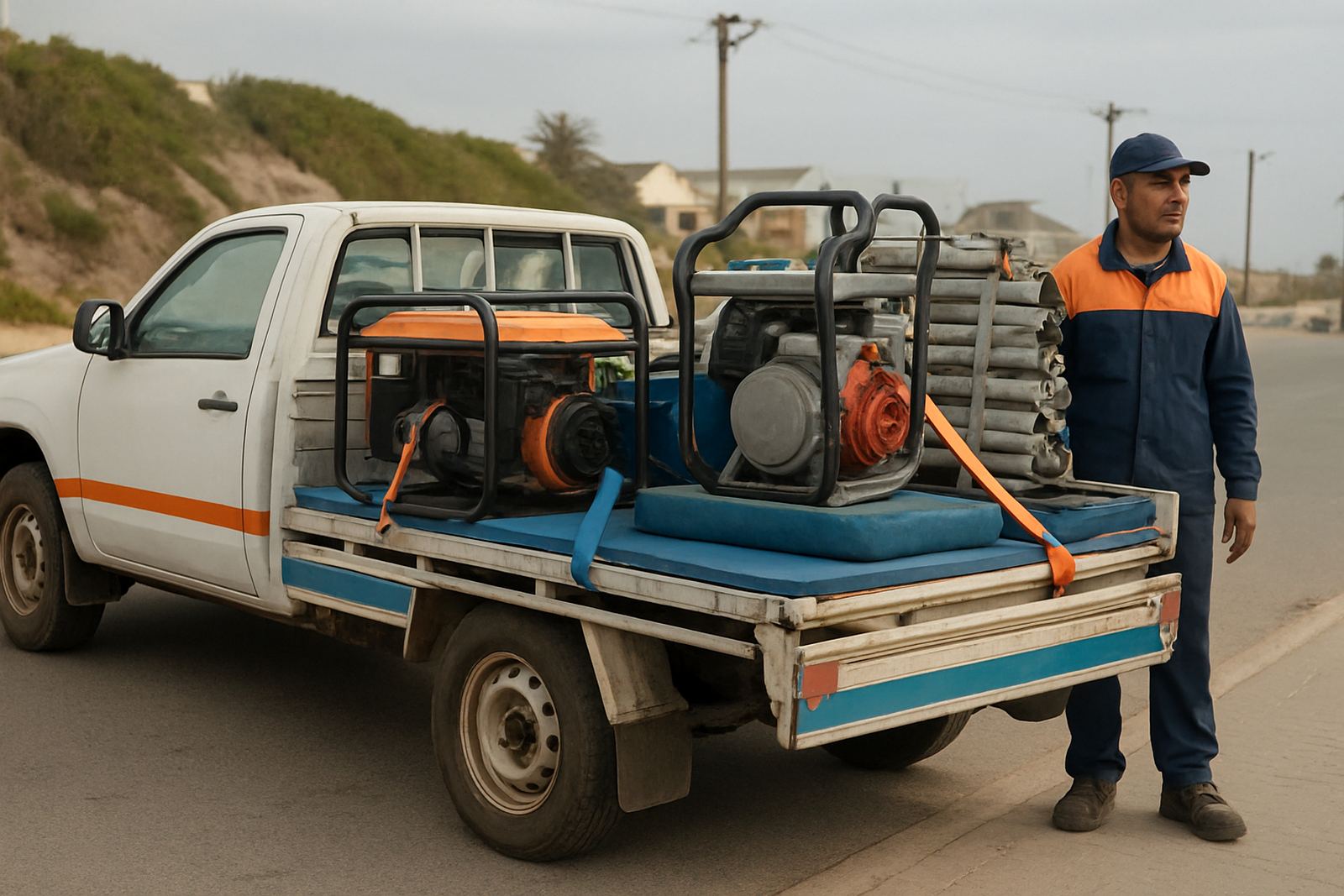
Start with the heaviest item and build around it. Place generators, compactors or boxed pumps flat on the load bed and keep the base as level as possible. If you are carrying more than one item, spread the weight from side to side. A load leaning to one side can make the vehicle difficult to handle, especially on bends, in traffic or in wet weather.
Check the balance before you leave our yard. Stand back and look at the vehicle from the rear and the side. If one corner is sitting much lower than the others, re-pack the load. A quick re-check saves a damaged machine and a dangerous road trip. For longer loads to Port Alfred, Kidds Beach or Qonce, stop after a few kilometres and look over the load again because straps can settle once the vehicle is moving.
Strap, Tie and Brace Everything Properly
Use proper tie-down straps, not rope that stretches under tension. The aim is to stop side movement, forward slide and vibration. Keep straps away from sharp edges where possible and use packing pieces if a strap could rub against metal corners. Cables should be coiled neatly and tied off, while hoses must be rolled without tight kinks. If a machine has a fuel cap, control lever or handle that can move, secure it before travel.
- Check that each strap is rated for the weight it is carrying.
- Pull straps tight after the first few minutes of travel.
- Use at least two restraint points on unstable items where practical.
- Keep loose fittings such as clamps, pins and couplers in a box or bag.
Scaffold tubes, boards and fittings must be separated from the driving area so they cannot shift forward under braking. A load that rattles on the way out of East London can turn into a serious hazard by the time you reach site.
Keep Fuel, Oil and Small Parts Safe
Fuel management matters during collection. If equipment leaves our yard with fuel in it, keep containers upright and away from heat or sparks. Do not place diesel or petrol cans next to generators with hot parts or close to electrical leads. If the item has been serviced, let it cool before loading. That is especially useful on warm days and when the equipment is coming straight off hire the same morning.
Small parts are easy to lose in transit. Put nuts, bolts, scaffold clips, nozzles, hose fittings and remote controls in a clearly marked container. Keep manuals, keys and any special adapters with the hire slip so they are not left on the load bed. If your order includes event gear for a weekend function, separate clean decorative items from dirty site equipment so nothing gets stained or scratched.
Loading Help at the Yard and on Site
Our team can assist with loading, but we still expect the final transport plan to suit your vehicle and route. Tell us if you need help with lifting a compactor, placing scaffolding bundles or arranging event equipment for delivery and later collection. For bigger hires, we can also talk through scaffold planning, pre-hire briefing and on-site setup so the same packing method can be used when the items come back.
If you are collecting for a job in Beacon Bay, Gonubie, East London or further along the coast, allow extra time for access gates, narrow driveways and municipal rules on where you can stop. A tidy load makes site arrival easier because you can unload in the same order that you packed it. That saves time and reduces the chance of one item knocking against another on the way off the vehicle.
Final Check Before You Leave the Premises
Before you pull out, walk around the vehicle and check the lot one more time. Make sure nothing is hanging loose, no straps are twisted, and no item can jump out on a bump. Test that doors, tailgates, gates or trailer latches are fully closed. If you are heading to a site with limited power or load-shedding backup, confirm that the correct cables, plugs and fuel are with the equipment before you go.
- Load even and balanced.
- Straps tight and not rubbing on sharp edges.
- Loose parts packed in a marked container.
- Vehicle lights, hitch and tyres checked.
- Fuel caps closed and no spills visible.
If anything looks doubtful, ask our team to recheck it with you. A few extra minutes in the yard is better than a damaged hire item or a late start on site.