Start with the ground, not the first lift
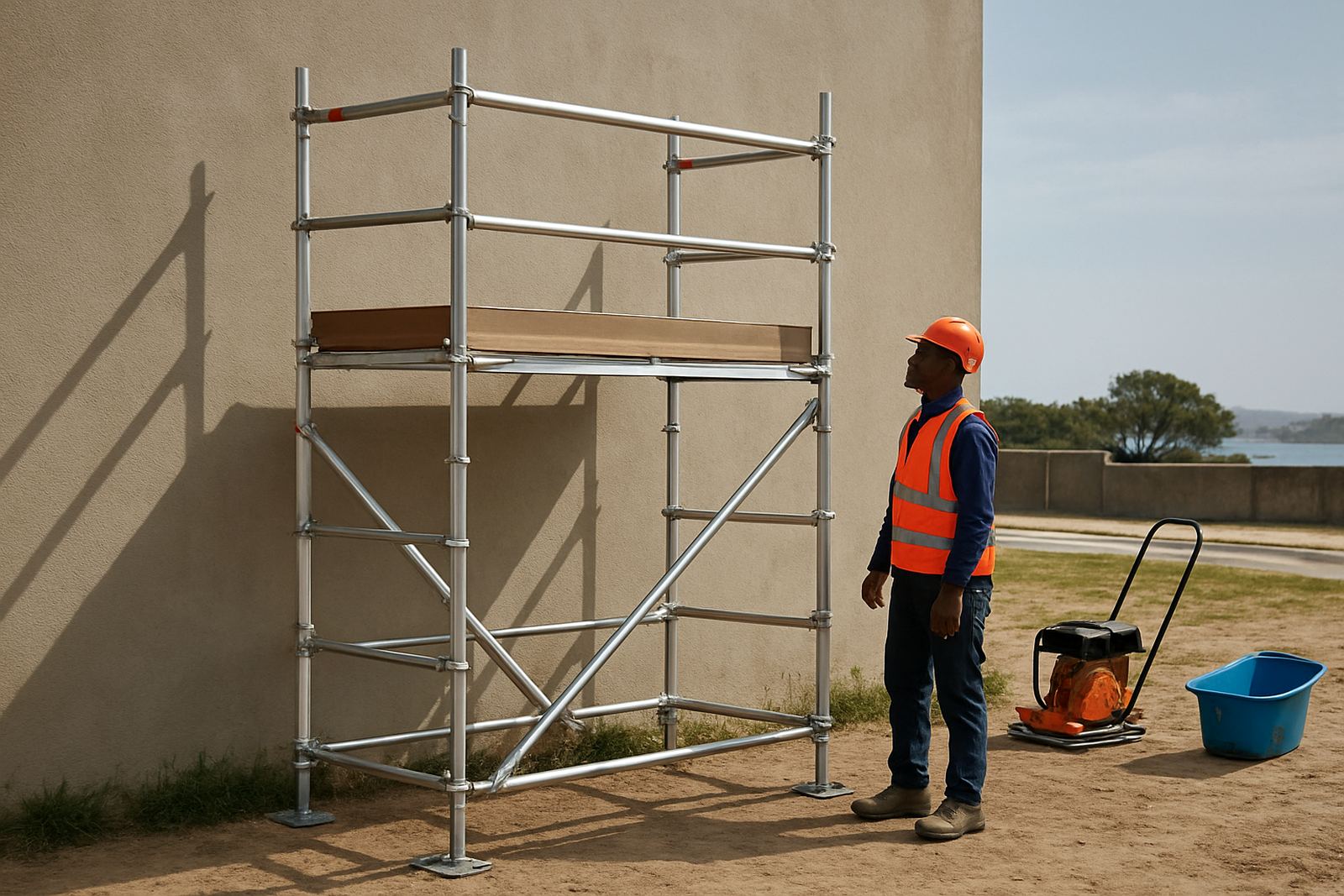
Before any scaffold goes up, check where it will stand. Coastal ground in East London, Beacon Bay and Gonubie can be soft after rain, and loose fill or uneven paving can let legs sink or shift. The base has to be level, firm and free of rubbish, rubble and hidden voids. If the scaffold is going on sand, grass or a sloped yard, allow for proper base plates and sole boards so the load is spread out.
Keep clear of drains, trenches, septic tanks and any area with underground services. If you are working near a road, pavement or busy access gate, plan the footprint so people and vehicles cannot knock the scaffold. In windy spots along the coast, tie-ins and bracing need to be right from the start, not added later when the frame starts moving.
- Check ground firmness by foot before assembly
- Use sole boards on soft or uneven ground
- Keep the scaffold clear of open trenches and drains
- Allow space for delivery trucks, skips and workers to pass
Build access that people can use without climbing
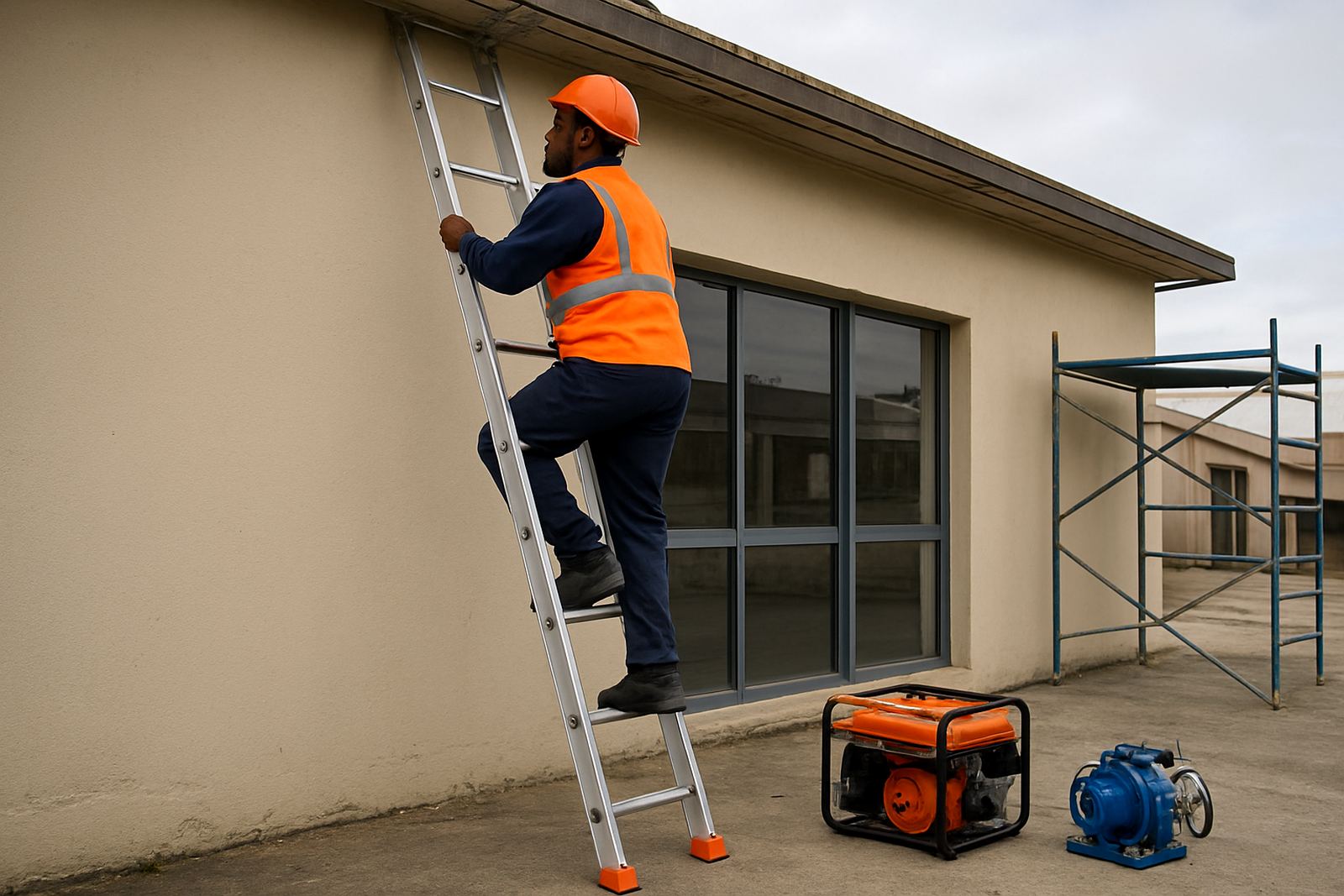
Safe access is one of the first things to sort out. Workers should not climb the outside of the scaffold, use loose planks or step from one level to another through gaps. Fit proper ladders, stair units or internal access routes that reach the working platform cleanly. On taller setups, access should be secured so it cannot slip or tip when someone steps on.
For short-term jobs in Qonce or Port Alfred, it is tempting to make do with what is on site. That usually ends in unsafe climbing, and it slows the job too. The best setup gives a clear route up and down, with the access point kept free of tools, offcuts and buckets. If the scaffold is for painters, roof work or maintenance, make sure access lines up with the work area so people do not lean out too far to reach a task.
- Use proper ladders or stair access, not loose access points
- Keep the climb route free of material and waste
- Secure access so it cannot move while in use
- Do not let workers climb the outside or cross open gaps
Edge protection stops small mistakes becoming falls
Every working platform should have edge protection where there is a fall risk. That means guardrails, midrails and toe boards fitted correctly and kept in place. A lot of site incidents happen because someone only needs to work for a few minutes and leaves one side open. Those few minutes are enough for a fall or for tools to drop onto people below.
Toe boards matter on busy sites because they stop wrenches, blocks, buckets and offcuts from slipping off the platform. On projects in East London CBD or near schools and public buildings, this is not only a safety issue but also a public one. If there is any chance of people walking under the scaffold, you need to control the area below and keep the platform tidy. One loose brick can cause serious injury.
- Fit guardrails, midrails and toe boards on exposed sides
- Keep platforms free of loose material and trip hazards
- Barrier off the area below when people can pass underneath
- Do not remove protection for quick access and forget to refit it
Know how much load the scaffold can carry
Scaffold is not a storage rack. Every platform has a working load limit and that limit must suit the task. A light maintenance job, a façade repair or a paint job needs far less capacity than masonry work or a materials transfer point. If too many bricks, tiles, cement bags or tools are stacked in one area, the scaffold can bow, shift or fail. Coastal humidity can also affect timber planks and fittings over time, so damaged parts should be taken out of service quickly.
Keep the load spread out, and never put all the weight at one end. Use proper lifting methods to get materials up, rather than throwing them from below or passing them up by hand in an unsafe way. If you are not sure of the scaffold class or the load rating, stop and confirm it before the team continues. Guessing is not a plan.
- Match the scaffold to the job, not the other way round
- Spread materials evenly across the platform
- Remove damaged planks, couplers or frames from use
- Never use scaffold as a materials store for longer than needed
Wind, rain and coastal wear need daily attention
The Eastern Cape coast can change quickly. A calm morning in Kidds Beach can turn into a windy afternoon, and rain can leave surfaces slippery or soften the ground under base plates. That means daily checks are not optional. A scaffold that looked fine yesterday may need a brace tightened, a board replaced or a tie inspected before work starts today.
Salt air also means metal fittings and tubes should be watched for corrosion. If you see rust, bent frames, cracked welds or loose fittings, stop using that section until it is checked by someone competent. The same applies after strong wind, a vehicle knock or any change in the scaffold footprint. If the setup has shifted even slightly, the risk is no longer small.
- Check after rain, wind, a vehicle impact or any site change
- Look for corrosion, bent tubes and loose fittings
- Watch for soft ground around the feet of the scaffold
- Keep an eye on slippery platforms and wet access points
A simple daily scaffold checklist for site teams
Keep the checks short enough that people will actually do them. A quick walk around before shift start and again after bad weather can catch most problems early. The key is to check the same points every time so nothing gets missed. If something is not right, tag it, isolate it and sort it before anyone goes back on the platform.
For builders, event crews and maintenance teams, a written checklist also helps with handovers. One person may finish work and another takes over after lunch or the weekend. A clear record shows what was checked and what still needs attention. That is especially useful on longer hires or jobs that run across more than one site in the Eastern Cape.
- Ground firm and level
- Frames, braces and ties secure
- Platforms complete with no loose boards
- Access points safe and clear
- Guardrails and toe boards in place
- No visible damage, rust or movement
- Area below controlled where needed
If you need scaffold planning, delivery or collection in East London, Beacon Bay, Gonubie, Kidds Beach, Qonce or Port Alfred, it helps to work with a team that knows local conditions and site timing. A proper pre-hire briefing can save a lot of trouble later.