Choose the right ladder for the job
Where the ladder stands is just as important as the ladder itself. The ground must be firm, level and dry enough to hold the feet without sinking or slipping. On paving, tiles, grass or fresh fill, test the base first. If the ground is uneven, level it properly rather than trusting a quick fix. Never stand a ladder on a crate, brick or bucket to gain a bit more height, that is how falls start.
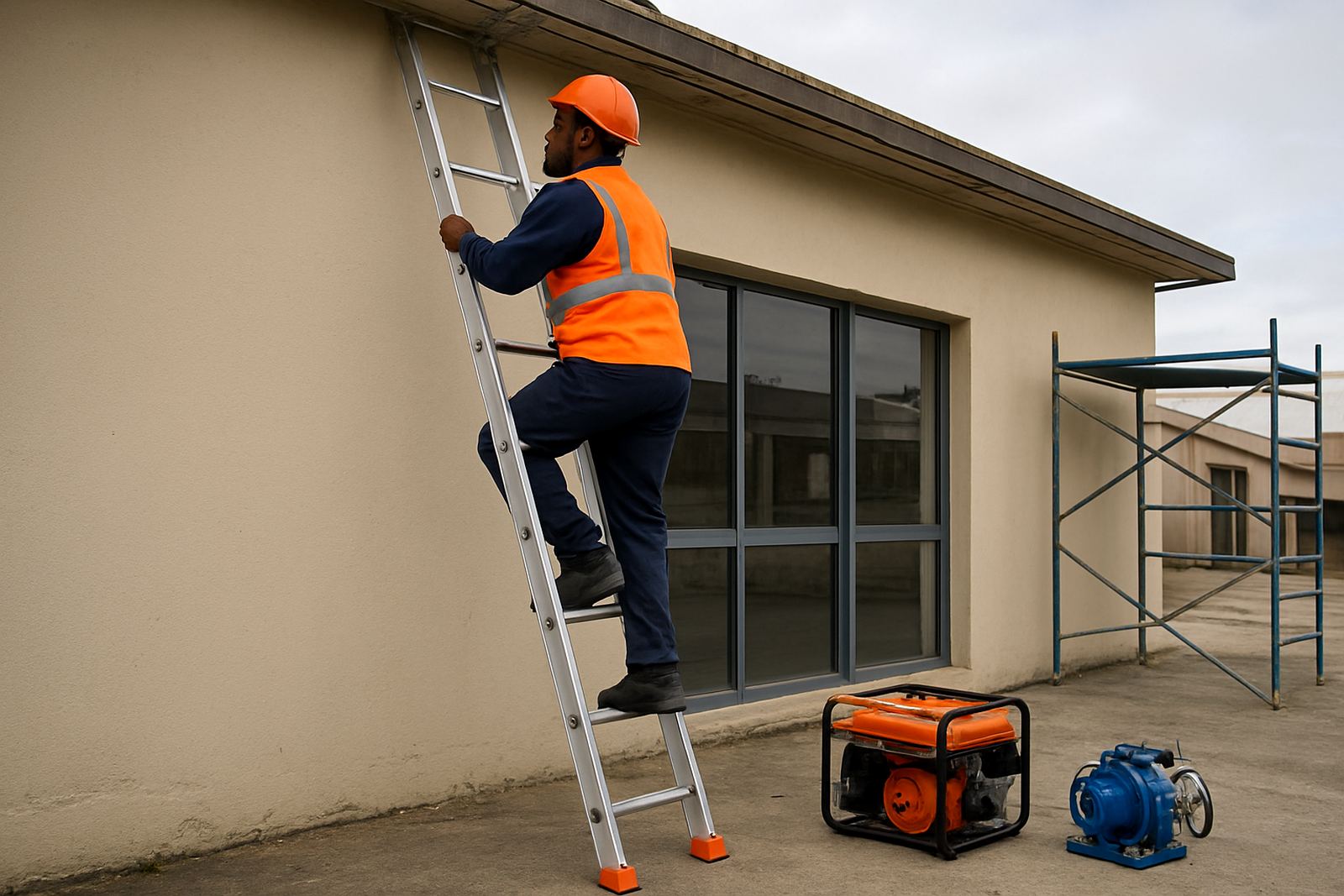
For extension ladders, use the correct angle. A common rule is one unit out for every four units up. Too steep and the ladder can tip backwards, too flat and the base can slide away. Make sure the top is secure if the ladder needs to lean against a wall or roof edge. If the surface is smooth or painted, extra care is needed because the top can shift without warning.
- Place the feet on firm, level ground.
- Keep the angle steady, not too steep or too flat.
- Lock spreaders, joints or sections fully before climbing.
- Do not move a ladder while someone is on it.
Watch the space above and around you
Many ladder incidents happen because people focus on the ladder and forget the area around it. Before you climb, look up and around for power lines, roof overhangs, ceiling fans, open windows, moving doors and pedestrian routes. In workshop yards and building sites, vehicles and materials can also create a hazard if the ladder is placed in the wrong spot.
Keep the area below the ladder clear. Nobody should walk underneath or stand in the drop zone while the ladder is in use. If the work is near traffic, a delivery route or a busy event area, put up a clear barrier or have someone manage movement. A small pause to control the space can prevent a nasty accident.
- Check for overhead electrical lines before lifting the ladder.
- Keep doors secured so they cannot swing into the ladder.
- Clear tools, cable and debris from the base area.
- Use warning signs or barriers if people are passing nearby.
Climb and work with three points of contact
When climbing, keep three points of contact at all times, either two feet and one hand or two hands and one foot. Face the ladder and climb one rung at a time. Do not carry bulky items while climbing if you can avoid it, use a rope, tool belt or hand line to send them up separately. One of the most common mistakes is trying to save time by climbing with both hands full.
Once you are on the ladder, keep your body centred between the side rails. If you have to reach too far left or right, climb down and move the ladder instead. Overreaching throws your weight outside the base and can cause a tip. Work from a stable position and keep movements slow and deliberate, especially if the surface is windy or if your boots are still damp from the site.
- Keep three points of contact during ascent and descent.
- Do not stand on the top rung unless the ladder is designed for it.
- Carry tools in a belt or hoist them up separately.
- Move the ladder if the task is out of comfortable reach.
Respect coastal weather and slip risks
East London and the Eastern Cape coast can bring wind, mist, sudden rain and salty moisture. These conditions matter. Wet rungs, damp soles and strong gusts can turn a simple access job into a dangerous one. If rain starts or the wind picks up, stop and reassess. A job that takes five minutes longer is better than a fall that takes days to recover from.
For outdoor work, check the ground after rain, especially on lawns, sand, muddy sites and around unfinished paving. If the ladder is being used near the sea or at a venue close to the shoreline, wipe off salt residue and keep the feet clean. Clothing should not be loose enough to snag on rungs or fittings. Gloves can help grip, but they must not reduce your feel for the ladder.
- Stop work in heavy wind or poor visibility.
- Dry the ladder and your footwear before climbing.
- Test soft ground for movement before setting up.
- Keep the ladder clean from mud, salt and grease.
End each job with a proper check
When the work is done, bring the ladder down carefully and store it where it will not be bent, kicked or left in standing water. If it was used on a roof edge or near chemicals, clean it before packing it away. A short end-of-job inspection helps you catch problems before the next hire or site callout. It also keeps the team honest about equipment condition.
As a simple rule, if the ladder feels unstable, looks worn, or did not perform as expected, remove it from service and report it. Good ladder safety is not only about the climb, it is about how the ladder is handled from collection to return. That habit protects the next person who needs it.
- Lower the ladder carefully, do not drop it.
- Check for new bends, cracks or loose fittings after use.
- Store it off the ground and away from moisture.
- Report any fault before the next hire or deployment.