Choose the right spot before you start
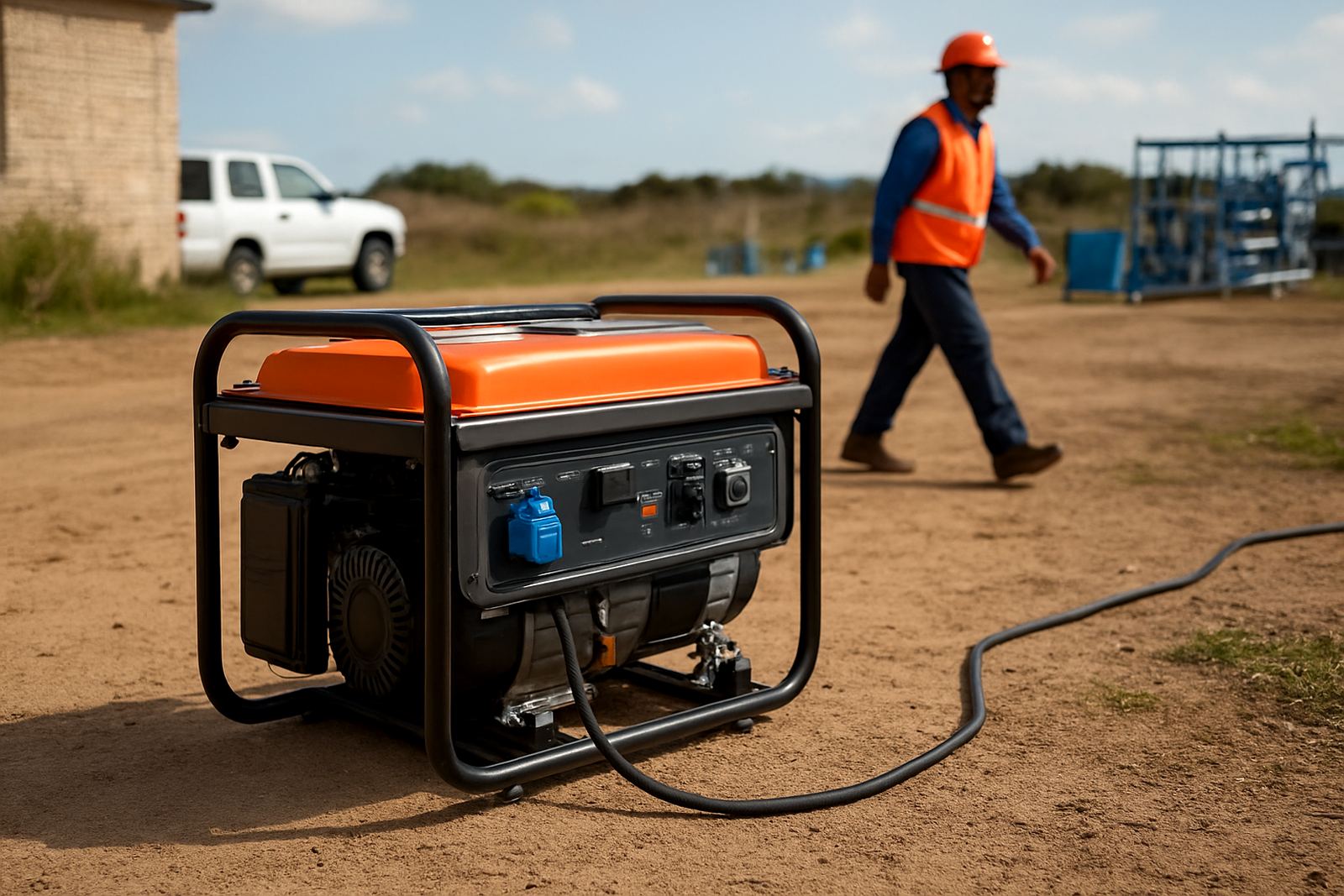
Put the generator on firm, level ground where exhaust fumes cannot drift into a house, tent, patio or enclosed work area. Keep it outside, under cover if needed, but never inside a room, garage or sealed container. In coastal areas around East London and Gonubie, give it extra space because salty air and damp ground can make starts and stops more troublesome.
Leave clear space around the unit for airflow and access. A good rule is at least 1 m on the sides and more if the set is feeding a crowd or a busy site. Keep it away from foot traffic, children, loose cables and anything that can catch heat. If the ground is soft after rain, use timber packing or a proper base so the machine does not sink or tilt.
For events, position the unit where noise and fumes will not affect guests, but where your team can still refill and check it easily. For builders, place it near the load but not in the middle of access routes, deliveries or turning points for plant.
Match the load to the generator output
Before you switch anything on, work out what the generator must carry. Add up the running watts of lights, tools, pumps, fridges or sound gear, then allow for start-up surge on motors and compressors. Many failures happen because one extra machine is plugged in after the job has started and the set is already near its limit.
Do not guess from plug shape or cable thickness. Check the label on each item and keep the total below the rated output. If you are running sensitive event equipment, allow more headroom so the power stays stable when someone switches on a large load. For homes during load-shedding, be careful with kettles, heaters and microwave ovens because they pull a lot more than people expect.
- List every item that will run at the same time.
- Separate continuous loads from starting loads.
- Keep heavy draw items off the same circuit where possible.
- Do not exceed the generator rating, even for a short burst.
- Ask for a pre-hire briefing if you are not sure about the load.
Use the correct cable and plug setup
Long thin cables cause voltage drop, heat and nuisance tripping. Use heavy enough cable for the distance and the load, especially on sites where the generator must sit 20 m or more from the work area. If you are feeding a marquee in Qonce or a builder’s compound in Beacon Bay, the wrong cable can leave lights dim and tools struggling.
Keep all joints dry and raised off wet ground. Use proper outdoor-rated cable, not loose household extensions under a tent flap or across a walkway. Where a cable must cross a path, protect it so no one can trip and no vehicle can crush it. Coil off unused cable neatly but not tightly around a hot running set.
- Use outdoor cable rated for the load and length.
- Keep plugs and sockets above standing water.
- Inspect for cuts, crushed sections and loose pins.
- Never tape damaged cable and carry on.
- Label leads so staff know what each one feeds.
Start-up checks before the first switch
Do a quick check every time before starting. Look at fuel level, oil level, air intake, battery condition if fitted, and the general state of the frame and sockets. If the machine has been standing through wet weather or coastal mist, wipe off moisture and make sure nothing is clogged with dust, grass or event litter.
Start the generator with no load connected unless the manufacturer instructions say otherwise. Let it warm up, then connect loads in stages. This gives you a chance to hear if the unit is labouring before the full draw comes on. If the engine hunts, stalls or smells hot, shut it down and find the cause before you continue.
For longer hire periods, check fuel management carefully. Running dry can damage the set and cause downtime at the worst possible moment. Keep spare fuel in approved containers only and store it safely away from flames, smoking areas and public access.
Keep people safe around the running set
A running generator is not just a power source, it is also a moving, hot and noisy machine. Mark the area clearly so guests, workers and children do not wander too close. On event sites, use barriers or plan the layout so the set sits behind decor, fencing or service screens but still has ventilation.
Never refuel while the engine is hot. Switch off, cool down and check for spills before filling. If a spill happens, clean it properly and do not restart until the area is safe. If the machine is on an uneven site in Kidds Beach or Port Alfred, re-check it after the first hour because vibration can shift it slightly.
- Keep a dry powder extinguisher nearby.
- Do not smoke near fuel or the generator.
- Do not touch hot exhaust parts.
- Keep children and unauthorised visitors away.
- Assign one person to monitor the unit during use.
Shut down, store and report faults properly
Turn off loads before you stop the generator, then allow the unit to cool before covering or moving it. Check for loose fasteners, fuel leaks, damaged cords and overload signs such as heat marks on plugs. If the machine tripped repeatedly or made unusual noise, report it immediately rather than leaving the next team to discover the problem.
For coastal work, rinse off salt spray from external surfaces where suitable and keep the unit dry during storage. If the job is long-term, ask for a maintenance schedule so oil changes, filter checks and battery care are not missed. Good shutdown habits save money and help the equipment last through wet winters, summer events and emergency callouts.
If you need help with safe positioning, load planning or cable runs, Coastline Hire can assist with site delivery, on-site setup, fuel management and weekend or emergency support across the Eastern Cape coast.