Check the ground before the compactor goes near it
Start with the surface, not the machine. On the Eastern Cape coast ground can change quickly from firm fill to soft sand, wet clay or loose rubble, especially after rain or near drainage lines. Before compaction, walk the area and look for voids, buried services, steep edges, fresh backfill and any signs of movement underfoot.
If the ground feels spongy or the trench side walls are already cracking, stop and reassess. A compactor can make an unstable area worse very quickly. Mark out the work zone, keep other workers back and make sure you know where the safest approach and retreat path will be.
- Check for cables, pipes and manholes before starting
- Remove loose stones, timber offcuts and scrap metal
- Keep trench edges clear of stockpiles and traffic
- Do not compact where the ground is visibly undermined
Work on slopes with a controlled line and slow pace
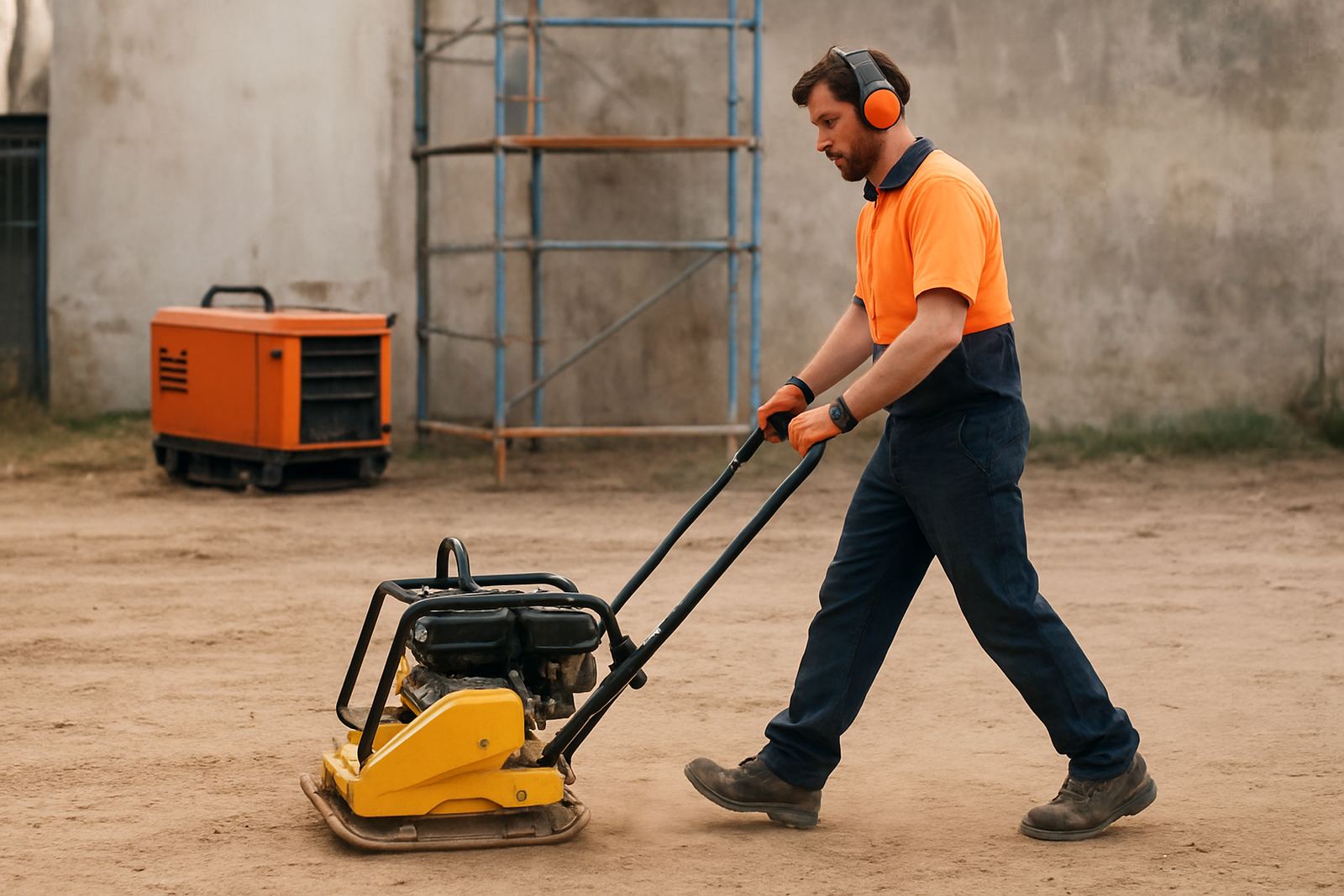
On slopes the main risk is loss of control. Never rush a compactor across an incline. Keep both hands on the handles, stand with feet apart for balance and move at a steady walking pace. If the machine starts to pull to one side, correct gently rather than forcing it.
Where possible, work up and down the slope in short passes rather than across the steepest line. If the slope is too steep for safe footing, it is not suitable for compaction. Take time to shape the area into manageable sections or use another method. Wet grass, loose gravel and polished concrete can turn into a slip hazard very fast, so extra caution is needed in rainy weather and on coastal sites.
- Never stand below a moving machine on an incline
- Keep the compactor moving in a predictable line
- Avoid sudden turns or sharp direction changes
- Stop if you lose footing or the machine starts to bounce
Treat trench work as a controlled task, not a quick job
Compacting in trenches needs strict control because the working space is tight and edge collapse can happen without warning. Only enter if the trench is wide and stable enough for the machine and the operator to move safely. In narrow trenches, a plate compactor may be more suitable than a heavier unit, but even then the operator must keep clear of the side wall and any loose spoil.
Do not let the machine sit on the trench lip. Keep the weight back from the edge and compact in layers, starting with the lower areas before moving outward. If water has gathered in the trench, pump it out first. Soft bottoms and saturated backfill can hide weak spots, and the machine may sink or tilt suddeny.
- Inspect trench sides before every pass
- Keep spoil piles and tools away from the edge
- Use shoring or support where required by site conditions
- Do not allow anyone to work underneath a loose bank
Match compaction passes to the material under your feet
Different fill materials need different handling. Sand, gravel, clay and builder’s rubble all react in their own way. If you overwork one layer or try to compact too much at once, you can create an uneven finish and unnecessary machine stress. Build in layers and check each one before moving on.
For mixed ground conditions, do a small test patch first. This helps you see how the surface reacts, how much vibration is needed and whether moisture levels are right. On very dry material, a light spray of water may help binding. On wet material, stop and let it dry or drain before continuing. The aim is a firm, level base not just a hard top crust.
- Compact in thin layers rather than one deep fill
- Watch for pumping, cracking or sinking under the machine
- Adjust passes if the surface remains loose after the first run
- Keep moisture even across the work area
Operator checks that matter before each shift
A safe machine starts with a proper pre-use check. Look over the handles, base plate, engine area and guards before the first start-up. Make sure bolts are tight, fuel lines are sound and there are no oil leaks onto the frame or ground. If the machine has a broken mount or damaged throttle cable, it should not go out.
Good footwear, eye protection and close-fitting clothing all help reduce risk. Hearing protection is also important where the work is extended or the site is enclosed. Never carry loose items in pockets that can fall into moving parts. If two people are working close together, agree on hand signals before the first pass so there is no confusion around reversing or stopping.
- Check fuel and oil levels before starting
- Confirm the stop switch works properly
- Inspect vibration points and fasteners
- Wear boots with solid grip on wet or loose ground
Stop work early when conditions turn unsafe
Weather and site traffic can change a safe area into a hazard in minutes. If rain starts, the ground softens or a delivery truck cuts across the work zone, pause the job and reset the area. Do not try to save time by pushing through when visibility is poor or the operator is tired. Fatigue leads to bad footing and poor judgement.
On longer jobs, build in regular rest stops and keep an eye on vibration exposure. If the machine feels different, sounds rough or starts leaving uneven tracks, shut it down for a check. It is better to lose ten minutes than damage a trench edge or injure a worker. That sort of mistake can cost much more than the hire.
- Stop during heavy rain or standing water
- Pause if the machine is overheating or smoking
- Remove bystanders before restarting work
- Report unusual movement, noise or vibration straight away
Before the machine leaves site, make sure the area is safe
When the work is done, clear the area of loose spoil, tools and debris before returning the compactor. Check that the compacted surface is level enough for the next trade and that there are no soft spots left around trenches or edges. If the job is for a driveway, slab base or access path, do a final walk over the area to pick up any dips or high points.
For sites in East London, Beacon Bay, Gonubie, Kidds Beach, Qonce or Port Alfred, our team can help with the right hire advice, delivery and collection, plus fuel management and pre-hire briefing where needed. If you are unsure whether the ground is suitable, ask before the machine is sent out. A short discussion can prevent a lot of trouble on site.