

Trench Compaction
Home / Jobs / Trench Compaction

Jobs

Trench Compaction

When a service trench is open, the real pressure starts with getting it back to spec and back in use. Coastline Hire supplies rammers, pumps and support gear for narrow trenches, wet conditions and reinstatement work across East London and the Eastern Cape coast.

When trench backfill needs proper compaction

Trench compaction is rarely about one type of job. On some sites it is a quick water line repair in Beacon Bay, on others it is a longer service run in Kidds Beach or a sewer tie-in where the side walls are tight and the ground stays damp. The common problem is the same, loose backfill settles later and causes sinkage, cracked paving or a failed inspection.

That is why the equipment choice matters. A hand tamper may work for a tiny patch, but most service trenches need a rammer or a compacting solution that can work between trench walls without damaging the pipe bedding. On the coast, moisture changes everything. In sandy ground near Gonubie or Port Alfred, material can collapse back into the cut if it is not managed properly, and in clay sections the fill can hold too much water and turn soft.

We hire for the actual trench condition, not just the size of the hole. If the trench is narrow, wet or close to existing paving then the right setup saves time and prevents rework.

Typical equipment set for a service trench

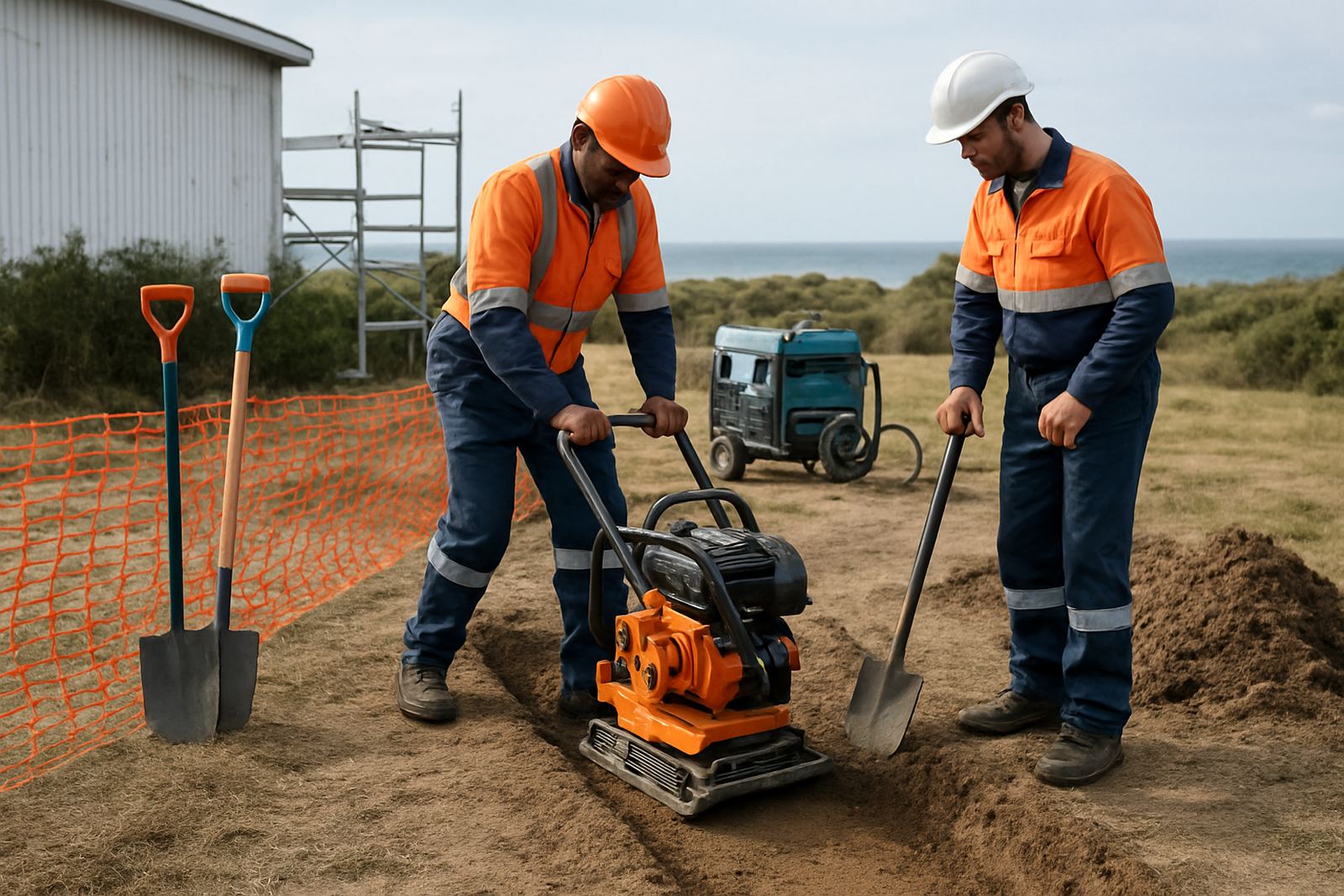
A trench compaction job often needs more than one machine. A service crew may use a rammer for the first layers, a plate compactor for wider reinstatement areas and a pump to keep the cut dry while work carries on. For deeper service trenches, support gear such as trench shoring, barrier fencing and correct access boards may also be needed depending on the site layout and the client rules.

  • Rammers for narrow trenches and backfill lifts near pipes
  • Plate compactors for paving edges and wider backfill zones
  • Pumps for dewatering after rain or in high water table areas
  • Generator support where power is not available or load shedding hits
  • Barriers, cones and lights for roadside or public access work

For day jobs in East London CBD or longer runs near Qonce, we often suggest a small package rather than a single hire item. That way the crew does not lose half a day fetching another unit because the trench has filled with water or the reinstatement width changes half way through.

Planning the trench before compaction starts

The best compaction result starts before the machine is switched on. Measure the trench width, the depth, the material being returned, and whether the top layer must match paving, asphalt or plain soil. If the trench crosses a driveway, footpath or municipal servitude, plan the reinstatement sequence in advance so the fill is compacted in the right lifts and not all at once.

On coastal jobs, we usually ask about rain exposure and groundwater. A trench in Beacon Bay with standing water needs a different plan to a dry cut in an inland suburb. If the site will be left open overnight, fuel supply, lighting and security need to be thought through as well. One missed detail can slow the whole crew the next morning, and thats when costs climb.

  • Confirm trench width and access for the machine
  • Check whether the fill is sand, gravel, selected soil or spoil
  • Allow for dewatering if the trench sits low or near the coast
  • Plan where spoil will be stored so it does not fall back in
  • Set out the reinstatement line before compaction starts

Common mistakes that lead to sinkage

The most common mistake is trying to compact layers that are too thick. Backfill needs to go in lifts, with each layer worked properly before the next one is added. If a crew rushes the job, the top may look firm for a day or two then settle after the first heavy vehicle passes. That leads to call-backs and unhappy clients.

Another issue is using the wrong machine in the wrong part of the trench. A plate compactor can bridge over a narrow cut and leave soft spots below the surface, while a rammer used on a finished paving edge can chip the edges and make more repair work. Water is another problem. If a trench is full of seepage or rainwater, compacting wet material can create a pumpy surface that fails later.

We also see crews forget about the edges. Reinstatement is often stronger in the middle than at the sides, which means the visible edge starts to dip first. That small dip can become a bigger issue after one storm.

Hiring for builders, plumbers and repair teams

Trench compaction hire works for plumbing repairs, electrical ducting, stormwater lines, fibre installs and small civil maintenance jobs. For builders, it is often the last step on a site where access is tight and time is short. For plumbers and utility teams, it is about moving quickly between callouts without carrying every piece of kit on every run.

We support short hires, weekend work and longer projects across East London, Beacon Bay, Gonubie, Kidds Beach, Qonce and Port Alfred. If the trench is part of a scheduled repair, we can help with delivery, collection, on-site setup and a pre-hire briefing so the team knows what to expect before work starts. Where needed, fuel management and emergency callout support can also be arranged.

  • Site delivery to keep the crew on task
  • Collection when the reinstatement is finished
  • Weekend hire for planned shutdowns and emergency repairs
  • Long-term hire for repeat service work and maintenance contracts

Budget ranges for trench compaction hire

For budgeting, the simplest way to think about trench compaction is by the size of the trench and the time the equipment will be on site. A small rammer hire for a short repair may be a few hundred Rand for the day, while a package with pump support, lighting and a plate compactor will sit higher. Longer hire periods often bring better daily rates, especially for contractors working through a series of trenches.

As a working guide, many small trench jobs fall into a range from about R450 to R950 per day for a single compacting unit. If the job also needs dewatering, generator support or multiple items, the daily total can move into the R1 200 to R2 500 range depending on duration and transport. Bigger civil or utility jobs with repeated site delivery can be quoted as a weekly or monthly hire, which is often more practical than trying to cost each day separately.

Rain, access and after-hours callouts can affect the final figure too. If the trench is in a narrow lane, behind a secure gate or in an area with poor parking, please plan for extra time on loading and offloading.

What clients say

Questions we get asked

What equipment is best for a narrow service trench?

A rammer is usually the first choice for narrow trenches because it works in tight spaces and compacts the fill close to the pipe. If the reinstatement area opens out wider, a plate compactor can finish the top layer.

Can you supply pumps with trench compaction hire?

Yes. Wet trenches are common on the coast, so pumps are often hired with the compaction gear to keep the trench workable and reduce delays after rain or seepage.

How much should I budget for a short trench repair?

A small one-day repair can start at a few hundred Rand for a single unit. If you need a rammer, pump support and transport, budget a bit more so the job does not stall halfway through.

Planning something? Email the team.

hire@coastlinehire.co.za