When the venue has no reliable power point
If you are setting up a wedding in Beacon Bay, a market in Gonubie, or a school fundraiser near Qonce, the first question is always the same: how much power do we actually need. Some venues have a single point that can take a few lights and a sound system, but not much more. Others have nothing on site, so the full supply has to come in by generator.
Event power is usually needed for PA systems, stage lights, fairy lights, catering gear, refrigeration, ticket points, tills and water pumps. In coastal areas, moisture and salt air can also affect plugs, leads and connections, so cable runs and cover points need proper planning from the start.
- Garden functions and marquee events
- Community days, school events and church gatherings
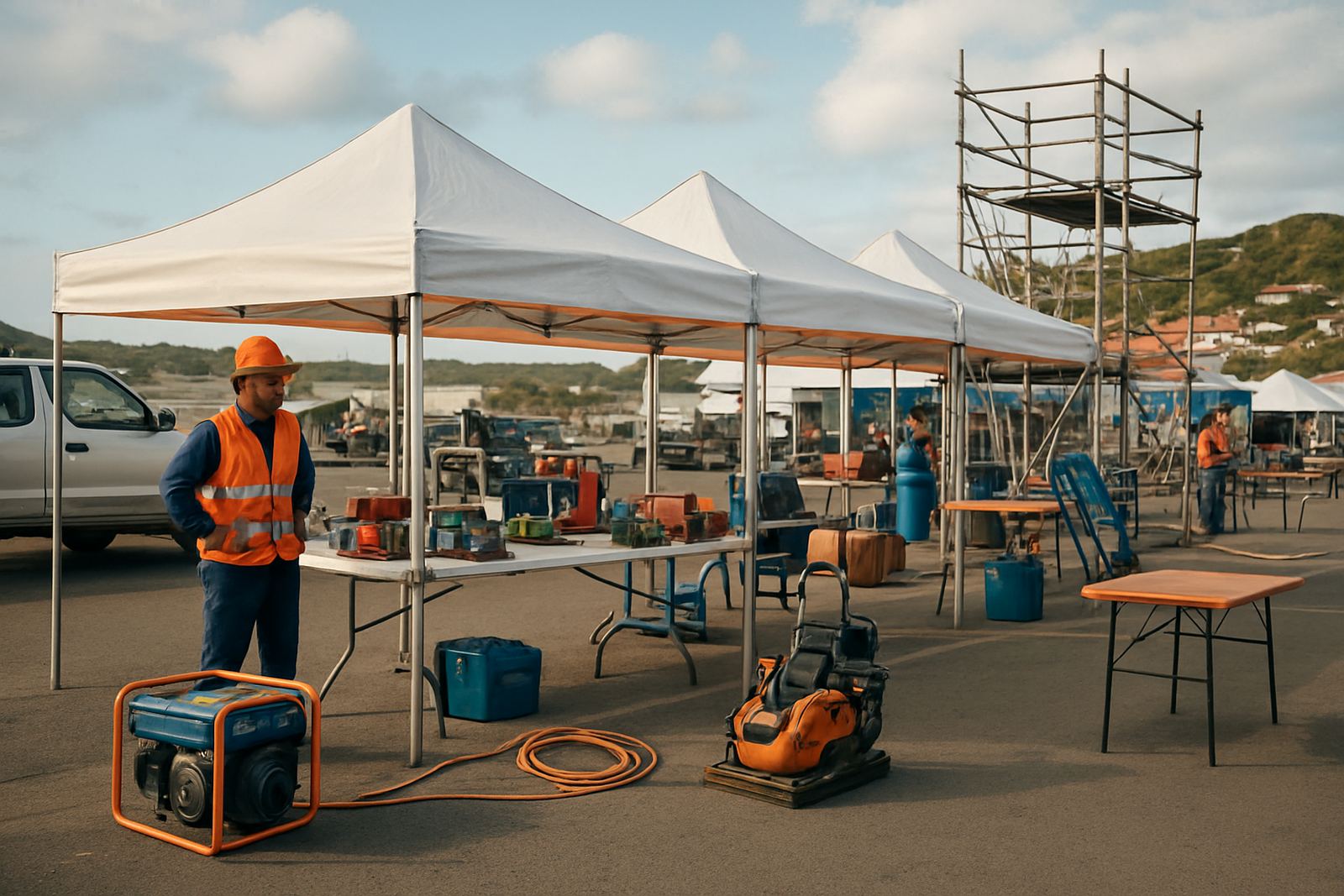
- Stall rows for food, craft and market trading
- Live performances, product launches and prize-givings
Typical generator and cabling set-up for event power
A smaller function may only need a compact generator, extension leads and a few work lights. A larger outdoor event can require a bigger set-up with split power feeds, distribution boards and longer cable runs to separate the sound area from the catering or vendor zone. Getting the size wrong can cause dips, nuisance trips or a machine running flat out all day, which is never ideal.
For most jobs we look at the load first, then match the kit to the actual use. That means checking what runs all at once, what can be staged, and what must stay live if there is a start-up surge. This is where a short pre-hire brief helps. It saves time on site and keeps the event moving.
- Portable generators sized to the event load
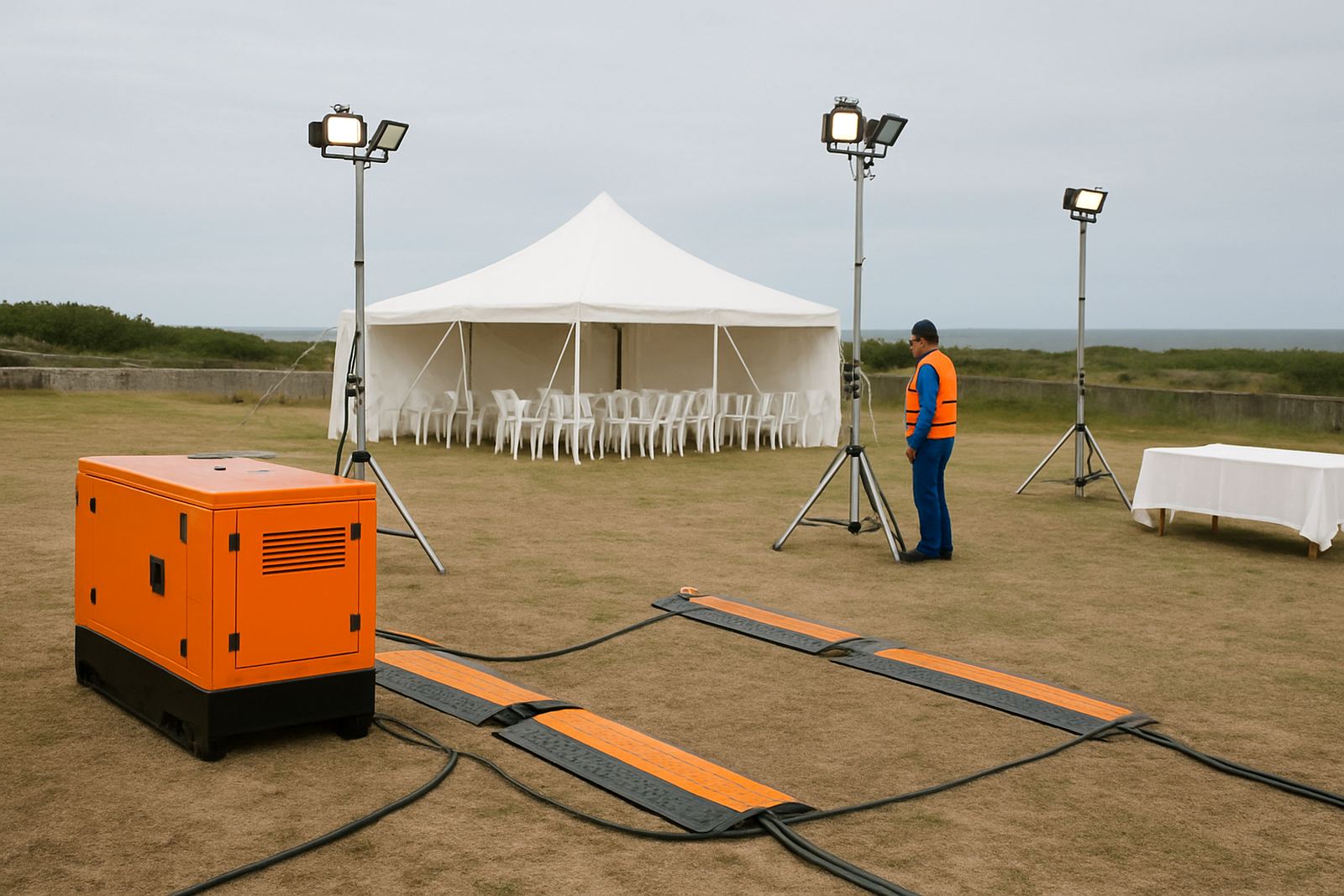
- Heavy-duty cables and safe extension points
- Lighting for walkways, entrances and activity zones
- Distribution for separate stalls, stage and back-of-house use
Layout planning for stalls, stages and activity areas
A good layout keeps power close enough to work, but far enough from foot traffic and wet ground. That is important on coastal grass, in parking areas and on uneven municipal land where people are walking with food and drinks. Cables should be kept out of the main walkways and where possible routed along edges, under cable protection or above ground where conditions allow.
We also advise on where the generator should sit. It needs ventilation, sensible access for fuel, and some distance from guests where noise may become an issue. If the event has a stage, the power point should be arranged so the audio team is not sharing a supply with kettles, bain maries or multiple fridges. Simple planning avoids alot of last-minute swapping.
- Keep cable crossings to an absolute minimum
- Place noisy equipment away from seating and speeches
- Separate catering power from entertainment power where possible
- Leave room for safe refuelling and quick checks
Common mistakes that cause event power trouble
The biggest mistake is guessing the load. People often add up the obvious items and forget extras like battery chargers, helper lights, urns, deco lighting or a second fridge. The next issue is using household leads that are too light for outdoor work. They heat up, fail early and can cause unnecessary shutdowns.
Another common problem is leaving the generator too close to the crowd, or placing it where exhaust and noise become a complaint. At the coast, damp weather can also affect open connections if they are left exposed. Even a light shower can create issues, so weather cover and sensible placement matter just as much as the machine itself.
- Under-sizing the generator for start-up surges
- Using cheap or thin cables for long runs
- Putting power points in wet or high-traffic spots
- Not allowing space for fuel top-up and checks
Budget ranges for event power hire in Rand
Costs depend on the event size, hire time, fuel use and whether you need delivery, setup or standby support. A small event with basic power and a few lights will sit at the lower end of the range. A larger setup with multiple zones, longer cable runs and after-hours support will cost more, as it should because there is more gear and more planning involved.
As a broad guide, smaller event power hire can start from around R650 to R1 500 for simple short-duration use, while medium events often fall in the R1 500 to R4 500 range once generator size, cables and delivery are added. Larger functions, trading areas or live activity zones can run from R5 000 upward, especially if fuel management, standby cover or layout help is included. For exact numbers, it helps to share your guest count, equipment list and venue access details before the quote is issued.
Event support across the East London coast
Coastline Hire works from Beacon Bay and supports event power needs in East London, Gonubie, Kidds Beach, Qonce and Port Alfred. We handle site delivery, equipment collection, on-site setup, weekend hire and emergency callout where the event cannot wait. If you are running a one-day function or a long weekend programme, the setup can be matched to the schedule so you are not paying for more time than needed.
For organisers, the best time to speak to us is before the site layout is finalised. That gives room for generator placement, cable lengths, lighting points and any support around stalls or live activity zones. It also makes load calculations easier and helps avoid a last minute scramble on the morning of the event.