When a wet site starts holding up the job
Water in a trench or foundation pit is not just a nuisance, it can stop brickwork, shuttering and backfilling for the day. On the coast, rain, seepage and high water tables can leave a site soft by mid-morning and unsafe by lunchtime, especially after a storm or when the subsoil stays saturated for days.
We help builders, contractors and property owners deal with standing water, seepage and runoff so the work can continue. That includes small domestic foundations in Beacon Bay, repair jobs in Gonubie, and larger commercial excavations where the pump has to run for hours at a stretch. If you are fighting muddy access or water pooling in a low point, the right dewatering setup can save a lot of hand work and delay.
Typical pump setup for dewatering jobs
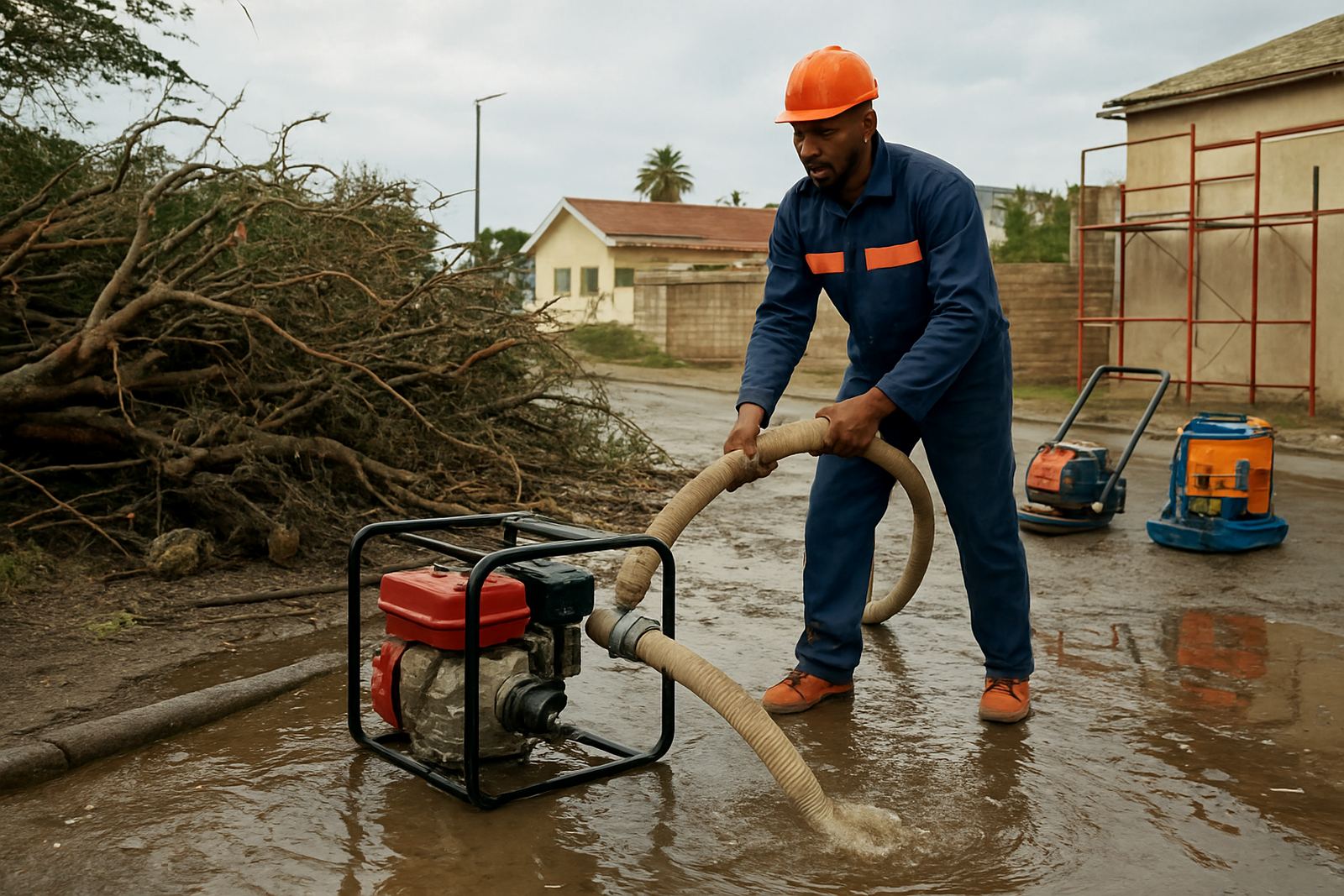
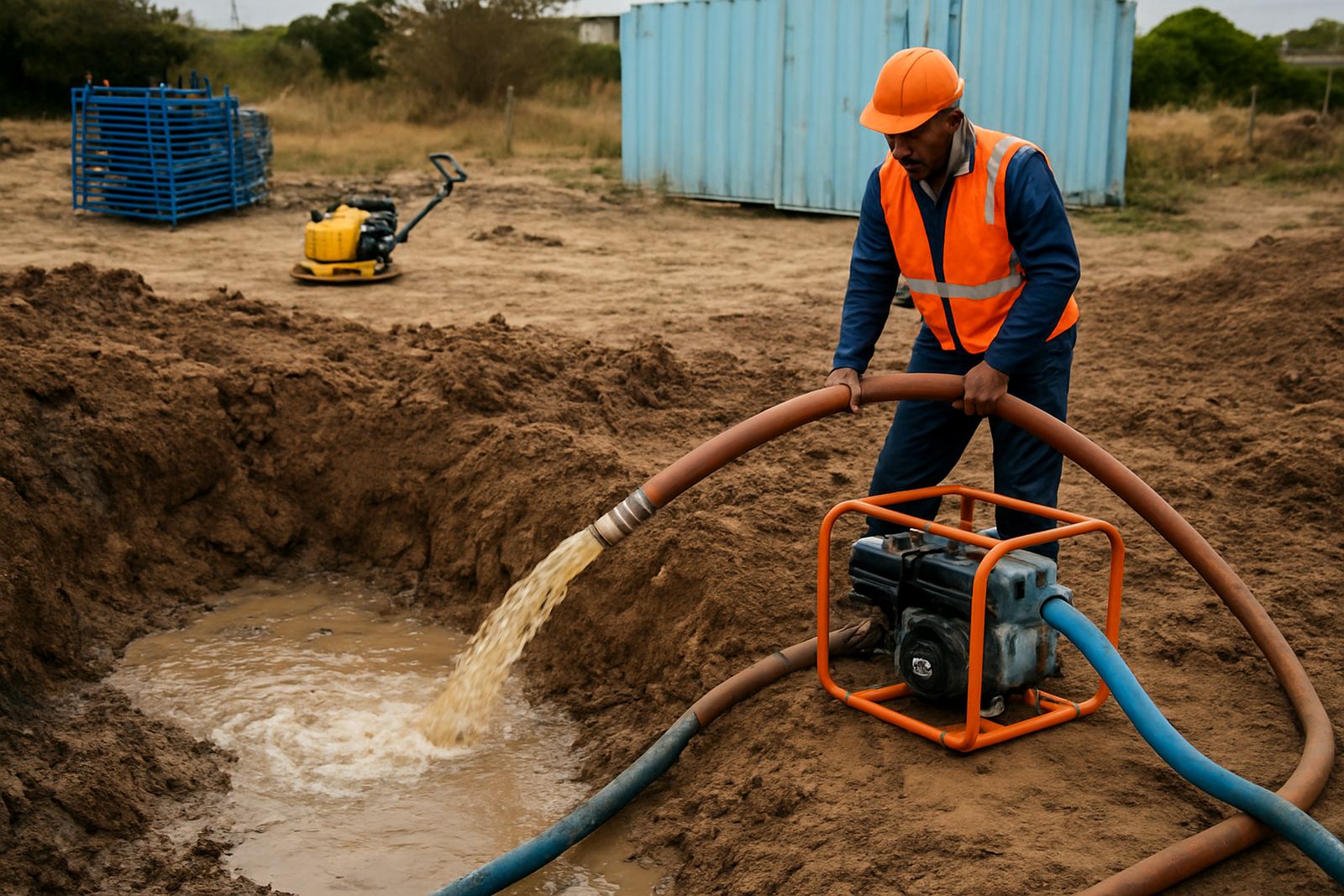
The right kit depends on how much water you need to move, how far it must travel, and whether there is sludge, sand or debris in the pit. For clean water from a low spot you may only need a small electric pump. For muddy water, trench seepage or a foundation pit that keeps refilling, we usually recommend a tougher setup with proper suction hose, discharge hose and a suitable strainer.
- Electric or petrol-driven water pump for steady dewatering
- Submersible pump for pits, sumps and flooded areas
- Flexible suction and discharge hose in the correct length
- Strainer or foot valve to reduce blockages
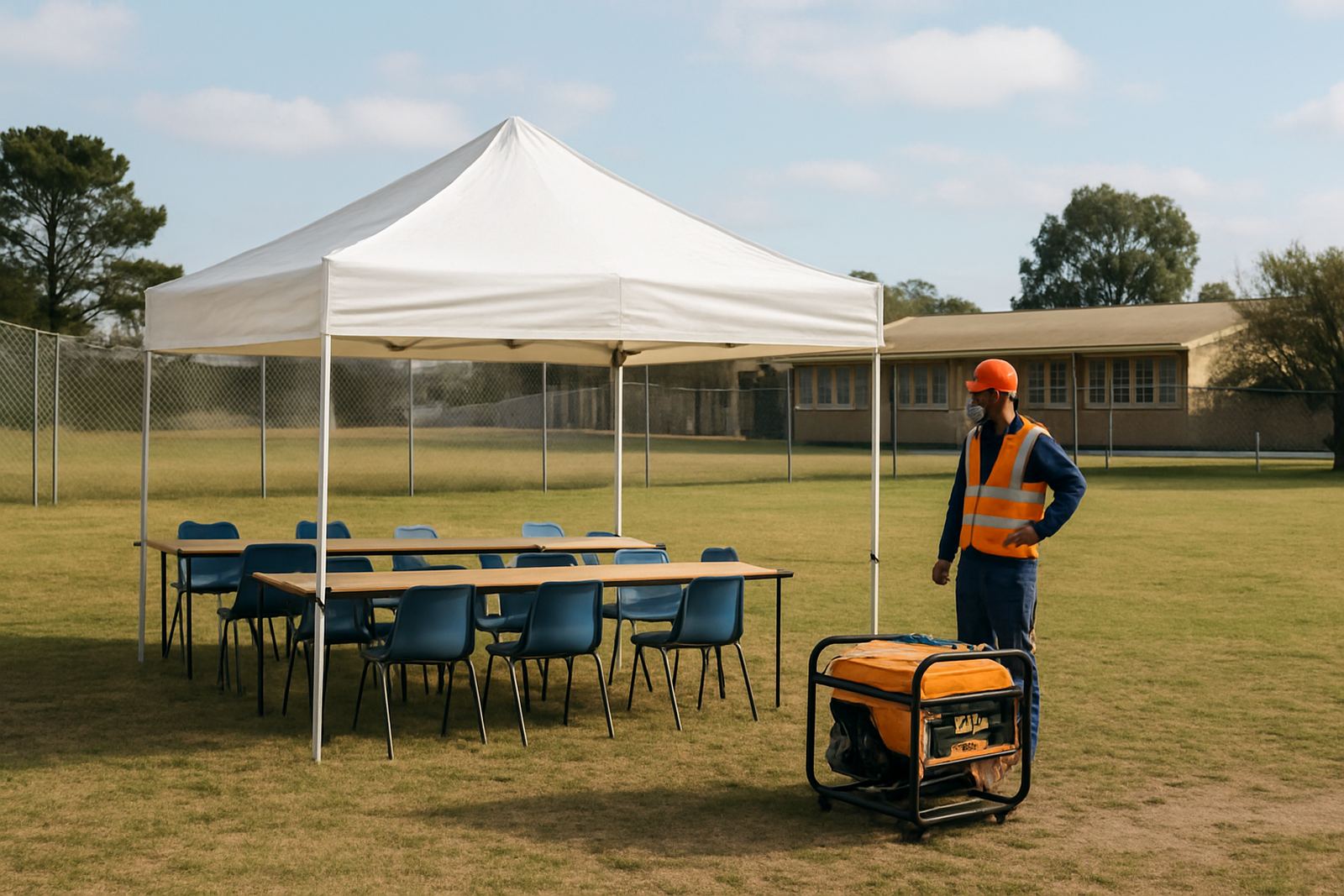
- Generator where mains power is not available
- Extension leads, couplers and hose clips for safe setup
If the water contains grit or fine sand, we will match the pump to the job so it does not clog after an hour. A pump that is too small just churns away without shifting enough water, while an oversized unit can be awkward and wasteful.
Planning the layout so the water actually leaves the site
Good dewatering is mostly about placement. The pump must sit at the lowest practical point, with the discharge line run to a legal and sensible outlet where water will not flow back into the excavation or onto a neighbour's property. On a tight site in East London or Qonce, that may mean routing hose around stored materials, wall lines and access paths so the pump does not become another obstacle.
We can help with on-site setup and basic layout advice before hire, especially where the job needs repeated pumping over several days. It also helps to keep a small sump or collection point where water gathers, because a pump sitting in mud will wear faster and pull in more debris.
- Place the pump in the lowest point, not halfway up the pit
- Keep the discharge line as straight as possible
- Use enough hose length to reach a proper drain point
- Check the outlet will not flood a driveway, road or neighbouring site
- Watch for hose kinks after vehicles or materials are moved
What goes wrong on wet sites
Most dewatering problems come from using the wrong pump, poor hose routing or leaving the unit unattended when water conditions change. A trench can fill faster than expected after rain, and a pump that handled clean water yesterday may struggle once sand and fine stones are drawn in today. That is why a quick pre-hire briefing matters before you start.
Another common mistake is trying to pump without allowing the water to collect in one point. If the suction is skimming the top of a muddy floor, the pump will lose prime or pull air. We also see power issues on sites with limited supply, especially during load-shedding. In those cases a generator backed setup is often the safer option, rather than waiting for the power to come back.
If your job is on the coast, humidity and salt air can also affect hoses, fittings and electrical leads. Equipment should be rinsed, dried and checked before storage, otherwise corrosion and sticky couplers start causing trouble faster than expected.
Hire costs and budget ranges
Site dewatering costs depend on pump size, fuel use, delivery distance and how long the unit needs to stay on site. For a small residential job in Beacon Bay or Kidds Beach, budget roughly R350 to R750 per day for a basic pump setup, depending on the type of unit and hose length required. If you need a generator as well, the daily rate can move into the R850 to R1,800 range.
For longer jobs, weekly hire usually works out better value, and we can quote for long-term hire where the pump must stay in place for ongoing excavation or drainage work. Fuel management is another cost to factor in, especially on continuous runs. If you know the site will need emergency callout support after heavy rain, it is better to plan for that before the water starts climbing.
We will always try to keep the setup practical and cost-aware, not over-spec the job. A lot of sites only need a straightforward pump and hose package, not a complicated arrangement.
What Coastline Hire can provide on the day
We support dewatering jobs from our Beacon Bay base across East London and the Eastern Cape coast. Depending on the site, we can deliver the equipment, collect it again, help with setup, brief your team on safe use and advise on where the discharge should run. For builders working to a tight programme, that kind of support can keep the excavation moving while the rest of the crew carries on with forming and steel fixing.
- Site delivery and equipment collection
- On-site setup and pre-hire briefing
- Fuel management for longer running pumps
- Weekend hire for weather-related delays
- Emergency callout when a site floods unexpectedly
Our team includes Siyabonga Mhlabeni, Annelise van der Merwe, Luyanda Gqoba, Megan Petersen, Themba Ndlovu and Nokuthula Dlamini, so there is always someone who understands the job at hand and can match the right equipment to the water problem. For a quote, email hire@coastlinehire.co.za and tell us the site size, water depth and how long you expect the pump to run.