When the holding needs work now, not next week
Smallholding jobs rarely stay in one lane. One day you are clearing overgrowth along a fence line, the next you are moving storm water away from a shed, then packing down a fresh access strip for a trailer or feed delivery. On properties around Beacon Bay, Gonubie, Kidds Beach and Port Alfred, the work often has to happen between weather changes, livestock routines and a long list of other chores.
That is where hire equipment helps. You do not need to buy and service a machine that only works hard for a few days each month. You can bring in the right unit for the job, use it properly, and hand it back once the ground is cleared or the water is where it should be. For owners managing a few hectares, a hobby farm or a busy peri-urban plot, that keeps cash flow steadier and avoids equipment sitting idle in the shed.
Typical hire kit for cutting, pumping and prep work
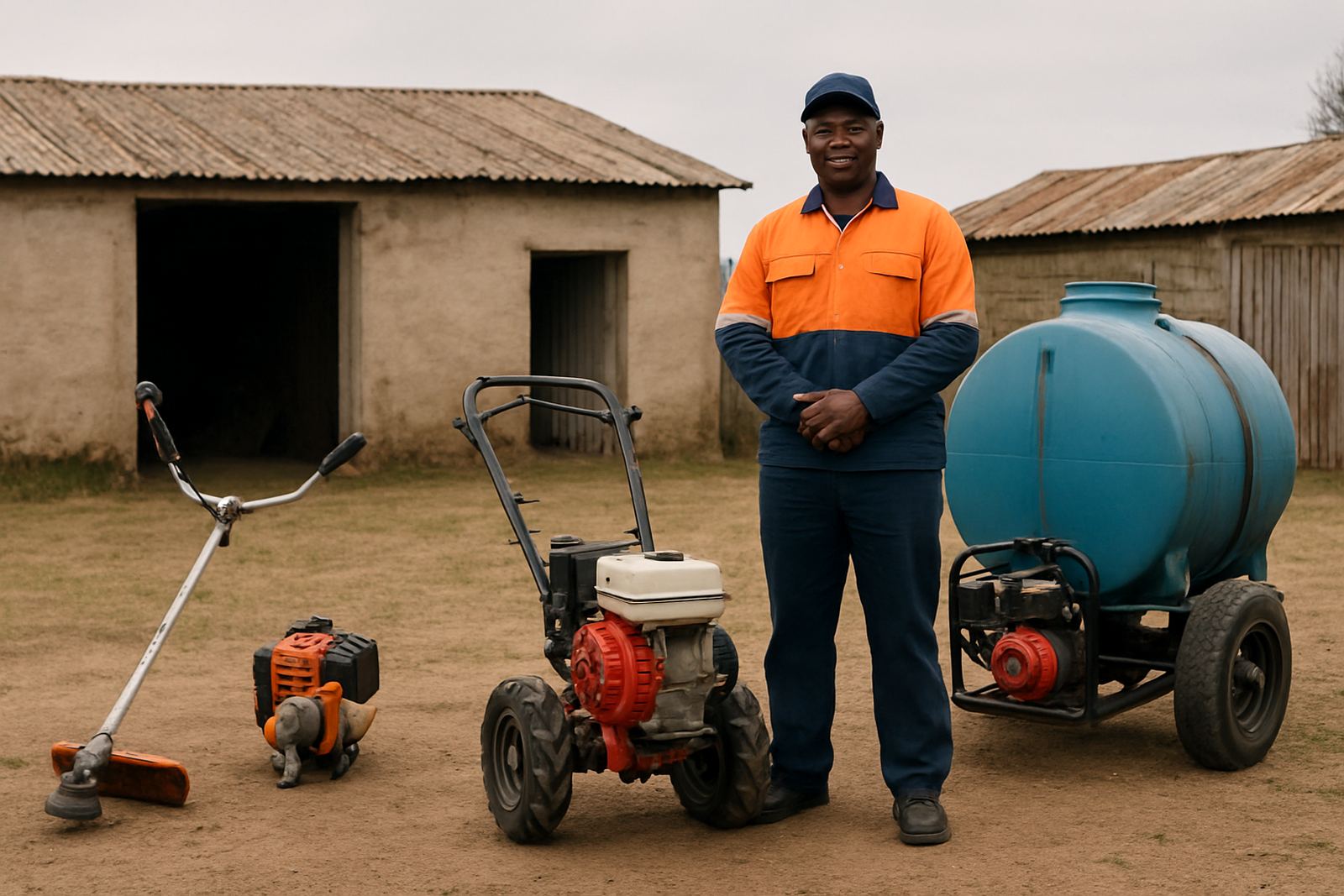
We match the kit to the job size, access and power situation. On smallholdings, the usual mix includes portable generators, pumps, plate compactors, scaffold for safe access work and smaller support items for clean-up and event style tasks if the property also hosts family gatherings or farm days.
- Generators for load-shedding, irrigation support and tools that need stable power
- Pumps for moving water from dams, pits, low spots or flooded run-off areas
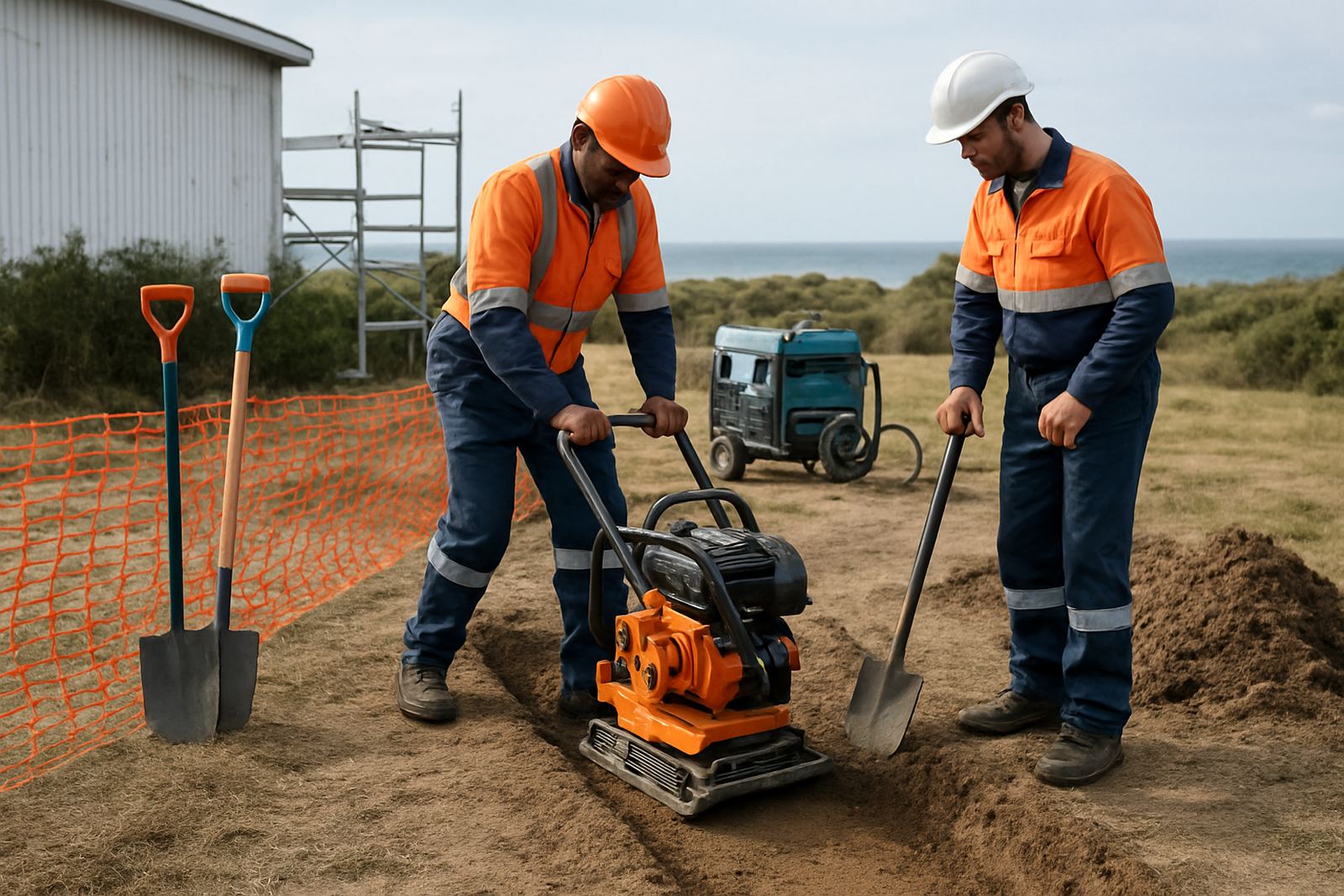
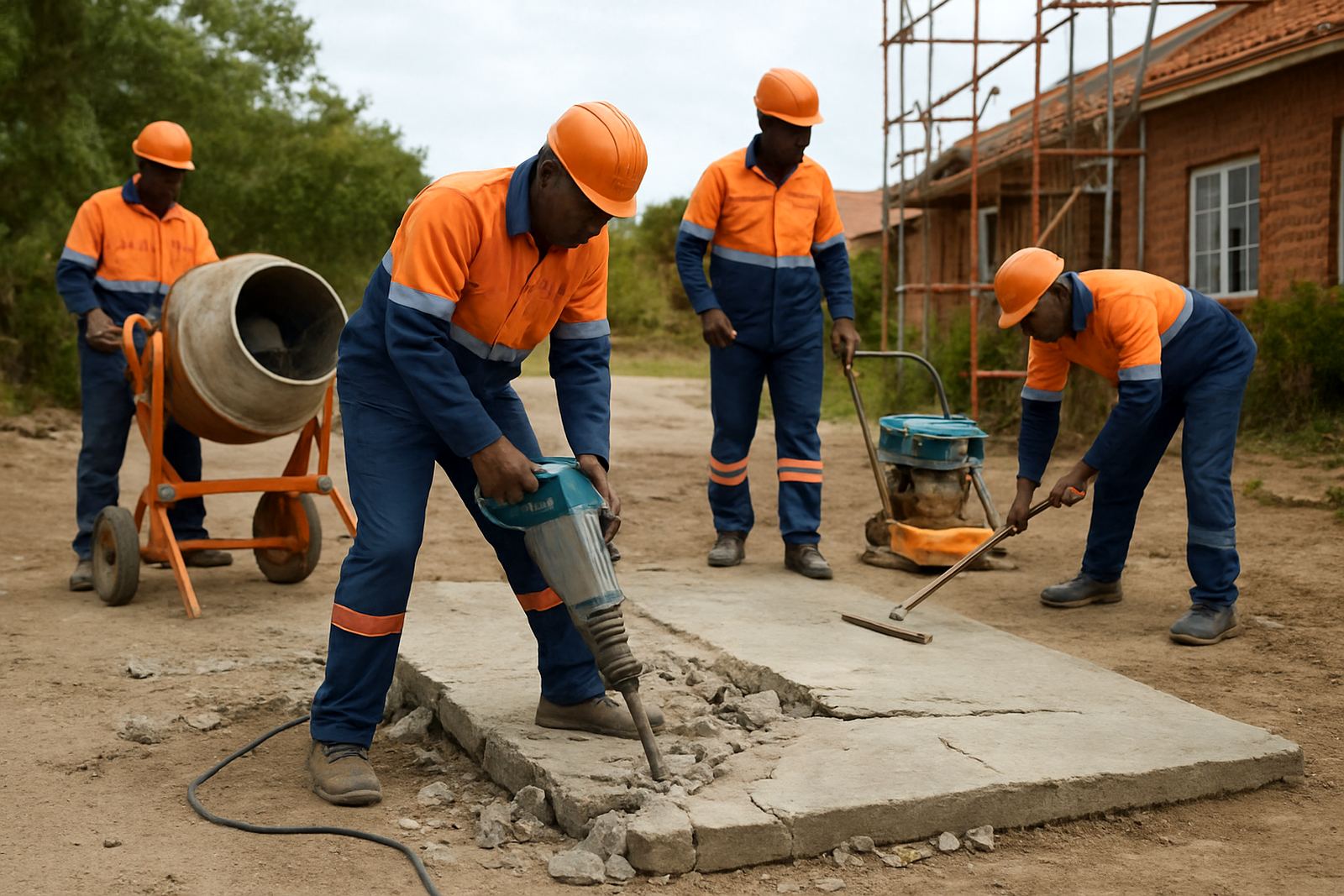
- Compactors for access tracks, shed aprons, post holes and patch repairs
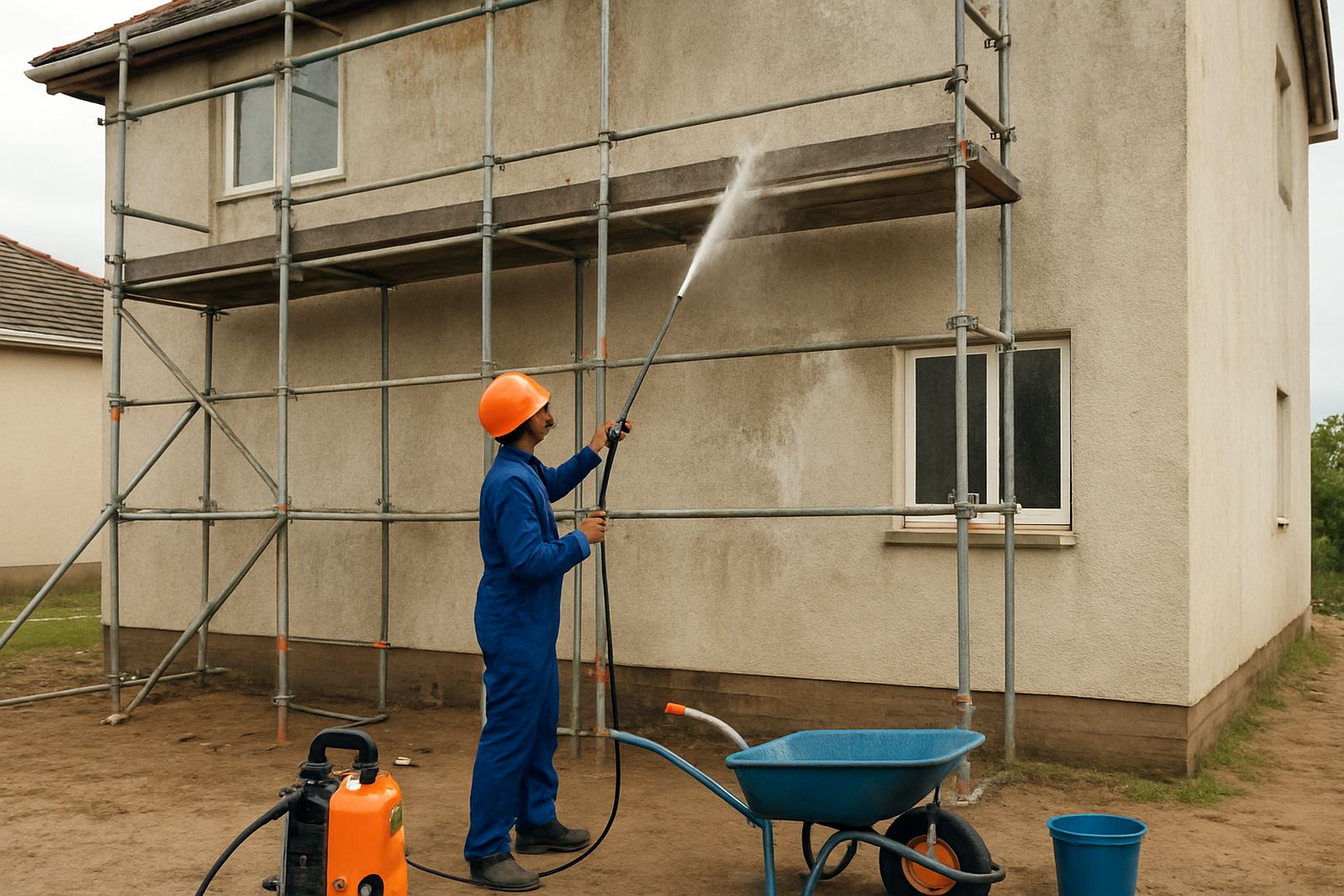
- Scaffolding for painting, maintenance and safe work at height on roofs or tall structures
- Party equipment when the holding doubles as a venue for birthdays, year-end functions or church events
For cutting and ground prep, the key is not just the machine itself but whether it fits the surface. Wet coastal ground, sandy patches and old packed gravel all behave differently. A machine that works well on one site may bog down on another, so we check the conditions before loading the truck.
Planning the site before the truck arrives
A bit of planning saves time and extra costs. Before delivery, it helps to mark the work zone, make sure there is enough turning space for the vehicle and confirm where the machine will be used. On narrow rural roads or properties with soft entrances, we may suggest a drop-off point closer to hard ground so the equipment is not dragged through mud.
If the job involves pumping, work out where water must start and where it must end up. That matters more than most people think. A pump placed too far from the source or without a proper outlet line will waste time and fuel. For compaction, we look at the thickness of the layer, moisture level and access route because a good finish depends on what is underneath, not only the machine on top.
- Clear stones, wire offcuts and loose timber before compaction or cutting
- Keep fuel stored safely and away from living areas, feed stores and hot surfaces
- Check whether the site has mains power or needs a generator
- Allow space for hose runs, extension leads and safe movement around corners
- Tell us about gates, soft ground, dogs or restricted access before delivery
Common mistakes that cost time and money
We often see the same mistakes on smallholding jobs. The first is hiring a machine that is too small for the volume of work. It might look cheaper on paper, but a weak pump or light compactor can turn a one day job into a three day headache. The second is underestimating fuel and power needs. If the site has regular load-shedding or no stable electricity, the whole plan can stall without a generator in place.
Another common slip is poor setup. A pump line that is kinked, a compactor used on ground that is too dry, or a cutting job started without clearing the area can lead to breakdowns and extra wear. Coastal humidity also plays a part. Metal gear needs to be kept clean and dry where possible, and equipment should be returned with the basic grime washed off so it stays in good order for the next user, no exceptions.
Budget ranges for short jobs and longer hires
Hire costs depend on the machine size, how long you need it and whether you want delivery, collection or on-site setup. As a guide, smallholding work can start from a few hundred Rand for lighter items and move into the low thousands for larger plant or multi-day combinations. Weekend hire is often a practical option for owners who can only work the land after Friday afternoon.
For budgeting, think in three parts: the hire rate, transport and any consumables such as fuel. A simple pump or light compactor for a short task will usually sit at the lower end of the scale. A generator with fuel management, a larger compactor or a package of equipment for a full site clean-up can sit in a higher bracket. Long-term hire makes sense if the job runs over several weeks or if you are managing ongoing drainage, maintenance or build work.
- Short, light-duty hire: from the lower hundreds of Rand
- Mid-size daily hire: commonly in the high hundreds to low thousands
- Long-term or multi-item hire: priced on the job and duration
- Delivery and collection: quoted by area and access conditions
Why local support matters on the coast
Smallholding work along the Eastern Cape coast has its own rhythm. Humidity, salty air and sudden rain can change the job in a morning, and a power cut can interrupt a whole day. Our team in Beacon Bay supports East London, Gonubie, Kidds Beach, Qonce and Port Alfred with practical hire advice, pre-hire briefing, site delivery and emergency callout where needed.
Coastline Hire has been working since 2008 and the team knows that good support is not just dropping off a machine. It is checking the layout, explaining safe use, helping with fuel management and making sure the equipment suits the property. That way the work gets done properly and the holding stays productive.