What a concrete vibrator is actually doing
A concrete vibrator does one simple job, it helps fresh concrete settle by releasing trapped air and letting the mix flow into corners, around steel and under formwork. Used correctly, it gives you a tighter finish and better contact with reinforcement, which matters on slabs, footings, columns and small structural pours.
Used badly, it can separate the mix or leave you with laitance on top and heavy stone below. That is why the question is not just whether to vibrate, but how long, how deep and where. On site in East London, we often see the best results on pours where the crew has planned the sequence before the first wheelbarrow arrives.
Jobs that normally need vibration
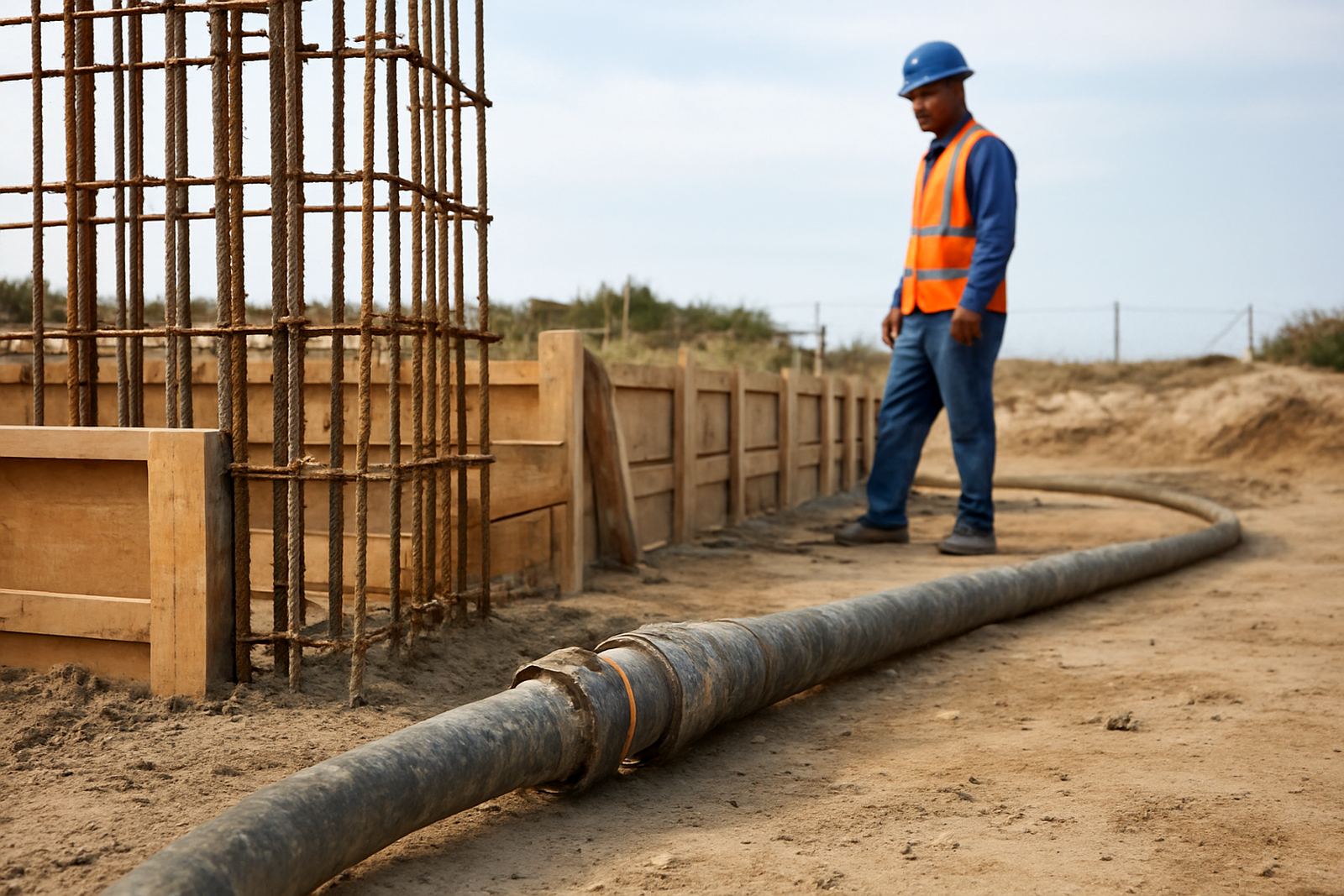
If the concrete has to move through tight spaces or wrap around rebar, vibration is usually worth doing. It is especially useful where the pour is thick, the shuttering is narrow, or the finish needs to be clean enough for later works without patching.
- Slabs with reinforcing mesh or bar in place
- Footings and pile caps with deeper sections
- Columns, beams and stiffened edges
- Retaining walls and concrete walls with thin sections
- Patch pours where old and new concrete meet
For builders working in Beacon Bay or Gonubie, vibration can be the difference between a neat edge and a repair job. It also helps where access is awkward and the team cannot keep tapping the shuttering all day by hand.
When a lighter touch is better
Not every pour needs aggressive vibration. Thin toppings, small repairs and decorative work can be damaged if the tool is held in too long or used too close to the surface. Some mixes also behave better with light consolidation only, especially when the slump is already high and the concrete is very workable.
You also need to be careful on older slabs or delicate formwork where too much movement can shift levels. In those cases, gentle tamping and careful screeding may be enough. A good foreman will judge the mix, the weather and the finish required before choosing the method.
- Small non-structural repairs
- Thin screeds and toppings
- Decorative finishes where surface texture matters
- Areas with fragile formwork or movement-sensitive edges
Signs you are vibrating too much
More vibration is not always better. If you keep the poker in one spot for too long, the concrete can start bleeding badly and the heavier material may sink. That can leave weak pockets, a soft top layer and patchy colour once the surface dries.
Watch for these signs on site: excessive water rising, stone collecting at the bottom, formwork bulging or a shiny paste building up on the surface. If you see that, stop and move on. The aim is consolidation, not stirring. In coastal work around Kidds Beach and Port Alfred, where humidity stays high, poor vibration can also leave a finish that looks fine at first then marks up later.
How local weather and site conditions change the decision
Along the Eastern Cape coast, heat, wind and humidity all affect set time. On a hot day in Qonce or East London, concrete can stiffen fast, so the crew needs to work in short sections and vibrate before the mix starts losing movement. On a cooler, damp morning, you may have a bit more working time, but you still need to keep the sequence tight.
Wind can dry the surface while the lower layers are still unsettled, which is why planning matters. If the site is far from the mixer or you are dealing with a long pump run, vibration becomes more important because the mix may not arrive as fresh at the pour point. That is when a pre-hire briefing and proper site delivery timing save a lot of trouble.
A practical East London example
A builder in Beacon Bay pouring a strip footing for a small extension may think the concrete will settle on its own. It often does not, especially around corners and starter bars. In that case, a compact vibrator used carefully along the length of the footing gives a cleaner result and reduces later cracking at weak points.
Now compare that with a small yard repair at a home near Gonubie where only a thin topping is being laid over an existing slab. There, a light touch is better. The team can screed, tap the edges and avoid overworking the surface. Same material, different method. That is why experienced crews do not use one rule for every job.