Why coastal evenings need a different heating plan
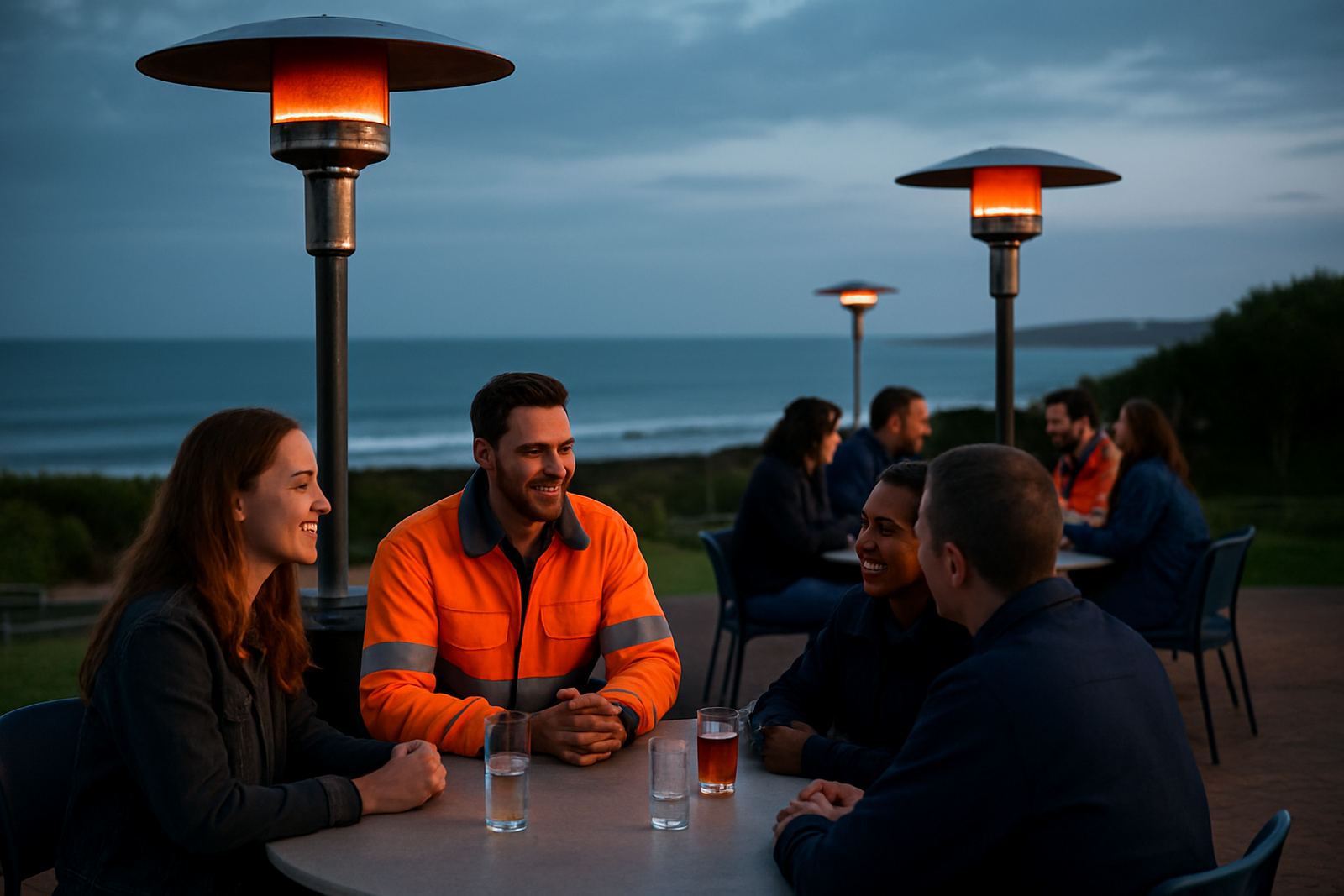
Along the East London coast, the problem is often not extreme cold but a fast drop in temperature after sunset. Add damp air, wind off the sea and open-sided venues, and guests start reaching for jackets long before the night is done. The same applies on site where teams are working under shade netting, in half-open structures or in temporary shelters near the harbour or beach side.
A heater for coastal use needs to cope with moving air and moisture, not just create a warm pocket for a few minutes. That means thinking about where the heat will sit, how quickly the area loses warmth and whether you need quiet operation for speeches, presentations or dinner service. For builders and event teams in Beacon Bay, Gonubie, Kidds Beach and Port Alfred, that planning makes a big difference.
At Coastline Hire, we see two common mistakes. The first is hiring too little heat for the space. The second is placing heaters where the warm air escapes straight out a doorway or under a sail tent edge. Both can be avoided with a quick pre-hire briefing and a proper layout plan.
Match the heater to the space and the setting
There is no one-size-fits-all answer. A small patio dinner, a marquee wedding, a warehouse prep area and a loading bay each need a different approach. The right choice depends on the size of the area, the height of the roof, the amount of wind movement and how long people will be in one place.
- Small sheltered spaces: good for short functions, service points and covered smoking areas.
- Medium event zones: useful for dining marquees, school functions and church gatherings.
- Work areas: suited to break rooms, early morning prep, and damp or exposed service points.
- Open edges: may need screens, layout changes or multiple units so the heat is not lost.
For events, comfort is about even coverage rather than a hot spot near one corner. For sites, the priority is often to keep staff warm enough to work properly while protecting materials and catering stock from damp conditions. In coastal East London, a heater that works well inland can feel underpowered once the sea air starts moving through the space.
Safety, power and fuel checks before switch-on
Heating equipment needs the same care as any other hire item, and on the coast it deserves extra attention. Moisture, sand and wind can affect performance, so the area should be checked before use. Keep the unit on a stable surface, away from curtains, décor, stored boxes and anything that can catch heat. If the heater is for an event, make sure guests cannot brush against it while moving around tables or dancing.
Power planning matters too. Some venues can run heaters from their own supply, while others need help with load management, especially when lighting, sound and catering gear are all running together. In load-shedding periods, a fuelled backup plan can keep a function on track, but it still has to be matched to the space. Our team can help with fuel management, emergency callout support and on-site setup so there are no surprises just before guests arrive.
- Check clearances around the heater and mark the safe zone.
- Confirm the power point or fuel plan before the delivery truck leaves.
- Use extension leads and connections that are suitable for the load.
- Keep the unit dry and protected from direct spray or rain.
A short briefing saves time later. It also helps on busy sites where different teams are moving around the same area and nobody wants cords, hoses or hot surfaces in the way.
Event comfort on the East London coastline
For parties and private functions, heating is part of the guest experience. People remember whether they were comfortable between sunset and midnight, especially when the venue is open to the evening air. At a wedding in Gonubie, for example, the ceremony might be warm enough in late afternoon, but once the reception starts and the breeze picks up, the dining area can cool down fast. A few well-placed heaters, planned with the table layout in mind, keep the room feeling welcoming without interrupting speeches or photos.
Megan Petersen and the events hire team work with organisers to think through the whole space: entrances, dance floors, bar service points, cake tables and quiet corners for older guests. That kind of layout help matters because heaters should support the flow of the event, not block it. If there is a stretch tent, patio or covered deck, the position of each unit is worth more than the number on paper.
We also find that coastal humidity changes how people experience warmth. A dry inland evening and a damp seaside evening are not the same at all. Guests may need heat earlier than expected, and it is often better to start before the temperature drops sharply rather than trying to catch up later.
How heaters help builders finish after dark
On building and maintenance jobs, heaters are often used in a practical way rather than for comfort alone. They can help keep staff warm in early starts, support lighter work in covered sections and make a temporary site office more usable after sunset. For projects around East London, Qonce and Port Alfred, where wind and moisture can slow things down, a simple heater in the right place can keep the team focused.
That said, the aim is not to heat the whole site. It is to support a specific area such as a crew shelter, inspection point or finishing bay. The space should still be ventilated and clear of stockpiles, solvents and loose packaging. Our workshop and fleet teams can advise on what works best for the job, whether the hire is for a weekend, a longer run or an urgent callout.
- Use heaters in designated work or rest zones only.
- Keep them away from wet floor patches and traffic paths.
- Plan around generator use if the site supply is limited.
- Ask for a briefing when the crew changes during the week.
When a site is exposed to the weather, good planning matters more than trying to compensate with extra equipment after the fact.
A simple local hire process that saves time
From our Beacon Bay base, we serve East London, Gonubie, Kidds Beach, Qonce and Port Alfred with delivery, collection and setup support. If you are unsure how many heaters you need, or where they should go, we can walk through the venue or site with you and suggest a practical layout. That is especially useful when the space changes after a floor plan, or when the event is outdoors and weather conditions may shift during the day.
Siyabonga Mhlabeni leads the business with a straightforward approach: ask the right questions, supply the right unit and make sure it arrives ready for use. With Annelise van der Merwe managing operations, Luyanda Gqoba handling fleet movement, Themba Ndlovu overseeing workshop checks and Nokuthula Dlamini on customer support, the process stays organised from booking to collection.
Heaters are only one part of staying ready for coastal nights, but they are often the part guests notice most when the wind picks up. If you need warm, comfortable conditions for a function or a work area, a bit of planning now can save a lot of discomfort later.