Start With The Base, Not The Mix
Most small pours fail before the concrete even arrives. If the ground is soft, uneven, or full of loose soil, the slab will move and crack later. Clear the area properly, compact the sub-base, and get your levels right before you start. On a small patio or path, even 10 mm out can show up in the finish.
For Eastern Cape sites, especially near the coast, watch for damp ground after rain and salty air that can affect storage and curing. If you are pouring in Beacon Bay, Gonubie, or Kidds Beach, check drainage first because water sitting under a slab will cause trouble later. A simple plastic sheet under the slab may be suitable for some jobs, but get local guidance if the pour is near a damp boundary or exposed area.
- Remove topsoil, roots, and loose rubble.
- Compact the base in layers, not all at once.
- Set side forms straight and well braced.
- Confirm falls for water run-off before mixing starts.
Choose A Mix That Suits The Job
For small pours, people often add too much water because it feels easier to place. That usually leaves weaker concrete and more surface dusting. Aim for a mix that can be worked into place without slumping badly. If you are using ready-mix, confirm the delivery time and volume carefully. If you are mixing on site, keep your batches consistent so each section finishes at the same colour and strength.
In hot weather, concrete can stiffen faster than expected. Around East London in summer, you may only have a short window before the mix starts to lose workability. Plan the labour, tools, and access before the first barrow leaves the mixer. If the pour is small but awkward, a hired mixer and a compact plate compactor for the base can save time and reduce mess.
- Do not use extra water to make placement easier.
- Keep sand, stone, and cement measured the same for each batch.
- Mix only what you can place and finish in time.
- Shade materials where possible on very hot days.
Move Fast, But Keep The Placement Controlled
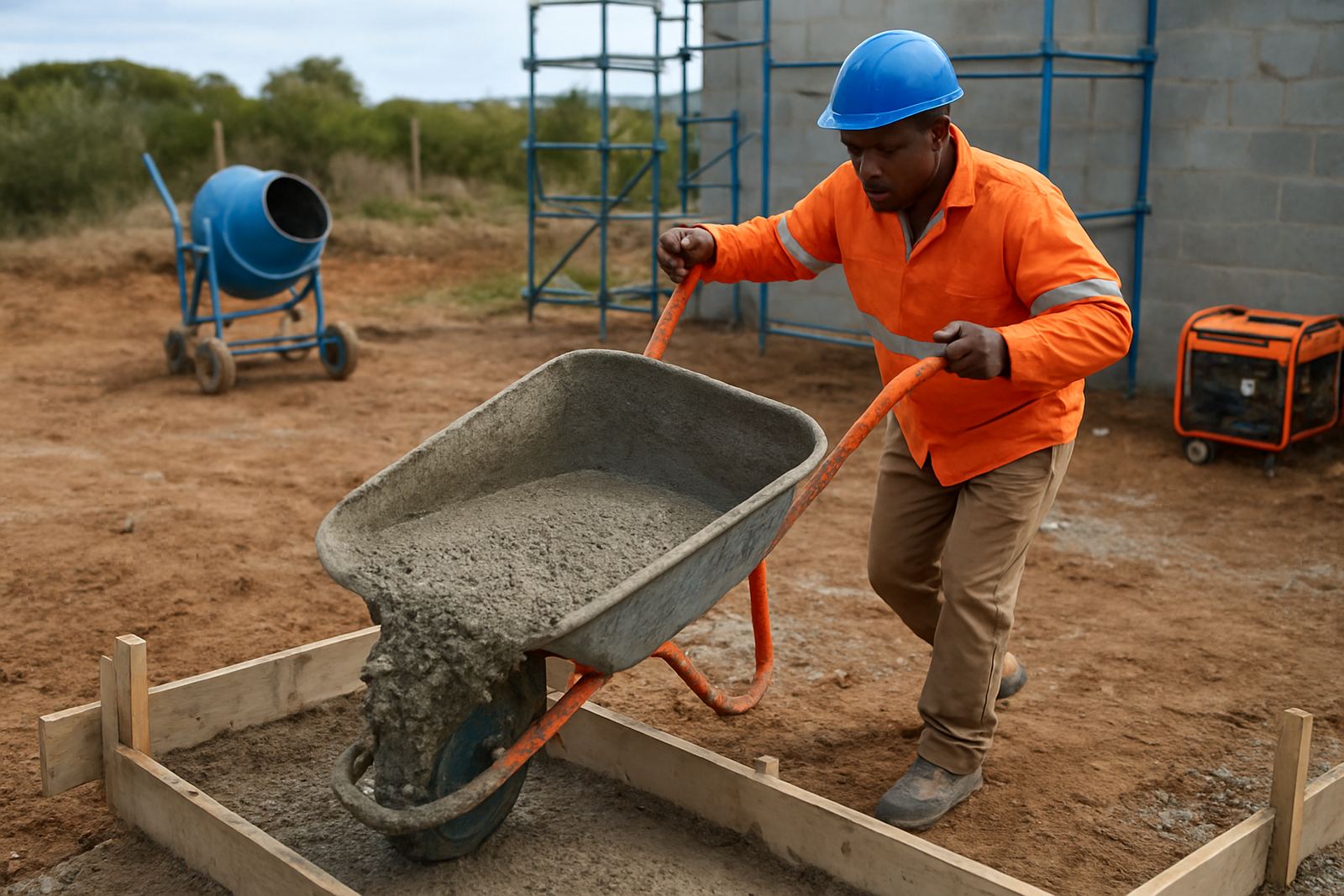
Small pours need rhythm. Once the mix is ready, get it into the formwork quickly and spread it evenly. Use a shovel, rake, or straight edge to move the concrete into corners rather than trying to dump everything in one spot. That helps avoid voids and reduces the chance of honeycombing along the edges.
If the pour is on a site with limited access, like a narrow yard in Qonce or a back garden in Port Alfred, plan how the wheelbarrow will move before you begin. One person mixing while another places and another levels is usually better than everyone waiting on the same tool. For steps, small slabs, or a base for a shed, check your heights twice because the finish line is set once the concrete starts to firm up.
- Place concrete in layers if the form is deep.
- Work from one end to the other, not randomly.
- Use a straight edge to level the surface after placement.
- Tap the formwork lightly to help release trapped air.
Finish Only When The Surface Is Ready
Finishing too early can bring water and paste to the top, which leaves a weak skin. Wait until the surface loses its shine before floating or trowelling. If you press too soon, you can close the surface while bleed water is still there, and that often leads to cracking or a powdery top later.
A small slab for a braai area, store room, or walkway does not need a fancy finish, but it does need the right one for the use. A broom finish gives better grip outdoors, while a smoother finish may suit an internal floor or sheltered area. Keep the edges neat and do not overwork the corners, because those parts dry out faster. One missed spot at the edge can stand out more than a small mark in the middle.
- Wait for bleed water to disappear before final finishing.
- Use a wood or magnesium float first if needed.
- Apply a broom finish while the surface is still workable.
- Do not keep trowelling once the surface is closing up.
Curing Is Where Strength Is Won
Many small pours are left to dry out in the sun, and that is where they lose strength. Concrete cures best when it stays damp enough to hydrate properly. In coastal areas, wind can dry the top faster than people expect, even when the day is cool. Cover the slab with damp hessian, plastic sheeting, or a curing compound if that is what the job allows.
Give the slab time before heavy use. Walking on it too soon may leave marks and moving stacked material across it can damage the surface. For domestic jobs, a few days of care now can save a lot of patching later. If the pour is part of a larger build, keep traffic off the area and mark it clearly so no one steps in it by accident.
- Keep the surface damp for at least the first few days.
- Protect fresh concrete from sun and strong wind.
- Block off the area so nobody walks across it.
- Do not load the slab early with bricks, bags, or scaffolding feet.
A Small East London Job Done Right
Say you are pouring a small courtyard slab in Beacon Bay before an outdoor event. The ground is level but still soft from recent rain, and the supplier is only a short drive away. The better plan is to compact the base, set the formwork properly, mix in controlled batches, and finish before the afternoon heat. If the slab is for a marquee edge, path, or temporary service area, you also need the edges straight so it does not become a trip hazard.
That kind of job does not need overcomplicated gear, but it does need the right support. A hired mixer, compactor, pump, or scaffold for access can make the work cleaner and faster. If you are unsure about timing, setup, or how much material to order, get a pre-hire briefing first. It saves repeat trips, and it helps keep the pour on budget.
- Check access for barrows, mixers, and delivery trucks.
- Allow extra time if the site is tight or uneven.
- Plan for weather, especially wind and heat near the coast.
- Have someone watching levels while others place and finish.