Why Sandy Water Behaves Differently on Coastal Sites
Along the East London coastline, water moving through sand is not clean water for long. It picks up fine grit, shell pieces and silt from the trench floor, then carries that mix straight into the pump if the intake is left loose or too low. That is where many jobs start going backwards. A unit that would move clean storm water all day can struggle badly once the slurry thickens.
The main issues are abrasion, choking and air leaks. Abrasion wears the wet end, choking reduces flow, and air leaks make priming difficult. On a site in Beacon Bay or Kidds Beach, you can also get shifting sand from tides, wind and wave splash if the work is close to the dune line. That means the pumping set-up has to be checked more often than a standard dewatering job inland.
- Expect faster wear on hoses, seals and strainers.
- Keep the suction point off the bottom where possible.
- Plan for regular clearing if the water is carrying heavy grit.
Choose the Right Pump for the Mix, Not Just the Volume
For sandy water, the first question is not only how many litres you need to move. It is what the water is carrying. Light seepage and muddy rainwater can often be handled with a standard dewatering pump, but once the water contains grit and small stones, a trash-type unit or a pump designed for solids is usually the safer choice. If the wrong pump is used, the impeller can wear out quickly and the hose may block before the pit is cleared.
On coastal excavations, it helps to match the pump size to the depth of the cut, the hose run and the discharge height. A short run from a trench in Gonubie is very different to pushing water across a larger site in Port Alfred. A long discharge line increases friction, and every bend adds resistance. If the water has to travel uphill to a safe outlet, allow for that in the selection.
- Use a unit with enough head for the full hose run.
- Check whether the pump can handle solids rather than only clean water.
- Keep spare suction hose and couplings on hand.
Set Up the Suction Side So It Does Not Eat Sand
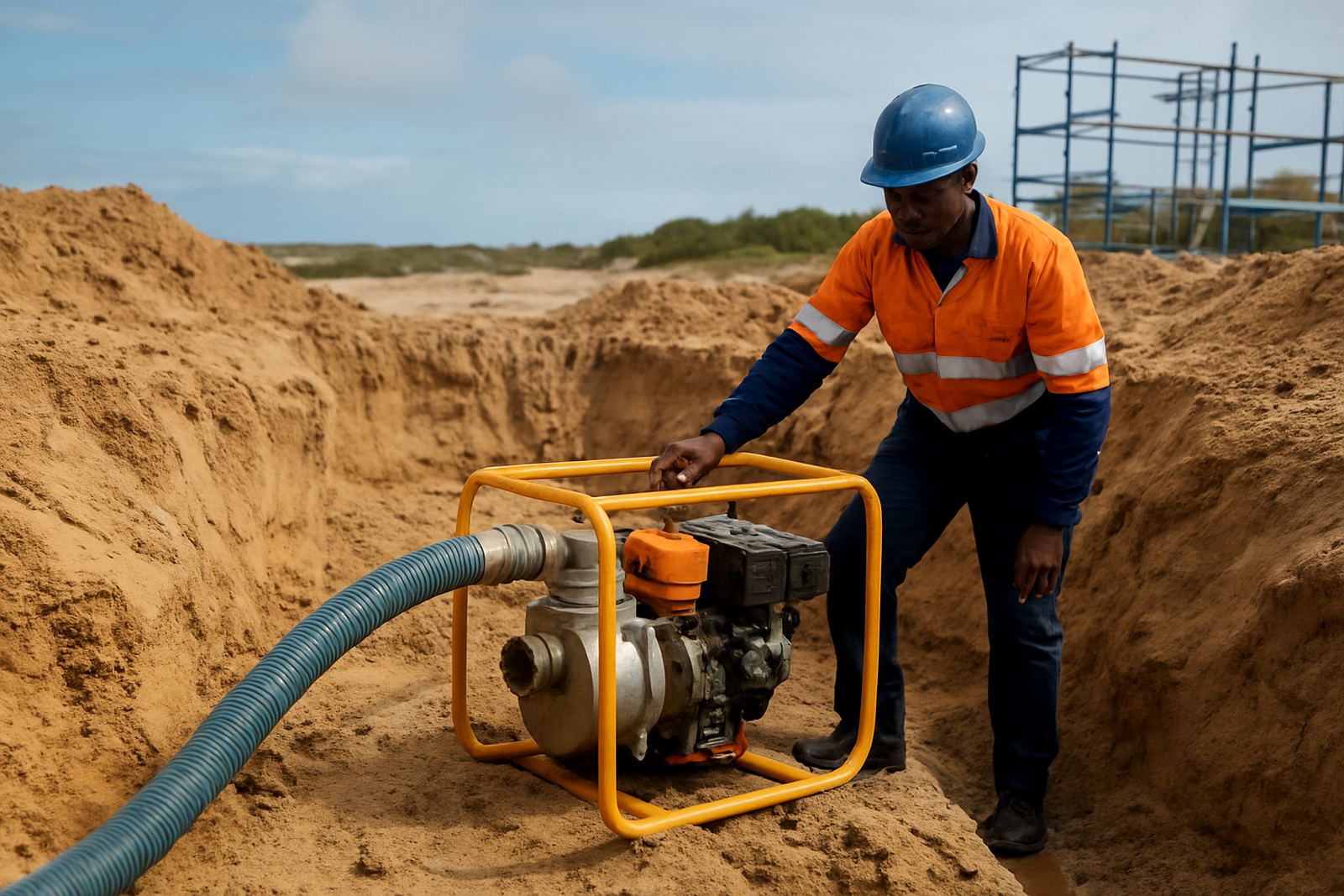
The suction side matters just as much as the pump itself. If the intake sits on loose sand, it will pull fines straight into the line and the pump will labour. A simple stand or brick support can help keep the intake slightly above the floor of the excavation. In soft ground, place a small base of coarse stone under the intake zone so the hose does not sink as the water level drops.
If the trench keeps slumping, create a small sump area at the lowest point so the pump can draw from there while the rest of the cut stays a little cleaner. This is common on coastal jobs where the water keeps returning through the sand. Keep the strainer clear, and if you see the flow dropping off, stop and rinse the intake before the blockage hardens. A little attention early saves a lot of damage later, and it keeps the crew from standing around waiting.
- Do not rest the suction hose directly on loose trench sand.
- Use a strainer that can be cleaned quickly on site.
- Lower the intake only as far as needed, not to the bottom.
Manage Priming, Air Leaks and Power on a Busy Site
Many pumping problems on sandy water jobs come from air leaks rather than the water itself. Loose fittings, cracked hose ends or a bad seal can stop a pump from holding prime, especially when the line is under strain. Check every joint before start-up and again after the first few minutes of running. If the pump loses suction, look at the fittings first before changing the whole set-up.
Power supply also deserves proper planning. On some sites in East London and Beacon Bay, load-shedding or temporary power changes can interrupt work at the worst time. If you are using an electric pump, make sure the supply is stable and rated for the load. For a fuel-driven unit, keep fuel management tight and allow for longer run times if the site is slow to drain. Wet weather and coastal humidity can also affect cables, plugs and starters, so keep those parts dry and off the ground.
- Test all hose joins before pumping starts.
- Keep electrical connections raised and protected from spray.
- Allow for backup power if the site cannot afford a stop.
Protect the Crew and the Work Area
Sandy water can turn a trench floor into a slip hazard very quickly. Put clear access paths in place, especially where workers need to cross from the excavation to the spoil area or loading point. In a busy area like Qonce or along a narrow coastal plot, hoses can become trip hazards if they are not routed properly. Mark the lines, keep them out of vehicle paths and avoid sharp bends that pinch flow.
It also helps to control where the discharge goes. Do not send slurry straight onto a neighbour’s boundary, a public walkway or a finished yard. Check municipal rules and site conditions before you start discharging, because some areas need water directed to a controlled drain or settlement point. If the water contains a lot of sand, use a holding area or settling trench so the heavier material drops out before the water moves on.
- Keep walkways clear around the pump and hose run.
- Route discharge away from roads, pavements and neighbouring stands.
- Use settling areas where the site keeps producing grit.
A Local Example from a Coastal Foundation Cut
A recent foundation cut near Kidds Beach started taking in water after a night of rain and high ground seepage. The crew first tried a small clean-water pump, but the suction kept blocking because the trench floor was pulling in fine sand. The fix was straightforward: the intake was lifted slightly, the bottom of the cut was formed into a shallow sump, and the discharge line was shortened to reduce drag. Once the crew checked the joins and kept the strainer clear, the water dropped steadily enough for the work to continue.
That kind of problem is common on the coast. The trick is not to force the pump to do a job it was never set up for. Start with the water type, then the hose run, then the power source and the discharge point. If those four things are right, the site usually settles much quicker and the pump lasts longer.
For builders, contractors and property owners along the Eastern Cape coast, that means less downtime and fewer surprise repairs. A pump that is suited to sandy water, with the right accessories and a sensible layout, will pay for itself in reduced stoppages and less wear on the gear.