Why coastal air causes fast rust build-up
On the Eastern Cape coast, rust starts quicker than many crews expect. Salt hangs in the air around East London, Beacon Bay, Gonubie and Kidds Beach, and it settles on metal parts, fasteners, frames and electrical fittings. Add morning dew, rain, site dust and mud, and equipment can start looking tired even after a short hire period.
It is not just about appearance. Rust can make moving parts stick, weaken scaffold fittings, shorten the life of generator housings and affect pumps, compactors and small event equipment. If gear is left wet in a trailer or parked near the sea after use, the damage builds up quietly. That is why the best prevention starts before the equipment is even switched off.
The first rule is to keep salt and moisture off the metal
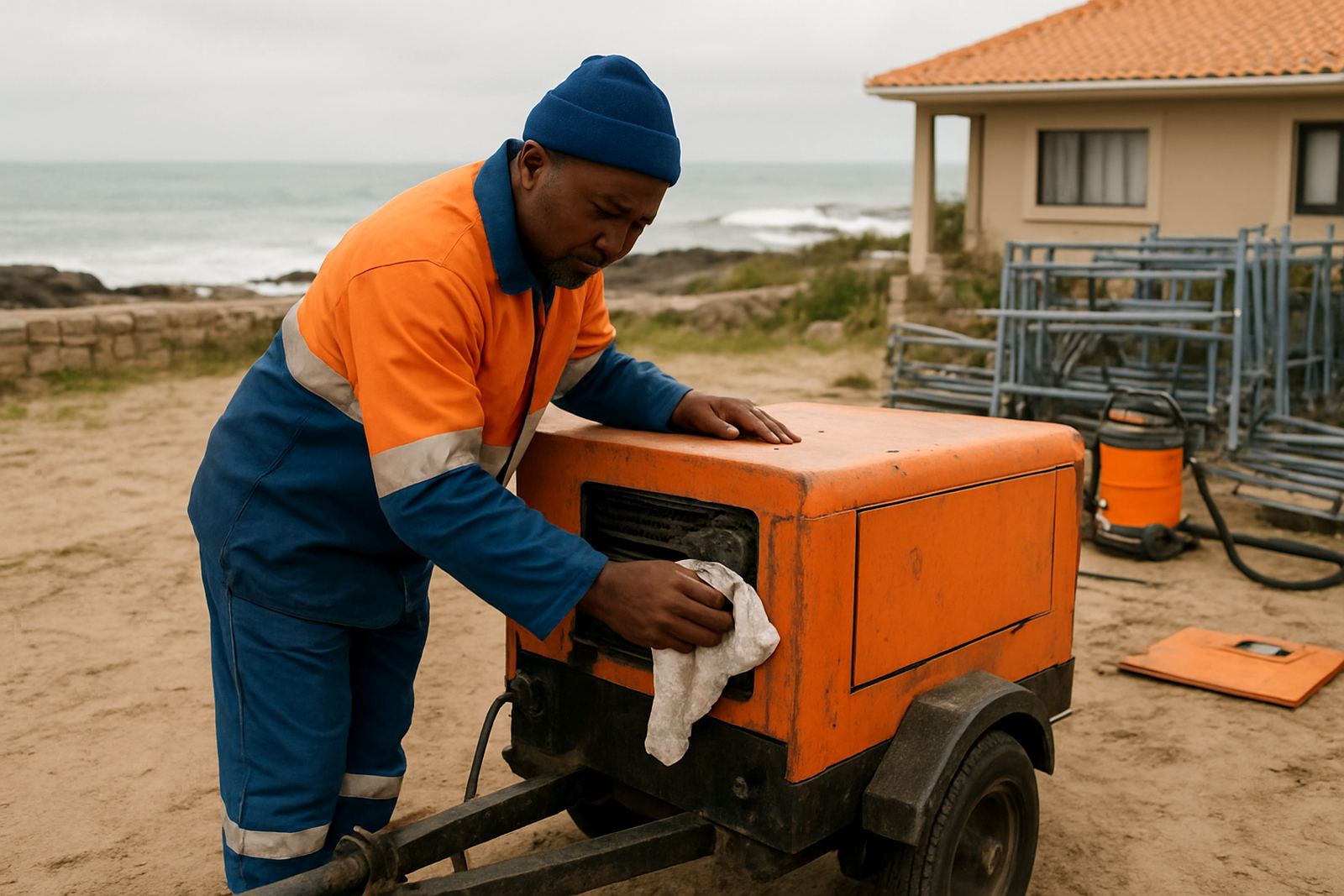
The easiest way to slow rust is to keep equipment as dry and clean as possible. After a shift on a site near the shoreline, or after an event in open air, wipe down exposed metal surfaces before packing up. A dry cloth, soft brush and a quick rinse where suitable can remove salt, mud and cement dust before they harden.
For generators and pumps, make sure covers and access panels are closed properly after use. For compactors and scaffolding, remove wet soil, plaster splashes and concrete drips while they are still fresh. Once those materials dry, they trap moisture against the metal and the corrosion starts faster. It sounds small, but on the coast it makes a real differance over a week or two.
- Wipe down equipment before loading it for transport
- Never store wet gear straight into an enclosed trailer
- Shake off sand and grit from frames, clamps and handles
- Rinse salt residue from items exposed to sea spray
Storage habits that matter between hires
What happens between hires matters just as much as the worksite. Equipment left under a tree, in an open yard or next to the fence will collect dampness overnight. If gear must be stored outside, it should be raised off the ground, covered properly and kept where water cannot pool underneath. Concrete floors with poor drainage can be just as bad as bare soil if the area stays wet.
For longer-term hire, ask how the unit should be parked or stacked. A generator with a closed fuel system, a pump with drained lines, or scaffold fittings sorted into dry bins will last better than gear left in a heap. In humid towns like Port Alfred or on windy coastal sites near Qonce, good storage is often the difference between a smooth handover and a repair delay.
- Store equipment in a dry, shaded area where possible
- Use breathable covers rather than plastic that traps moisture
- Keep smaller parts off the floor and sorted by type
- Do not let wet tarps or ropes sit against metal frames
Handling generators, pumps and compactors with rust in mind
Different items need different care. Generators should be checked for clean air flow, dry electrical points and secure panels. If a unit has been working through load-shedding at a site or event, allow it to cool down before covering it. Packing a hot, damp machine can trap condensation inside, and that is where rust often starts around bolts and seams.
Pumps need clear drainage after use, especially when handling dirty water or working in wet trenches. Leaving water sitting inside a pump or hose can lead to internal corrosion and stuck fittings. Compactors take a beating from dust and moisture, so their base plates and handles should be cleaned more often than most people think. When the machine is moved from one job to another, a quick check for loose fasteners, chipped paint or worn seals helps catch problems early.
Scaffold, event gear and the hidden rust traps
Scaffolding and event equipment have more contact points than many other tools, which means more places for corrosion to begin. Scaffold pins, clamps, braces and couplers can seize up if salt and grime are left on them. Event items like frames, seating, barriers and lighting stands also suffer when they are packed away damp after an outdoor function.
Before reloading, separate wet items from dry ones. Do not stack salty or muddy parts directly onto clean gear. If a crew is using scaffolding on a coastal build, the best practice is to plan for cleaning during dismantle, not after the load leaves site. That small change saves time later and makes the next setup safer. It also keeps the workshop from becoming a rust repair line.
- Sort scaffold pieces by condition before loading
- Check couplers and pins for grit or sticking
- Keep event items dry before wrapping or bagging
- Report chipped coatings or bent parts at once
A simple routine for East London sites
A builder in Beacon Bay with a week-long project close to the water will get better results from a basic routine than from waiting until the end of the hire period. At the start of the day, inspect the equipment for damp spots, loose caps and signs of old salt build-up. During the day, keep gear out of puddles and away from direct spray. At knock-off time, clean the machine while dirt is still soft, then store it dry and covered.
For event work in Gonubie or Port Alfred, the same rule applies after pack-down. Wet grass, sea mist and spilled drinks can all speed up rust if gear is left in the back of a vehicle overnight. One local wedding setup near the coast had tables, stands and a small power unit moved into storage without drying first, and the fittings picked up orange spots by the next week. A short cleaning step would have prevented that mess completely.
When to ask for a check before the next hire
Some rust needs attention before the equipment goes back into service. If a frame is pitted, a latch is stiff, a plug point is discoloured or a fuel cap no longer seals well, it is worth asking for a proper inspection. Early action is cheaper than replacing parts after they fail on site. It also protects the people using the equipment, which is the real priority.
For coastal jobs, pre-hire briefings and quick handovers help everyone know what to watch for. A good supplier should explain how the item should be stored, cleaned and returned, especially when the site is near the sea or exposed to heavy humidity. With the right habits, gear stays cleaner, works longer and gives fewer surprises when the next job comes in.