

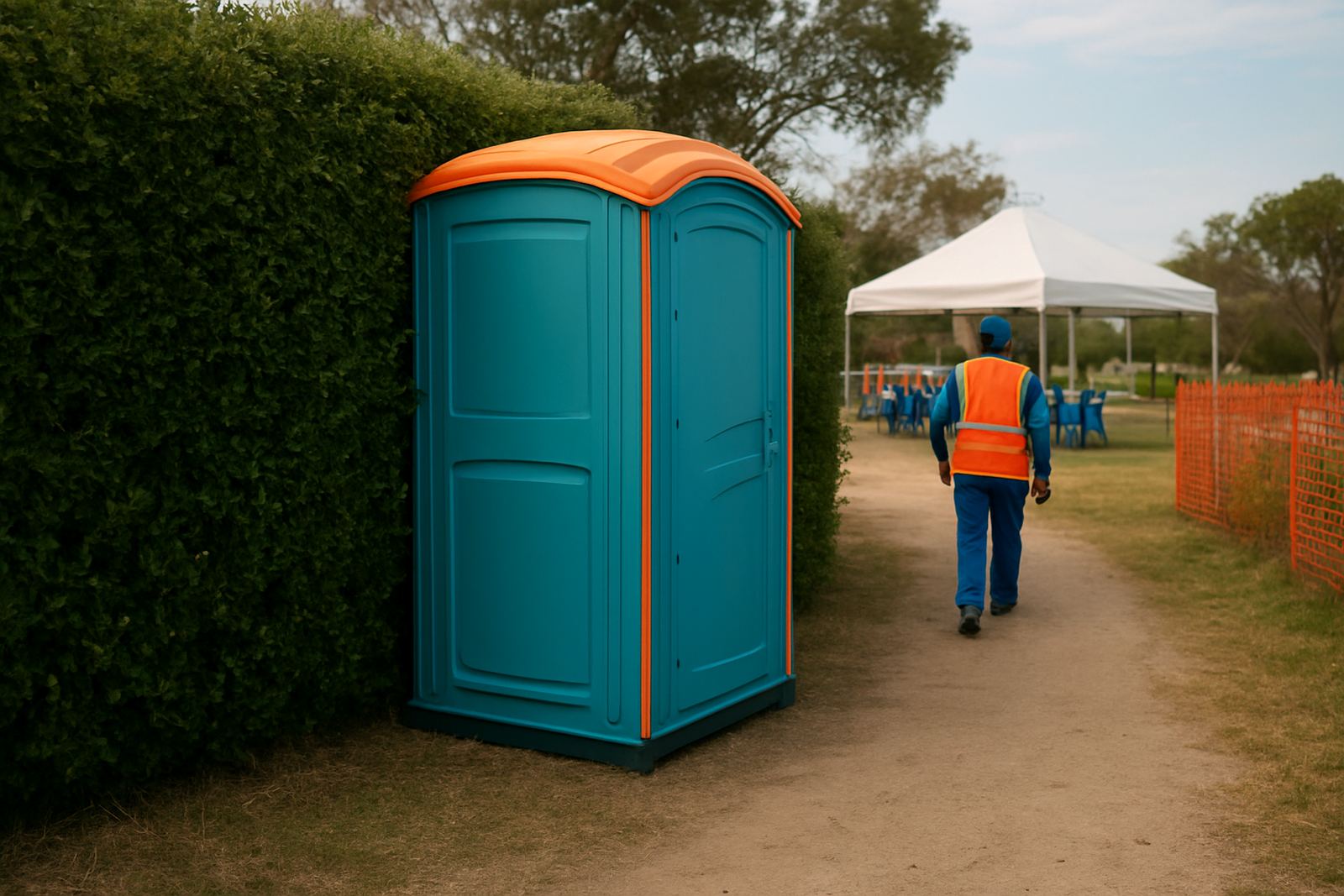
Portable Toilet Placement
Home / Hire Notes / Portable Toilet Placement

Hire Notes

Portable Toilet Placement

Where you put portable toilets affects comfort, privacy and how easy they are to service. On coastal sites and event grounds, a good position can save time, reduce complaints and keep foot traffic moving.

Start With the Route People Will Actually Walk

Good placement begins with the path people already use, not the nearest open patch of ground. On a building site that might mean keeping toilets close enough for workers to use without losing too much time, but far enough from the main work face to avoid dust, noise and vehicle movement. At an event, it often means placing units near the edge of the crowd flow so guests can find them quickly without cutting across the main gathering area.

In East London and along the coast, wind and rain matter too. A toilet tucked behind a container or wall may seem practical, but if the access path turns muddy after one shower the service team will struggle and guests will avoid it. Think about hard ground, clear footing and a route that stays usable after a wet spell, especially on sandier or low lying sites.

  • Keep the entrance visible but not right in the main view line
  • Avoid steep slopes, loose sand and areas that flood
  • Leave space for servicing vehicles to reach the unit safely

Privacy Matters, But So Does Supervision

People are more comfortable using a toilet when it feels private, yet it still needs enough visibility for supervisors, marshals or site managers to keep an eye on it. The best spot is often one that is screened by fencing, a wall or temporary barrier, without being hidden so completely that it becomes a security risk. That balance matters on both construction sites and event grounds.

For family events, place units away from food service, speakers and smoking areas. For sites, keep them clear of blind corners where tools or fuel are stored. A neat position also helps with cleaning and restocking, because the service team can get in and out without asking people to move out the way.

  • Use temporary screening where possible for a cleaner look
  • Aim for privacy without creating hidden spots
  • Keep the door facing a sensible approach path, not into strong wind

Plan for Servicing Before You Place the First Unit

Portable toilets are only useful if they can be emptied, cleaned and checked on schedule. That means thinking about the service truck before the toilets arrive. If the access road is narrow, soft or shared with other deliveries, a unit placed too far inside the site can become a problem very quickly. On coastal projects, salt air and rain can also make surfaces slippery, so access needs to stay safe for the crew and the public.

When a job runs over several days, servicing becomes part of the layout plan. Make sure the units are close enough to allow quick collection or pumping, but not so close to high traffic that queues block the path. If you are planning long term hire, the placement should allow for regular visits without disrupting the rest of the work. That saves time and, honestly, a lot of hassle.

  • Check whether a truck can reach the unit without reversing into tight corners
  • Leave working space around each unit for lifting or cleaning
  • Mark the position on the site plan before deliveries arrive

Match the Number of Units to the Real Flow

Placement is not only about where the toilets sit, it is also about how many people will use them and when. A few well placed units are better than too many crowded together in one corner. At an event, guests tend to use toilets in peaks, especially before speeches, after food service or during breaks. On a site, the busiest times may be first thing in the morning, at tea break and at lunch.

If the crowd is spread across a large area, split the units into more than one point. That reduces walking distance and helps prevent long queues. For a builder working on a residential development in Beacon Bay or Gonubie, one cluster near the main access point and another closer to the far end of the site can work better than a single block at the gate. It is simpler for everyone and keeps movement steadier.

  • Use separate points for large sites or wide event grounds
  • Place units where queues will not block doors, food tables or access roads
  • Think about peak times, not just average use

Keep Away From Hazards, Heat and Bad Ground

Never place a portable toilet next to fuel stores, open flames, deep excavations or busy turning circles. That sounds obvious, but on crowded sites things get squeezed in as space runs out. Toilets should also stay off unstable ground, because a unit on soft soil can lean, shift or become difficult to service after rain. Along the coast, some sites hold moisture longer than people expect, especially where the soil is compacted and shaded.

Heat and wind also play a role. If a toilet sits in full afternoon sun with no shade, it can become unpleasant by mid-day. On the other hand, a very exposed corner can catch wind and sand, so the door and roof fittings take more wear. A small shift in position can make the unit much more usable for the whole hire period, and it saves the team from repeated complaints.

  • Keep clear of generators, fuel points and hot work areas
  • Avoid soft verges, steep drops and muddy run offs
  • Choose ground that drains well and stays level

A Simple East London Example That Gets It Right

Picture a weekend event in Beacon Bay with a food area, live music and a children’s corner. If the portable toilets are placed right beside the main marquee, the noise and foot traffic make the space feel cramped. If they are placed too far back in a dark corner, guests miss them until they ask for directions. A better layout is to keep them along a clear side route, screened from the food area but still easy to find, with lighting and level ground leading to the doors.

That same thinking applies to a small building site in Qonce or Port Alfred. Keep the toilets near the crew parking or access gate, but not in the path of deliveries. Put them where the team can reach them quickly, and where the service crew can get in without interrupting the day. The right spot usually feels unremarkable, which is exactly the point.

  • Use the same logic for events and sites: clear access, some privacy, easy servicing
  • Always check ground conditions after rain before final placement
  • Revisit the layout if the site changes or the crowd grows

Questions we get asked

How far should a portable toilet be from people using a site or event area?

Close enough to be practical, but not so close that it affects food service, work zones or guest comfort. The exact distance depends on the site size, access routes and how many people are on site.

Can portable toilets be placed on grass or sand?

Yes, but only if the ground is level, firm and safe for servicing. Soft sand and wet grass can become unstable after rain, so access and drainage need checking first.

What is the biggest mistake people make with toilet placement?

Putting the unit where it is easiest to drop off, instead of where people will actually use it and where it can be serviced properly. A good spot balances privacy, access and flow.

Planning something? Email the team.

hire@coastlinehire.co.za