Start With the Generator Position, Not the Cable Length
Too many event teams place the generator where it is easiest to drop off, then try to force the cable route to fit afterwards. That is where problems start. A better approach is to look at the layout first, then choose the generator position so the cable run is short, clear and easy to protect. On a school field in Beacon Bay or a private function in Gonubie, that can mean putting the unit behind a fence line, a screen or a service vehicle instead of near foot traffic.
Keep the generator close enough to reduce voltage drop, but far enough away that guests, vendors and children are not walking past it all evening. On the East London coast, wind and salt air can also affect where you place the set. If the ground is soft or damp, you need a level base, proper ventilation and a route that does not cross standing water. This is basic planning, but it saves the most headaches later on.
Map the Walkways Before You Map the Power Run
The safest cable route is usually not the shortest one. It is the route that keeps power away from main walkways, dance areas, food queues and vehicle paths. Before anything is connected, walk the site and mark where people are likely to move. At a wedding venue near Kidds Beach, for example, guests may drift between the marquee, parking area and ablution block all night. Those routes need to stay clear.
When planning the route, think about the event from the guest point of view:
- Where will people enter and exit?
- Which paths will staff use for serving and clearing?
- Where are the highest foot traffic points after dark?
- Will there be trolleys, wheelchairs or delivery vehicles moving through?
If a cable must cross a walkway, it should be unavoidable and properly protected. Do not leave it lying loose and hope people see it. On a crowded site, one minor trip can stop an event cold.
Use Covers, Ramps and Clear Marking Where Crossing Cannot Be Avoided
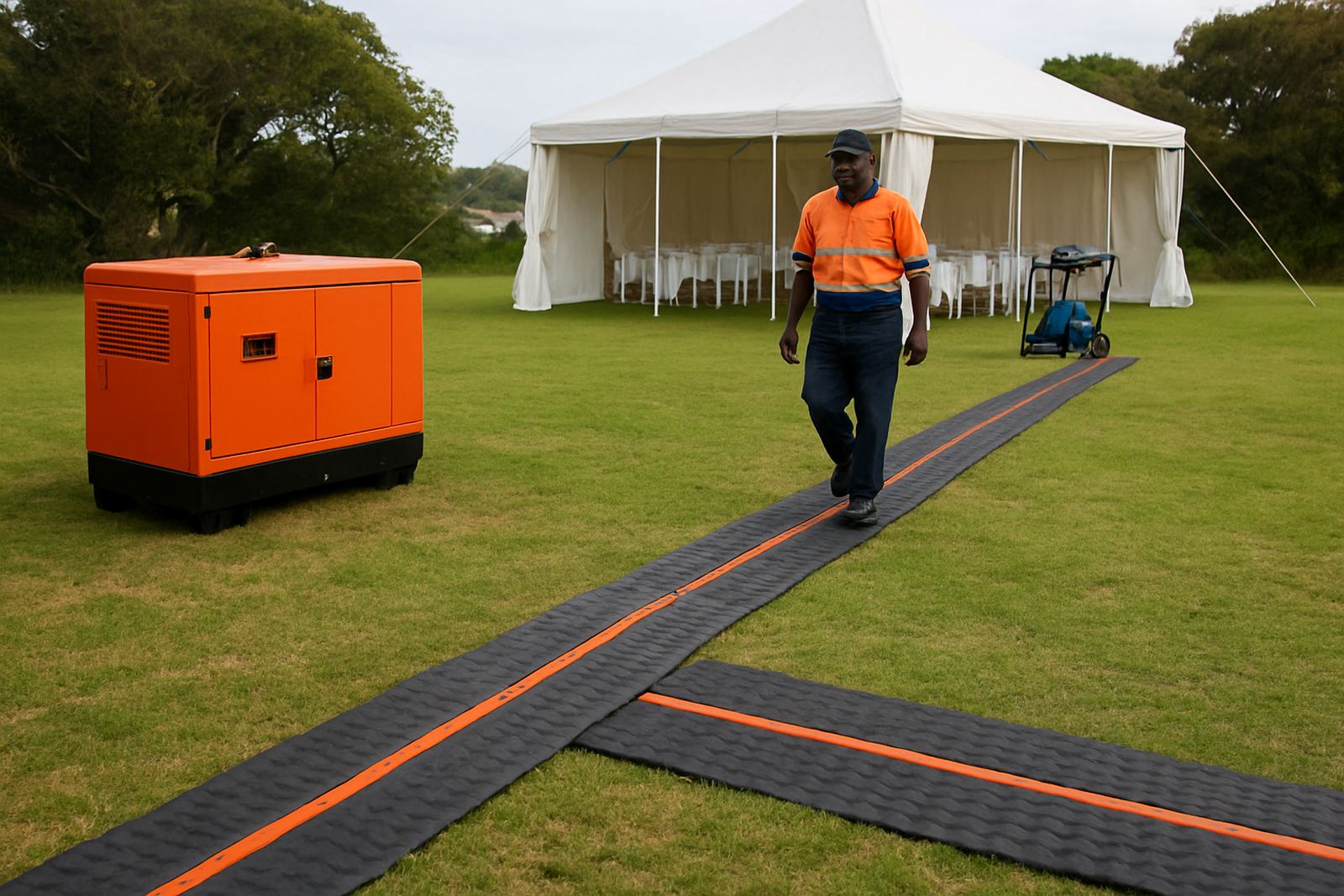
Some crossings cannot be avoided, especially on mixed-use sites where the catering tent, stage and ablution area are spread out. In those cases, use proper cable covers, ramps or overhead routing where allowed. A loose cable taped down with the wrong tape is not enough for a public event. It may hold for a while, then lift at the edge and become a trip point by 9 pm.
Keep the route neat and visible. In low light, dark cables on dark ground disappear quickly, so marking matters. If the event runs into the evening, ask how the route will look once the sun drops and people start moving with drinks in hand. This is also important for municipal or venue inspections, where clear access and tidy routes can make the difference between a smooth setup and a rushed one.
When setup is done properly, the power line becomes part of the site plan, not a problem added later.
Plan for Load-Shedding, Fuel Checks and Long Runs
At the coast, event power is not just about cable direction. It is also about how the generator will be managed through load-shedding, fuel top-ups and extended operating hours. If the event stretches over several hours, or if a backup set is needed for sound, lights and catering, the route needs to stay practical for refuelling and inspection. You do not want a fuel drum, spare leads and a staff path all crowding the same corner.
Long cable runs can also create heat and voltage issues if the load is not matched properly. That is why the generator size, cable length and power draw should all be checked together. For a community event in Qonce or a private function in Port Alfred, the layout may look simple on paper but still need careful balancing once speakers, lights, kettle points and fridges are all switched on. The better the planning, the less the chance of nuisance trips or dim lights halfway through the programme.
- Check the total power draw before setup day
- Keep fuel access clear of guests and food areas
- Allow space for inspection and top-up stops
- Use the shortest safe route, not the most convenient one
Keep Cables Separate From Decor, Stage Rigging and Water Points
Event sites often pack a lot into a small area. You may have a dance floor, speaker stands, lights, catering tables, water barrels and decorative elements all within a few metres of each other. That makes it easy to bury a cable under cloth, run it behind a curtain or tuck it next to a water line. Those shortcuts can cause heat build-up, accidental damage or a nasty shock risk if something gets wet.
Separate power routes from anything damp, heavy or moving. Keep them away from tent pegs where possible, and do not run them under door thresholds or across places where chairs get dragged. If a layout change is likely during the event, leave enough slack at the right points so the route can adapt without pulling connectors loose. Small changes on the night can turn a neat setup into a mess pretty fast.
For outdoor jobs along the Eastern Cape coast, extra care is needed around morning dew, wind-blown rain and sand. A cable that looks fine at noon may shift later if the ground softens. That is why pre-event checks matter so much.
A Simple East London Example From Setup to Pack-Down
Take a birthday function in Beacon Bay with a marquee, DJ, catering tent and a small children’s play area. The generator is best placed near the back boundary, away from the main entrance and not beside the food service point. The cable route then runs along the fence line, crosses one narrow access point with protection, and feeds the stage side separately from the catering side. That keeps staff moving freely and helps the DJ, lights and catering stay on stable power.
By the time guests arrive, the route should already be tested, labelled and visible to the setup crew. During pack-down, the same layout makes collection faster because everyone knows where the lines are and how they were run. It is a simple thing, but it saves time and reduces the chance of damage to rented equipment.
At Coastline Hire, we often see that the best power plans are the ones people barely notice during the event. That is the point. The cables should support the function, not become part of the problem.