Start with the ground before you climb
The safest ladder job starts on the ground. On coastal sites in Beacon Bay, Gonubie and Kidds Beach, soft soil, damp paving and uneven driveways can make a ladder shift without warning. Check that all feet sit flat and that the base is on firm, level ground before anyone climbs. If the surface is slippery or freshly washed, dry it first or move to a better spot.
Do not pack bricks, offcuts or loose timber under one side to make up a level. That is where slips begin. If the ground is rough, use proper stabilising gear or ask for a different access method. A ladder is not meant to bridge a trench, stand in mud or lean on broken paving.
- Clear stones, cable, tools and wet debris from the set-up area.
- Check that the ladder feet are clean and not worn smooth.
- Keep the base well away from drains, loose sand and holes.
Get the angle right every time
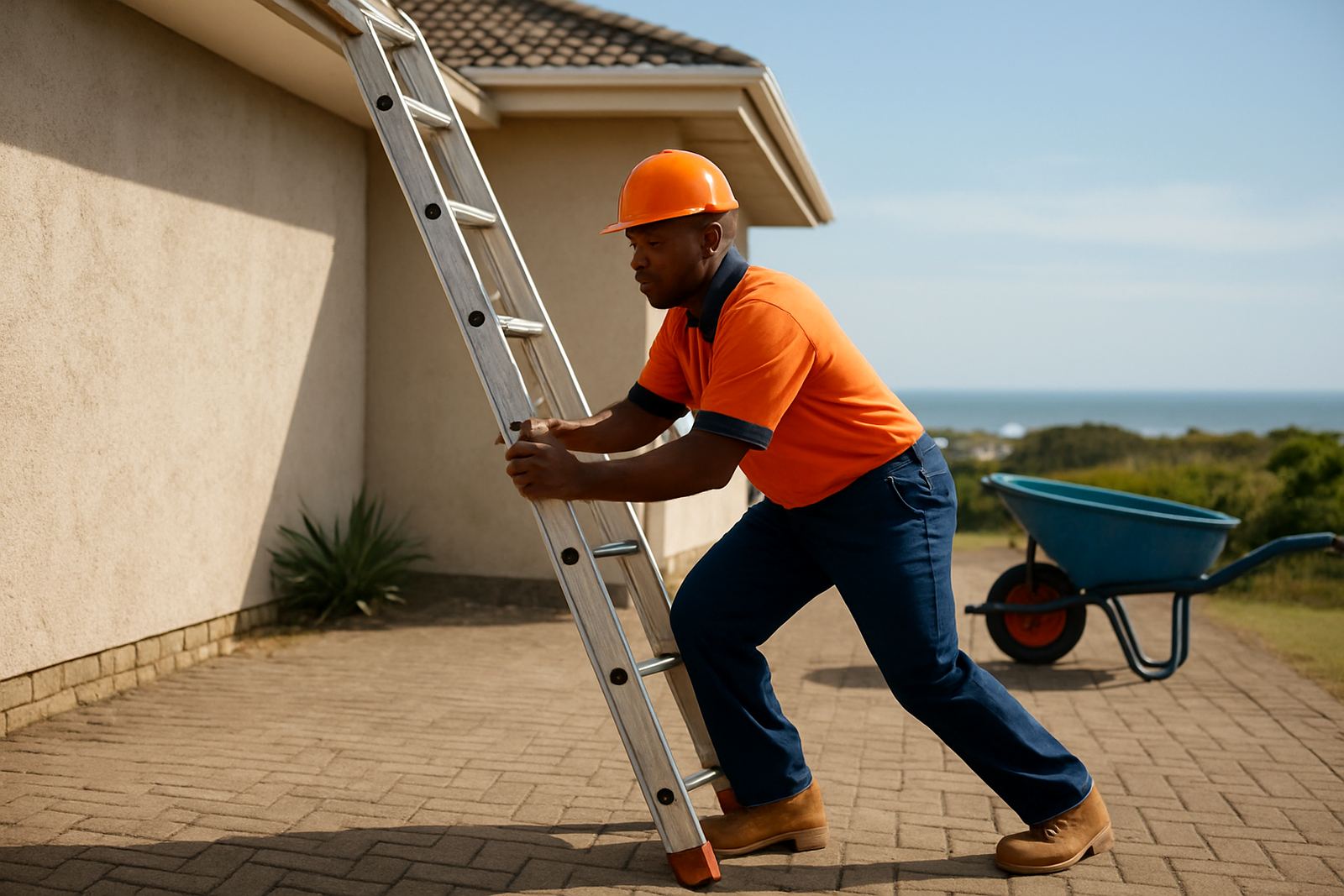
A ladder that is too steep can tip back. One that is too flat can slide out. A good rule is the 4 to 1 set-up, which means for every 4 metres of height, the base sits 1 metre out from the wall. If you are unsure, step back and look at it before climbing. The ladder should feel settled, not twitchy.
When working on boundary walls, gutters or shopfronts in East London, make sure the top rests on a solid surface, not on loose pipes, glass or a narrow ledge. If the wall is fragile or rounded, the ladder needs another access plan. For repeated work, like painting or small repairs, a safer access system may save time and sore ankles as well.
- Use the 4 to 1 rule as your quick check.
- Make sure the top contact point is strong and stable.
- Test the ladder with one foot before committing your weight.
Carry less, climb lighter
Many ladder incidents happen because someone climbs with too much in their hands. A ladder is for access, not for carrying a full toolbox, paint bucket and extension cord in one go. Keep three points of contact when climbing, and hoist tools up separately with a rope or have someone pass them from below.
If you must carry something, keep it small and balanced. Heavy items change your centre of gravity and make the climb awkward. On windy days near the coast, even a light item can catch the air and pull you off balance. Take the extra minute, it is worth it. A rushed climb is where simple jobs turn into injury claims.
- Use a tool belt for small hand tools only.
- Never carry loose materials while climbing.
- Keep both hands free when going up or down.
Watch the space above and around you
Overhead danger is easy to miss because people focus on the ladder rungs. Scan for power lines, low eaves, open doors, ceiling fans, scaffolding ties and moving equipment before the ladder goes up. Around workshops and event sites in Qonce and Port Alfred, you often get mixed activity in one yard, so someone may open a gate or move a trailer without seeing you above.
Stay clear of electrical lines at all times. If the ladder is needed anywhere near cables, stop and reassess. Wind can also push the ladder or make you overreach. Keep the work area controlled, and ask one person to stand by if there is vehicle movement or foot traffic nearby.
- Look up before you look at the job itself.
- Keep doors locked or signposted if they open into the work zone.
- Set barriers or cones where people might walk through.
Do not overreach to save time
Overreaching is one of the most common mistakes. If your belt buckle or hips move outside the ladder stiles, you are too far out. Climb down and move the ladder instead. It may feel slower, but it is much safer than trying to stretch for one more brush stroke or bolt.
This matters on narrow paths, at height around shop signs, and on residential jobs where you are working close to cars or boundary walls. Keep your body centred and your feet on the same rung area. If the task needs both hands and a long reach, a ladder may not be the right access method at all.
When in doubt, stop. A quick reset is better than a fall that takes the whole day off line.
Use the right ladder for the task
Not every ladder suits every job. A short step ladder may be fine for indoor fittings, but outside work often needs a taller, more stable unit. For builders and event crews along the Eastern Cape coast, ladder choice should match the surface, the height and the job duration. If you are fixing a banner, checking lights or reaching a soffit, make sure the ladder length gives you safe working height, not just reach.
Before use, inspect the ladder for cracks, bent rungs, loose hinges and damaged feet. Salt air and damp storage can wear equipment faster near the coast, so a quick check matters. If anything feels off, take it out of service. It is not worth gambling on a ladder that creaks or wobbles.
- Match ladder height to the job, not the hope.
- Inspect hinges, feet and side rails before each use.
- Store ladders dry and off the ground to reduce corrosion and warping.
A small East London example
A simple case comes up often on Beacon Bay homes after a windy week. A person wants to clear a gutter or repaint a fascia board and sets the ladder on a slightly sloped driveway. The base sits on damp concrete, one foot settles into a grit patch, and the person leans too far to reach the corner. That is enough for the ladder to shift.
The safer method is basic: choose level ground, check the angle, move the ladder instead of stretching and keep the area clear of hoses, vehicles and children. If the work is repeated over a few days, plan the access properly from the start. That saves time and keeps the job moving without drama. A little care at set-up can prevent a costly stoppage later on.
For builders, homeowners and event crews, ladder safety is mostly about discipline. The equipment is only one part of the picture. The rest is where and how you use it.