

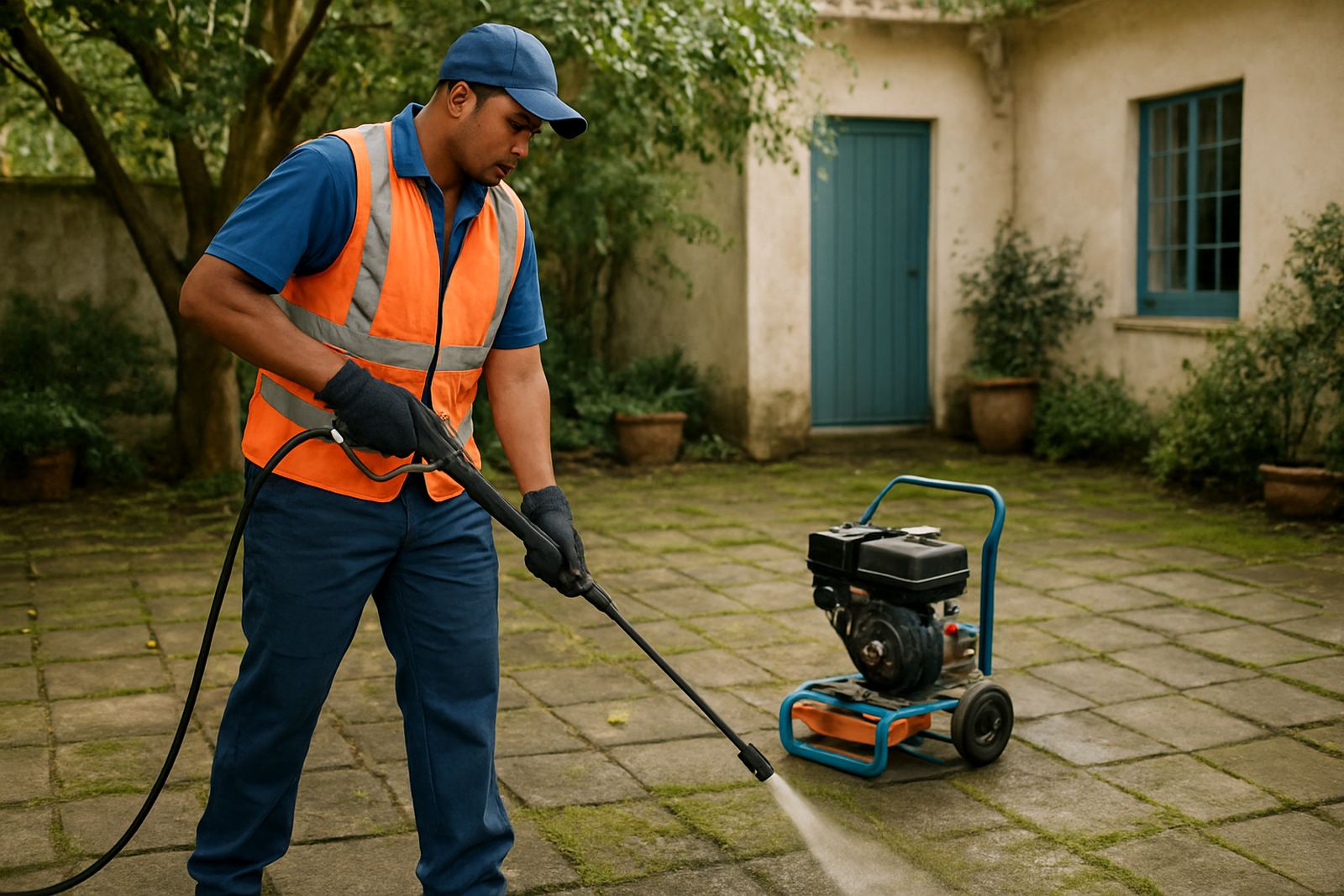
Pressure Washing Paving
Home / Hire Notes / Pressure Washing Paving

Hire Notes

Pressure Washing Paving

Paving near the coast picks up salt, algae, sand and black marks fast, especially in East London, Beacon Bay and Gonubie. The trick is to clean it properly without blasting out the joints, lifting edges or marking nearby walls and screens.

Why paving near the coast needs a gentler wash

Coastal paving gets dirty in a different way to inland sites. Salt spray, damp shade, fine sand and foot traffic all work into the joints, and once algae sets in the surface can become slippery. On driveways and courtyards in places like Kidds Beach and Port Alfred, people often reach for the highest pressure they can find, but that is where the trouble starts.

Too much force can wash out jointing sand, chip block edges and drive water under loose sections. It can also leave a zebra pattern on concrete pavers or strip the finish from decorative surfaces. The aim is to lift dirt, not dig into the paving. If the paving is already moving, cracked or hollow sounding, it should be sorted before any washing starts.

  • Check for loose pavers, open joints and soft spots first.
  • Clear furniture, planters and loose stones from the area.
  • Test one small section before working across the full surface.
  • Avoid spraying straight at wall bases, garage thresholds and drain covers.

Set the pressure for the job, not for the machine

Different paving types need different treatment. A small courtyard in Beacon Bay with older clay pavers needs a softer approach than a wide municipal-style forecourt with concrete blocks. The right setting depends on the surface hardness, the age of the paving and how the joints were finished.

Use a fan pattern where possible and keep the lance moving in steady passes. Hold the tip at a sensible distance so the spray does the work across the whole area instead of cutting one narrow line. If the machine has adjustable flow, start lower and step up only if needed. A pressure washer with too much punch may clean fast, but it also pushes grit into edges and makes the finish look patchy.

  • Work from the cleanest area toward the dirtiest so you can see the effect.
  • Keep a consistent speed on each pass to avoid streaking.
  • Use the lightest effective setting for jointed or decorative paving.
  • Never point the spray upward into walls, gates or door seals.

Protecting joints, edges and nearby finishes

The biggest mistake is not the washing itself, it is what happens around the wash zone. Joints are there to lock the paving in place, so if they are blown out the surface starts moving and water gets in. Edges at garden borders, pool surrounds and steps are also easy to damage, especially where older pavers have already settled a bit.

Before you start, sweep away loose grit and rinse off the obvious dirt. That reduces the amount of pressure needed. Keep an eye on nearby finishes like plaster, painted skirtings, aluminium frames and timber screens. A short blast can mark them quickly and on coastal sites with salt on the surface, stains can show up even after the paving looks clean. Its better to take an extra pass than to fix damage later.

  • Mask or shield delicate finishes close to the paving.
  • Reduce pressure near edges, expansion joints and drain points.
  • Use a narrow working lane so you do not miss soft spots.
  • Stop immediately if sand starts washing out in a heavy stream.

A practical cleaning sequence that saves time

A proper paving wash works best when it follows a sequence. Start dry, then loosen, then rinse. If you go straight in with full pressure, the dirt shifts around and the surface can dry in streaks. For larger areas, split the job into manageable sections so the wash water does not sit for too long and leave tide marks.

On coastal driveways and event areas in East London we often recommend a simple routine before and after heavy use. It helps with rental properties, schools, body corporates and venues where the paving has to look decent again by the next day.

  • Sweep or blow off sand, leaves and litter.
  • Pre-rinse with low pressure to soften grime.
  • Wash in overlapping passes, keeping the spray moving.
  • Rinse the area clean and clear standing water from low points.
  • Inspect the joints and top up sand if any has come out.

When a site needs more than a standard wash

Some paving jobs are tied to bigger site conditions. If the area has poor drainage, heavy algae growth or mud tracked in from nearby work, the water blasting needs to be planned so the runoff does not create a mess elsewhere. This is common on building sites around Qonce and on event grounds where vehicles, pedestrians and equipment all share the same surface.

In those cases it helps to think about access, water supply and where the dirty water will move. A wash after load shedding, for example, may need backup power if pumps or water supply equipment are involved. For bigger areas, the team should also check whether the paving sits next to ramps, tent flooring or temporary walkways so nothing gets undermined.

If the area is badly stained or the joints are already weak, the safest route may be a lighter wash first, then a second clean after repairs. That saves the surface and usually gives a better result than trying to force everything clean in one go.

What to ask before hiring equipment for paving work

Pressure washing paving sounds simple, but the right equipment and the right advice make a big difference. A short pre-hire briefing helps you match the machine to the surface and the size of the job. It also helps if you need site delivery in Beacon Bay, collection in Gonubie, or a weekend hire for a quick turnaround.

Before you hire, it is worth confirming what comes with the machine and whether you will need extras for the site. On coastal jobs, cleaning agents, water access and runoff control matter just as much as raw pressure. If the paving is part of a builder's handover or an event venue tidy-up, timing matters too.

  • What pressure range is suitable for block paving, concrete or decorative finishes?
  • Is the machine suitable for long runs or only smaller areas?
  • Do you need hoses, a water supply setup or fuel management?
  • Can the hire team help with setup, collection and emergency callout if needed?

Questions we get asked

Will pressure washing remove the sand from paving joints?

It can, if the pressure is too high or the nozzle is held too close. Use a lower setting, keep the spray moving and top up the joints after cleaning if needed.

Can I pressure wash old coastal paving safely?

Yes, but older paving needs a softer touch. Check for loose blocks, worn edges and weak joints first, then test a small section before cleaning the whole area.

What is the best time to wash paving in the Eastern Cape coast?

A dry, mild day is best so the surface can dry properly and you can see the finish. Avoid cleaning just before rain, and allow extra drying time where shade and humidity hold moisture.

Planning something? Email the team.

hire@coastlinehire.co.za