Start with the menu, guest count and holding time
Before you book a cold room, work backwards from what you need to keep chilled and for how long. A wedding in Gonubie with plated meals, soft drinks and desserts will need a different setup to a festival in East London holding meat, ice and bottled stock for two full days. If you only think about capacity in litres, you can miss the real issue, which is how often people will open the door and how quickly stock must move in and out.
Ask your caterer, butcher, bar team and event lead for a simple stock list. Then note the arrival time, serving time and breakdown time. If there is a long gap between delivery and service, you may need extra room for pre-chilled trays, backup stock and crates that cannot sit in the sun for long. On the coast humidity and warmth can push product temp up faster than people expect.
- List all chilled items by group: meat, dairy, drinks, desserts and prep stock.
- Estimate how often the door will open during service.
- Allow extra space for packaging, crates and labels.
- Plan for the warmest part of the day, not just the cooler morning load-in.
Choose a spot that suits the site and the truck
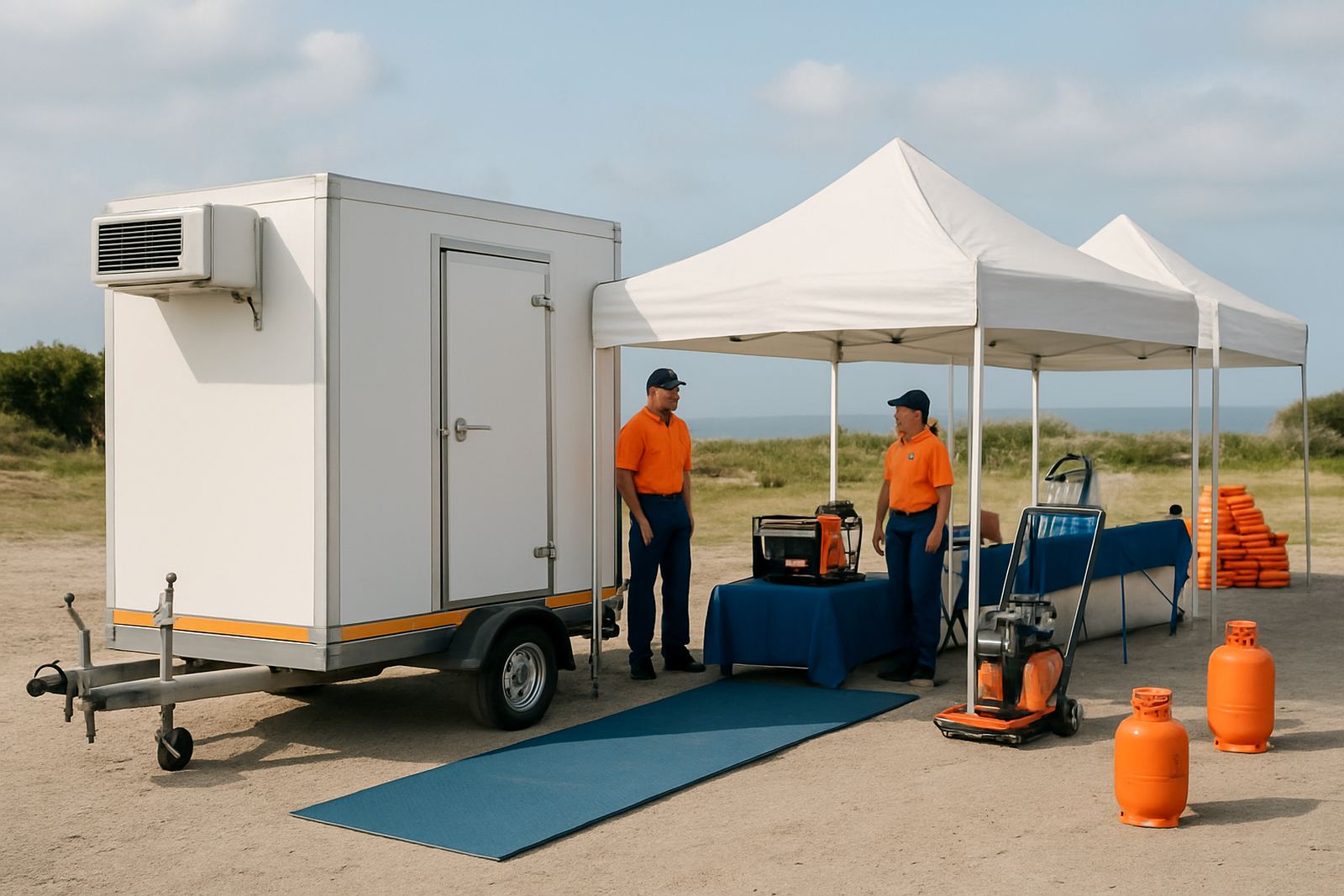
Placement matters just as much as size. The cold room should sit on firm level ground with enough clearance for doors to open fully and for staff to walk around safely. In Beacon Bay and other tighter sites, that might mean using a side yard or a service lane rather than the main guest entrance. In Port Alfred or Kidds Beach, soft ground after rain can become a problem, so the base must be checked before delivery.
Keep the unit away from direct afternoon sun if possible. Shade helps, but do not block airflow around the equipment. A cold room tucked against a wall or under low tree cover may overheat. You also need to think about delivery and collection access. If a truck cannot reverse safely, or if there are low branches, narrow gates or soft shoulders, the setup can drag on and delay other suppliers.
- Measure gate width, turning space and overhead clearance.
- Check the route from truck to final position for steps, kerbs or loose gravel.
- Keep the unit close enough for staff access but away from guest traffic.
- Leave space for generator refuelling or electrical cable runs if needed.
Build power into the plan, not around it
Cold storage is only useful if it keeps running. At many events around East London load shedding or weak site supply can catch people out, especially when sound, lighting and catering all run from the same source. A cold room must be tied into a power plan that includes start-up load, running load and backup cover if the main supply drops.
If the venue does not have reliable electricity, plan for a generator sized for the cold room and the rest of the event load. Keep fuel management clear from the start, because a unit that runs well until midnight is no help if nobody is assigned to top it up. For longer events, a pre-hire briefing with the site team helps avoid the common mistake of plugging the cold room into a circuit that also serves kettles, urns or lighting. That can trip the supply and spoil stock.
- Confirm the available power source and socket type before delivery.
- Separate chilled storage from high-draw appliances where possible.
- Assign one person to check fuel, cables and running status during the event.
- Ask for emergency callout support if the event runs across a full weekend.
Set up for clean loading, safe handling and easy stock rotation
A cold room works best when the inside layout is simple. Put the most-used items near the door and reserve the back for reserve stock or bulk crates. If the room is crowded from the start, staff will spend too long searching and the door stays open, which lets heat in. Keep the floor clear and use shelving or stackable crates where possible so air can move around the product.
Labeling also saves time. Mark trays by service time, table number or bar round, depending on the event. For a large birthday function in Beacon Bay or a school fundraiser in Qonce, that kind of order keeps service moving and reduces mistakes. It also helps the team know what can come out first and what must stay chilled until later.
Good handling is not complicated, but it must be consistent. Hands should be washed, lids kept on, and warm items never packed in with chilled goods. Small habits make a big difference when the room is being opened all day.
Use the cold room as part of the event flow
The best event plans treat chilled storage as one part of the whole site layout. The route from delivery point to prep tent, bar and service area must be direct and safe. If staff have to cross guest paths or carry stock over grass that turns soft, you lose time and increase the chance of spills.
For outdoor functions on the Eastern Cape coast, wind can matter too. A cold room door that sits in a strong gust may be awkward to manage, and loose packaging can blow around the loading area. Where possible, keep the approach sheltered and mark the access route clearly. Megan Petersen and the events team at Coastline Hire often help clients think through this stage so the storage point supports the service plan rather than slowing it down.
- Map the delivery route from truck to cold room and then to serving points.
- Keep the loading area dry, level and free of loose items.
- Plan who can enter the room and who signs off stock.
- Allow for end-of-night pack down so the collection team can work quickly.
A local example from a busy East London weekend
For a weekend event near Beacon Bay, a client needed chilled storage for meat, soft drinks and desserts from Friday delivery through to Sunday afternoon. The site had limited parking, a basic power supply and no spare indoor room. The solution was to place the cold room beside the service area on level ground, with generator backup and a simple stock plan that separated bar stock from food stock. Because the access route was checked in advance, the delivery took less time than expected and there was no last-minute reshuffling of tents or tables.
That kind of planning matters on the coast, where weather, traffic and supply timing can change quickly. A well-placed cold room does not just keep items cool, it helps the whole event run at a steady pace. For builders doing weekend functions or event teams juggling multiple suppliers, the same rules apply: measure early, confirm power, and keep access simple. If the plan is clear on paper, the weekend is far easier on site.