Start by marking the cut line and the keep zone
Clean concrete removal begins before the breaker is switched on. Mark the section that must come out, then mark the area that must stay intact. On repair work that can mean a strip around a drain, a patch beside a boundary wall, or a path section where pavers meet a concrete apron. If you are working in Beacon Bay or Gonubie, where many homes have neat driveways and finished edges, the extra few minutes spent marking lines can save a whole lot of patching later.
Use chalk, masking tape, or paint marker on dry concrete where possible. If the slab is dusty or damp, sweep it first so the line is clear and the operator is not guessing. Never start by smashing the middle of the area and hoping the crack stays inside the repair zone. That is how small jobs become full slab replacements.
- Mark the repair section and the edges that must stay sound.
- Check for buried cables, water lines and drainage runs before breaking.
- Leave enough space for the tool to work without striking adjacent finishes.
Choose the tool size to suit the slab, not your tempation to rush
A breaker that is too heavy for the job will cause more vibration, more noise and more unintended cracking. A unit that is too small will make the operator force it, which is just as messy. For thin aprons, small patios, or patch repairs on residential sites, a lighter breaker or compact jackhammer is often the better choice. For thicker slabs, steps, or reinforced sections, a larger unit may be needed but it should still be handled in short controlled bursts.
The aim is to open the concrete along the line of least resistance. Start at an edge, corner or saw-cut if one exists. Work in small sections and lift broken pieces out as they loosen. In humid coastal areas, concrete can hold moisture and look sound on top while being softer below. That makes it even more important to test the response of the slab before committing to a full strike pattern.
- Use a smaller tool for repair cuts and confined areas.
- Work from edges into the section, not from the centre outward.
- Stop often to check whether cracks are travelling where you want them.
Control dust, vibration and flying chips
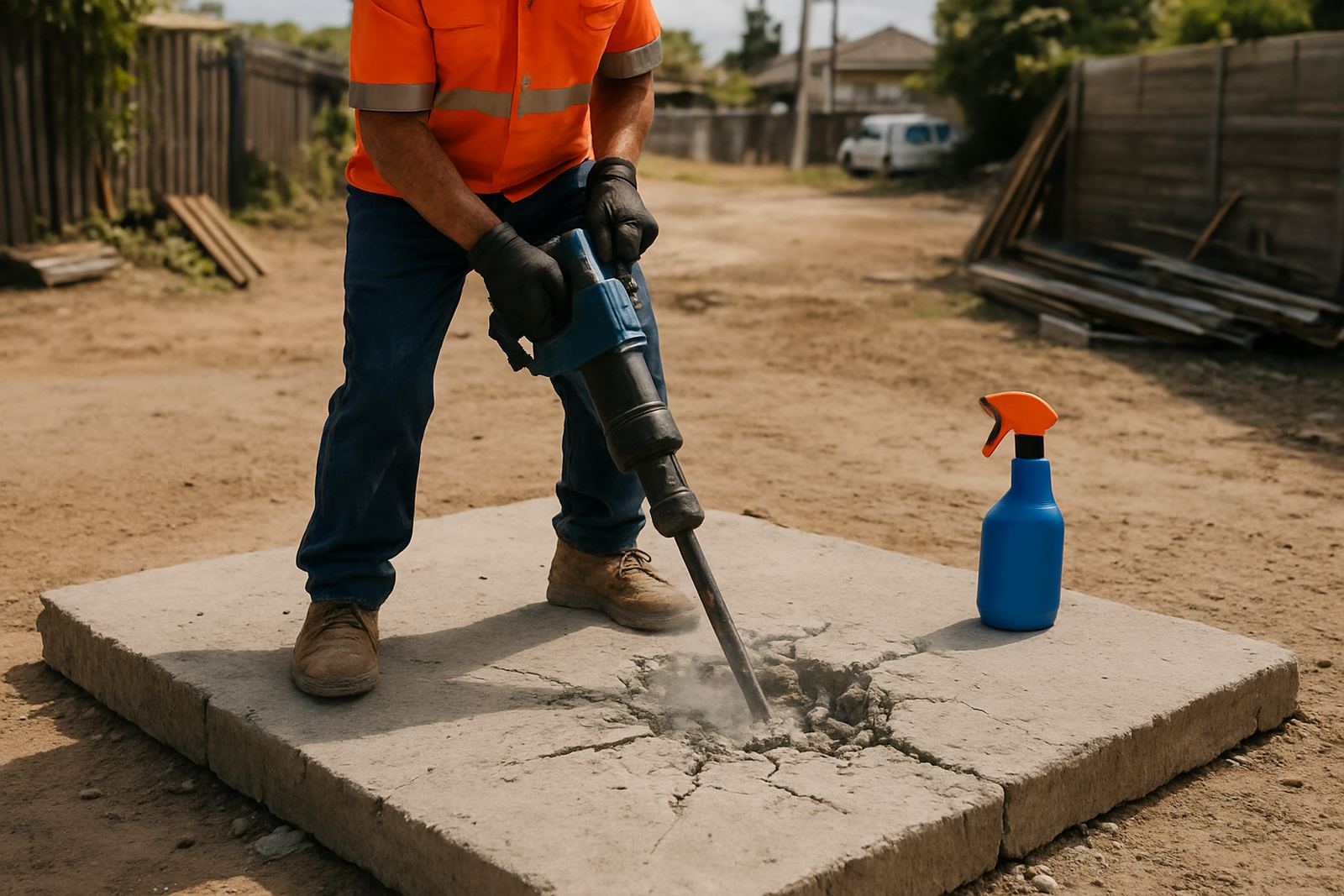
Concrete breaking is never a neat job, but it can be kept tidy. Dust control matters on occupied sites, around shops, and at homes where neighbours are close by. Wetting the surface lightly can help keep dust down, although too much water creates a slurry that is slippery and hard to clean. On East London sites where wind can pick up quickly, even a small amount of dust can spread farther than expected.
Vibration is another issue. If you are working near freshly plastered walls, boundary walls, or floor finishes, the breaker can transfer shock into the surrounding structure. That may cause hairline cracks or loosen tiles. Keep the tool upright and let the weight of the machine do the work. Do not pry hard against the surface, and do not use the chisel like a lever unless the tool is meant for that. Chips can fly with force, so eye protection, gloves, boots and hearing protection are basic, not optional.
- Lightly dampen the area to control dust, but avoid pooling water.
- Keep bystanders clear, especially children and event guests on shared sites.
- Wear eye, ear and hand protection every time.
Protect pipes, slabs and finishes around the repair
Most breakage problems happen at the edges of the job. A drain pipe near a patio, a service line under a walkway, or a kerb next to a driveway can all take damage if the operator goes too deep or too wide. Before starting, confirm what is under the slab. If drawings are not available, use local knowledge and common sense. Older properties in Qonce or Port Alfred often have repaired sections, shallow service runs, and mixed slab thicknesses, so assumptions can be expensive.
Where possible, score the concrete first with a cut line or a breaker blade at the edge. This gives the crack a direction to follow. If steel mesh or reinforcing bar appears, do not yank it out immediately. Cut or clip it once the surrounding concrete is free. Pulling on steel too early can drag a clean break into a rough, wide hole.
- Check for services before the first strike.
- Cut reinforcement only after the slab around it is loose.
- Keep the repair area slightly larger than the final finish size if the edge needs trimming.
A small East London repair job done the right way
A common local example is a cracked section beside a home in Beacon Bay where a new drain line has to be installed. The aim is to lift one neat panel, not damage the neighbouring driveway or chip the garden edge. The team would first mark the repair box, confirm the pipe route, then break the concrete from one corner in short passes. Once the section loosens, the pieces are removed by hand so the edges stay square and the trench can be dug without widening the opening.
That method saves time later when the patch is poured back. It also reduces the amount of rubble to cart away, which matters on narrow residential streets or sites with limited access. On coastal homes, where salt air and damp can affect older concrete, a neat removal is often the difference between a tidy repair and a patch that looks rough from day one.
Hire support that keeps the job moving
For builders, homeowners and event crews alike, the right hire support helps the work finish faster and with less waste. At Coastline Hire in Beacon Bay, the team can help match the breaker, compaction gear, pumps or scaffolding to the site conditions, then arrange delivery, collection, on-site setup, fuel management and weekend hire where needed. That is useful when a job in East London has to happen around business hours or when a pump-out and concrete repair must be handled on the same day.
Pre-hire briefing also helps. It gives the operator a chance to ask about slab thickness, access, nearby finishes and any load-shedding timing that may affect the rest of the work. A few clear details before hire can prevent a lot of frustration on site.
When the goal is a clean repair, not a bigger demolition, good planning matters just as much as power.