What a rotary tiller does on site
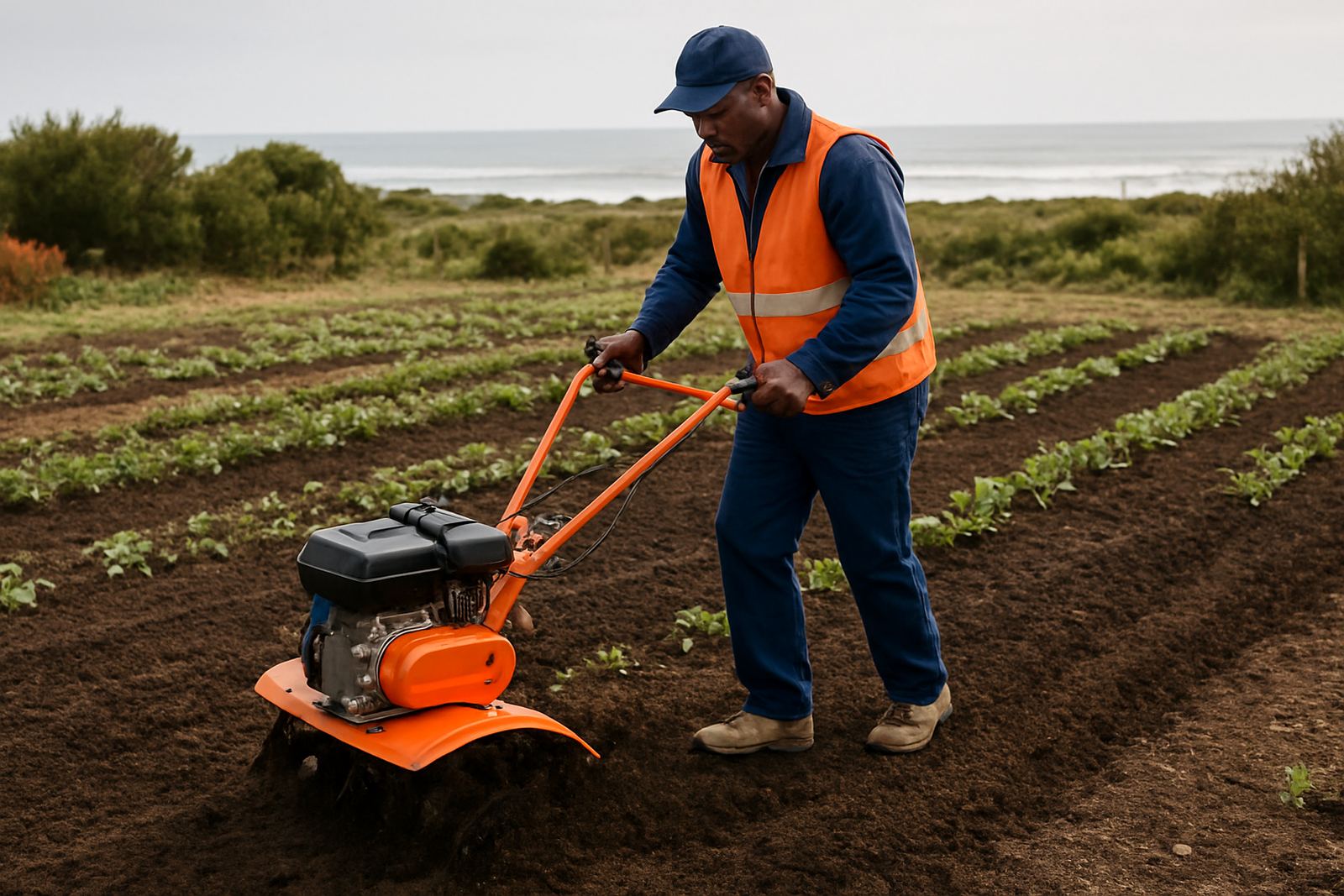
A rotary tiller is a soil preparation machine with rotating blades that cut into the ground and work it into a finer, more even tilth. It saves a lot of hand digging on beds, lawn areas and new planting zones, especially where the soil has gone hard after dry weather or traffic from builders. For coastal gardens, where sand and clay can be patchy in the same yard, it helps break lumps and blend in topsoil or compost before planting.
We supply tillers for home gardens, smallholdings, estate maintenance and turf establishment work. They are useful where you need a uniform finish before laying lawn, planting vegetables, setting up flower beds or preparing strips for irrigation. If the ground has roots, stones or hidden rubble, the machine still helps, but a proper check first saves time and damage.
- Breaks up compacted soil
- Mixes compost, manure and topsoil
- Prepares seed beds and lawn areas
- Reduces manual digging on larger plots
Sizes and options we hire out
Different jobs call for different widths and engine sizes. Smaller tillers are easier to use in tight garden spaces and between beds, while wider units cover more ground on bigger areas. For steep sections or very hard soil, it is often better to choose a heavier machine with more weight on the blades so it keeps biting into the ground instead of dancing around on top.
Most orders are matched to the site conditions rather than just the area size. A 200 m² garden with thick roots can take longer than a 500 m² lawn patch that has already been cleared. If you are unsure, send us the site details and we will point you to the right unit, not the biggest one by default. That keeps the work easier and the hire cost sensible.
- Light-duty tillers for domestic gardens
- Mid-size units for landscaping and lawn prep
- Heavier machines for smallholdings and tougher ground
- Short hire and longer-term hire available
Where a tiller works best on the Eastern Cape coast
We commonly supply tillers for yards in East London, Beacon Bay, Gonubie, Kidds Beach, Qonce and Port Alfred. Coastal humidity can keep the soil damp in spots and powder dry in others, so the same property may need a careful pass rather than one aggressive run. On fresh garden projects, a tiller is ideal after clearing old grass, light rubble and loose branches.
It suits new turf installations, veggie patches, landscaping around homes, school grounds and small business courtyards. It is also handy after building work where the top layer has been compacted by foot traffic or materials. If the site is full of buried waste, wire or brick bits, tell us first because that changes how we set up the job and may affect blade wear.
For sandy coastal soil, the machine can move quickly, so the operator must watch depth and not overwork the top layer. For heavier inland soils nearer Qonce, a slower pass often gives a better finish and leaves the ground ready for raking, levelling and planting.
Power, depth and setup basics
Rotary tillers are usually petrol-powered and self-contained, so they do not need a mains electrical supply on site. That makes them useful during load-shedding or on plots where power is not yet connected. You do still need safe handling space, clear access and enough room to move the machine in and out of the work area.
Typical working depth is around 150 mm to 250 mm, depending on the soil and the machine size. The working width can range from about 300 mm on compact units to 900 mm or more on larger machines. If you are preparing for lawn, a shallower pass followed by levelling often gives a better finish than going too deep in one go.
- No mains power needed on most models
- Useful during load-shedding and on remote sites
- Allow clear access gates and a clean working strip
- Keep people and pets away while blades are running
Care, servicing and safe use on hire
We service the equipment before it goes out, but good care on site matters too. Before starting, remove stones, wire, bottles and loose timber from the area. Check that irrigation lines, cables and pipes are marked or lifted clear. A tiller can damage hidden services and it can throw material if the ground is not checked first.
During use, keep the blades free of wrapped roots and grass build-up. If the soil is very wet, stop and let it dry a bit because mud can smear rather than break up. After use, the machine should be cleaned down, especially in coastal air where salt and damp can speed up rust. A quick rinse is not enough if soil has packed around the tines.
- Clean off wet soil after every use
- Check tines for wear or bending
- Watch for hidden pipes, cables and sprinkler lines
- Report unusual vibration or starting trouble straight away
What to confirm when placing an order
When you book a rotary tiller, it helps to confirm the soil type, area size and access conditions. Tell us whether the ground is already cleared, whether there are slopes, and whether you need prep for lawn, beds or a planting mix. If the site has tight entrances or steps, that affects which unit can be delivered and how it is moved on site.
You should also say whether you need delivery, collection or operator guidance. For weekend work, let us know early so the machine can be set aside in good time. If the tiller is going into a larger project with pumps, scaffolding or other hire items, we can help plan the timing so the ground work is done before planting or turf arrives.
- Site location and access details
- Soil condition and expected depth
- Need for delivery or collection
- Hire period, weekend work or long-term use
Local support from Beacon Bay to Port Alfred
Based in Beacon Bay, East London, we support customers across the coast with practical hire, clear advice and reliable turnaround. Some jobs need a same-day response, others only need a planned delivery before a landscaping crew starts. Either way, we aim to keep the process straight-forward and the machine matched to the job.
If you are preparing a family garden, a smallholding block or a turf area for a new development, a rotary tiller can save a full day or more of hand work. It is one of those machines that makes sense when the soil has gone hard and the spade just keeps bouncing off it.
For help choosing the right size, send the site details to hire@coastlinehire.co.za and we will talk you through the best fit for your ground and schedule.
Key facts
| Machine type | Walk-behind rotary tiller for soil preparation |
|---|---|
| Typical working width | 300 mm to 900 mm, depending on model |
| Working depth | About 150 mm to 250 mm |
| Power source | Petrol engine, no mains supply needed |
| Best suited for | Gardens, smallholdings, turf prep and planting beds |
| Service area | East London, Beacon Bay, Gonubie, Kidds Beach, Qonce, Port Alfred |