What a plate compactor does on site
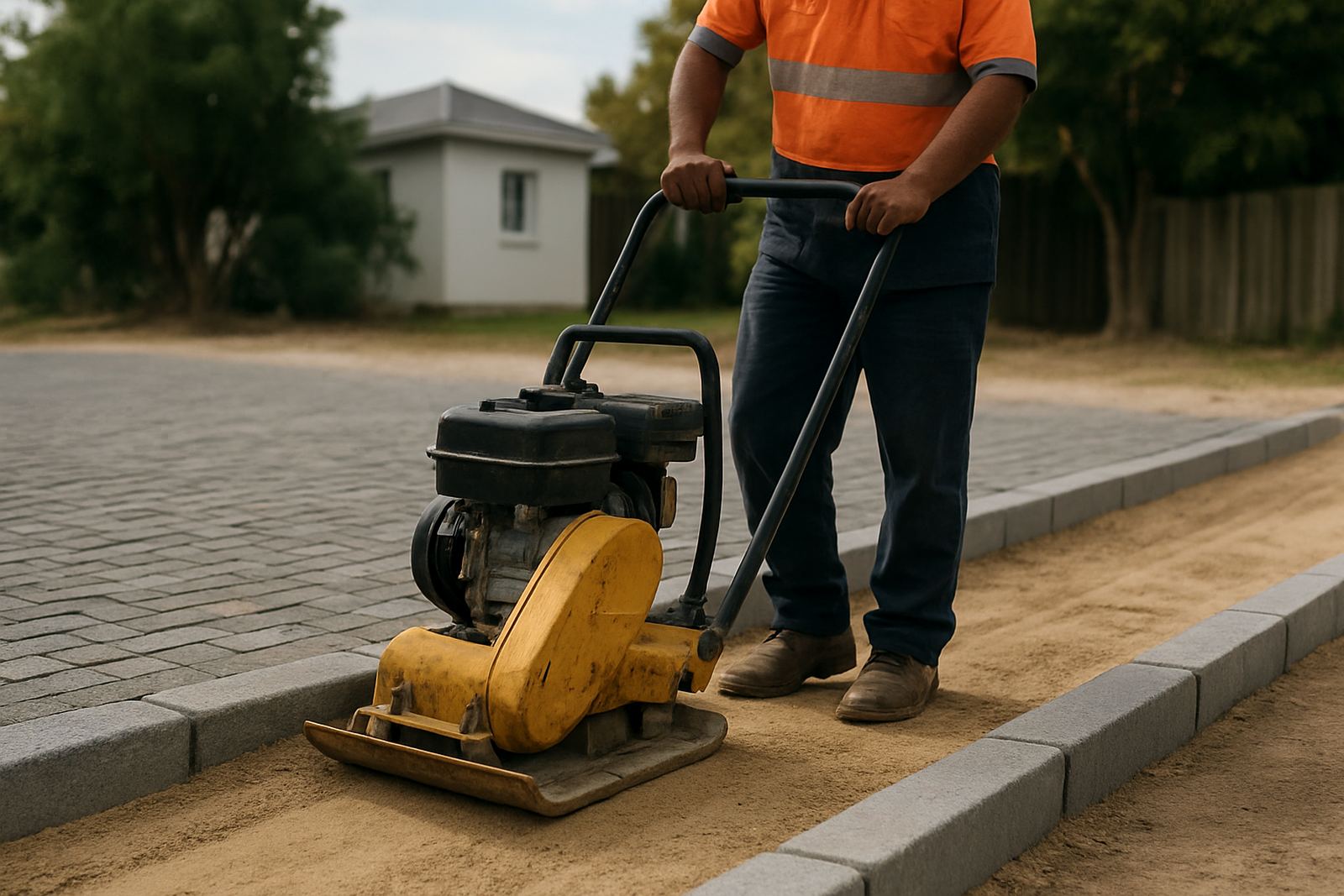
A plate compactor uses a heavy vibrating base plate to press loose material down into a tighter, more stable layer. That matters when you are preparing a paving area, repairing a trench, setting kerbs or closing up a patch after pipe work. On sandy ground or a coastal site with softer fill, a proper compaction pass helps reduce later sinking and uneven joints.
These machines are common on building sites because they are easy to move, quick to put to work and suitable for smaller to medium sized areas where a roller would be too big. Around East London, Beacon Bay and Gonubie, they are often used for driveways, footpaths, retaining wall backfill and general site preparation where the finish needs to hold shape in wet or windy weather.
- Compacts paving bases, bedding sand and crusher dust
- Suitable for trenches, patch repairs and small slabs
- Helps reduce settlement after rain or traffic
- Useful for builders, paving crews and maintenance teams
Sizes and compaction options available
Plate compactors are usually chosen by plate size, machine weight and whether you need forward only or reversible movement. A smaller unit is easier to handle in tight spaces, while a heavier machine gives deeper compaction on tougher material. For most general hire jobs, a machine in the 60 kg to 90 kg range is a practical all round choice. Larger reversible units suit thicker fills and longer trench runs.
Typical compaction force can range from about 10 kN up to 30 kN depending on the machine. Plate widths commonly sit between 400 mm and 600 mm, with overall working speed usually around 20 m/min to 25 m/min on level ground. If the job is on a steep driveway, near a retaining wall or on a narrow estate plot, a smaller plate may be easier to control and less likely to mark edges.
- Forward plate compactors for paving prep and light ground work
- Reversible models for deeper fill and longer runs
- Smaller plates for tight access and edge work
- Heavier units for harder material and better depth
Where a plate compactor suits best
Plate compactors are used on building sites, in yards, around homes and at event venues where temporary surfaces need to stay firm. They are particularly handy on the coast, where damp sand, loose fill and sea air can make prepared ground behave differently from inland sites. If you are laying paving in Port Alfred or setting up a temporary path in Kidds Beach, proper compaction gives a neater, longer lasting finish.
The machine suits a wide range of work, but it is best matched to granular material rather than wet clay. If the soil is too wet, the plate can just move the mud around instead of tightening it. That is why a quick pre-hire chat helps, especially if your site was recently dug out or if municipal work has left the area soft after rain.
- Paving bases and bedding layers
- Trench backfill after plumbing or electrical work
- Driveway patching and walkway repairs
- Event floor prep and temporary path formation
Power, fuel and setup on delivery
Most plate compactors hired for site work are petrol driven, which makes them simple to use where mains power is not available. That suits load-shedding conditions and outdoor work on new developments, road verges or remote coastal plots. The machine starts with a recoil pull and needs fresh fuel, clean oil and a level surface before running. Some units also have a water tank attachment for dust control when working on dry material.
When Coastline Hire delivers, the team can help with site placement, a quick start-up brief and practical advice on safe operation. For event jobs, the machine may be brought in after layout marks are set so compaction happens only where needed. If the site has limited access, it helps to know gate widths, stairs, soft grass or any overhead restrictions beforehand.
- Petrol powered for off-grid and load-shedding conditions
- Simple start-up and easy refuelling on site
- Water spray options on some units for dust control
- Best used on a flat, cleared working area
Care, servicing and safe daily use
A plate compactor works hard, so the machine should be checked before every shift. Look at the base plate, belts, guards, fuel level and any loose fasteners. The plate must stay clean, because packed mud and stones can reduce performance and make steering harder. After use, a quick wash down and a short inspection help keep the unit ready for the next hire.
On coastal jobs, salt air and damp conditions can speed up wear if equipment is left dirty. That is why regular servicing matters, especially for jobs in Gonubie, Beacon Bay and along the coast where humidity hangs around. Keep hands and feet clear of the plate while it is running, and avoid using the machine on unstable slopes or around open trenches unless the ground has been properly secured. A small typo in setup can cost time, so it is worth taking the briefing seriously.
- Inspect fuel, oil and fasteners before starting
- Clean the base plate after use
- Store under cover where possible
- Use trained operators on sloped or confined sites
What to check when ordering a hire unit
Before you book, it helps to match the machine to the job size and the material you are compacting. A paving crew doing a small patio in Beacon Bay will need a different setup from a contractor closing a trench near Qonce. If you are unsure, give the area size, soil type and access details so the right unit can be set aside. That saves repeat trips and avoids sending a machine that is too light for the work.
Coastline Hire can also help with weekend hire, emergency callout and collection or delivery across East London, Beacon Bay, Gonubie, Kidds Beach, Qonce and Port Alfred. For longer jobs, ask about fuel management and planned swap outs so the machine stays on site when you need it. It is also worth checking who will operate the compactor, because the hand feels different on each model and a short pre-hire briefing makes a proper differnce.
- Surface type: sand, crusher dust, fill, gravel or trench backfill
- Area size and access width
- Desired plate width and machine weight
- Need for delivery, setup, fuel or collection
Key facts
| Machine type | Walk-behind plate compactor |
|---|---|
| Typical weight range | 60 kg to 90 kg |
| Plate width | About 400 mm to 600 mm |
| Compaction force | About 10 kN to 30 kN |
| Power source | Petrol powered |
| Common uses | Paving bases, patching, trench backfill, ground prep |