Heavy Breaking For Concrete, Slabs And Strip-Out Work
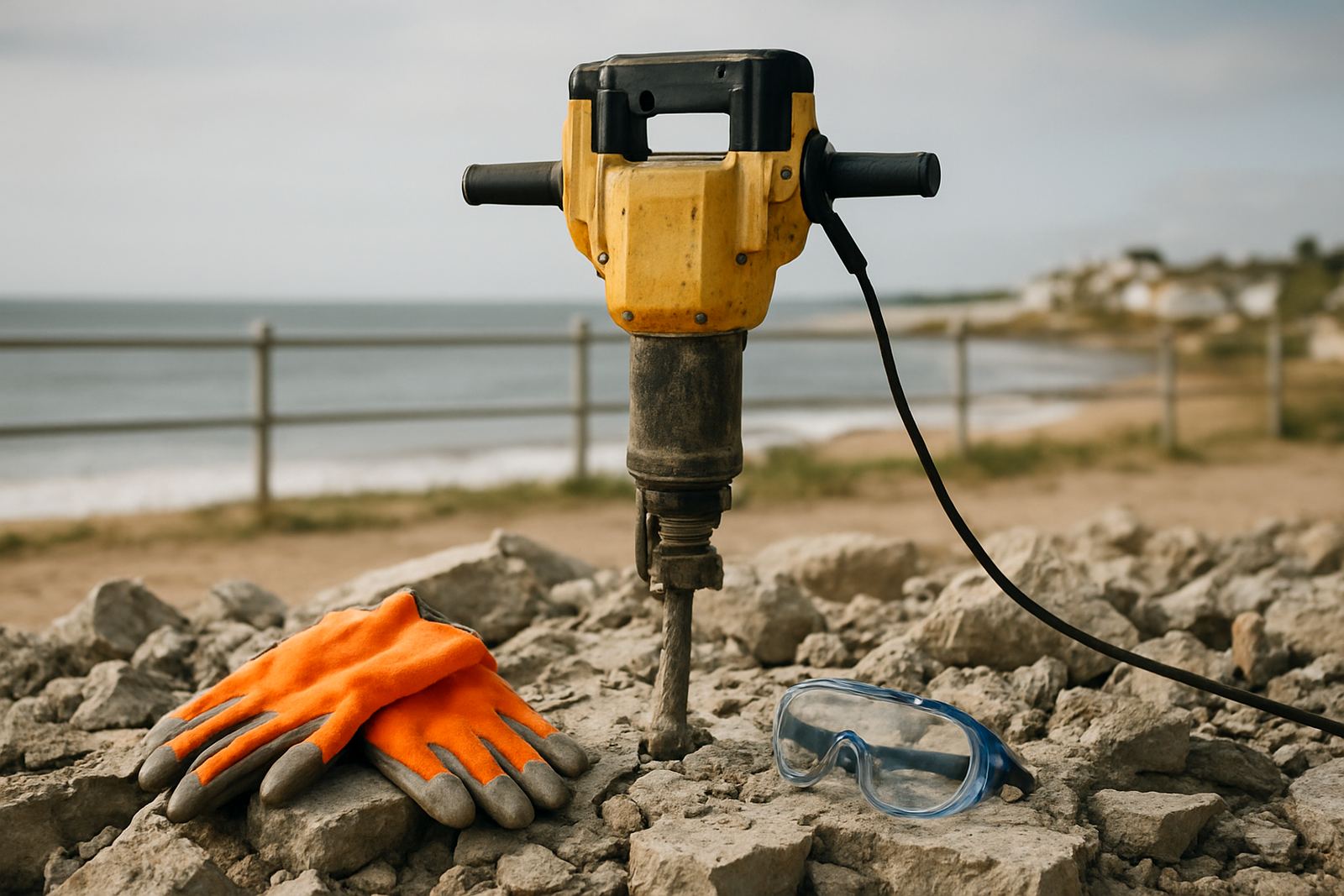
A jack hammer is a heavy demolition tool used to break concrete, chip out plinths, remove old screeds and open up trenches where hand tools will not do the work. It saves time on site and gives better control than trying to smash through a slab with hammers and bars. For coastal jobs, it is a practical choice when you are dealing with old driveways, foundations, yard slabs, service holes or hard plaster that needs to come off cleanly.
We supply jack hammers for building work, civil maintenance, renovation and plant hire support across Beacon Bay, Gonubie, Kidds Beach, Qonce and Port Alfred. The right breaker depends on how hard the material is and how long the operator will be working. A lighter unit is useful for floor tiles and small chases, while a heavier breaker is better for thick concrete or stubborn sections with rebar. If you are not sure, tell us the concrete thickness and we will match the tool to the task.
In East London, where many sites deal with salt air, damp slabs and older structures, a jack hammer often becomes part of the first phase of the job. It is also useful on municipal repairs, drainage access and prep work before new pipe runs or platform bases go in.
Options, Bit Types And Working Weight
We supply jack hammer options suited to different demolition tasks. The body of the machine is built for impact, while the bit or chisel carries the actual breaking force. You can request the setup that suits the work, whether that is pointed for cracking and starting a break, or flat for lifting and widening the opening. On some jobs a narrow chisel is faster for sectioning, while a broader blade helps when you want to lift material in sheets.
Typical hire options include compact units for smaller interior work and heavier breakers for outdoor concrete and structural demolition. Working weight, impact rate and bit type all matter. A heavier unit can speed up thick slab removal, but it also needs a stronger operator and more room to work. If the area is tight, such as a passage, bathroom strip-out or boundary line repair, a smaller breaker may be the smarter choice.
- Compact breaker for light demolition and floor prep
- Mid-weight unit for slab edges, steps and general breaking
- Heavy breaker for thick concrete and stubborn sections
- Pointed bit for starting cracks and penetrating hard material
- Flat or wide chisel for lifting, trimming and surface removal
We can advise on the best bit for the job and help you order more than one if the work changes during the day. That often saves a second trip and keeps the crew moving.
Where A Jack Hammer Suits Best On Site
Jack hammers are used where brute force and control both matter. They suit foundation removal, slab breaking, kerb work, old steps, floor patching and demolition around services. On coastal properties they are handy for removing cracked apron slabs and old hardstands that have shifted with moisture and age. They also help when you need access for plumbing, electrical conduits or stormwater runs.
For builders, the tool is useful before concrete cutting, excavation or trenching starts. For property owners and maintenance teams, it is often the first tool out when a section has to be opened up without damaging the surrounding area. A good operator can break accurately around walls, pipes and edges, but the job should still be planned carefully. Dust, flying chips and vibration are part of the task, so PPE and a clear work zone are essential.
We also supply jack hammers for short term weekend hire, emergency callout and long term hire on bigger contracts. If your team is working in Qonce or Port Alfred and the programme has slipped, we can arrange delivery and collection so the work does not stall.
- Concrete slabs and footings
- Driveway and yard demolition
- Tile and screed removal
- Service openings and trench access
- Step, plinth and kerb breaking
Power Supply, Setup And Practical Requirements
Jack hammers normally need a suitable electric power source or a matching air supply, depending on the type of breaker supplied. Before ordering, check what power you have on site and whether the crew will be running other tools at the same time. In load shedding areas, a generator may be needed to keep the breaker working. We can assist with generator pairing so the unit has enough capacity and does not trip under load.
For safe use, the operator needs enough space to stand correctly and move the bit without twisting. The work area should be clear of loose rubble, hidden cables and soft patches that can catch footing. If the break is close to a wall or a service line, plan the cut or mark-out first. On certain jobs we will suggest a pre-hire briefing so the team knows how the tool will be delivered, started and used on site.
When a project is in a windy or coastal spot, make allowance for dust control and corrosion care. Salt air is hard on tools, so do not leave the breaker exposed overnight if you can avoid it.
Care, Servicing And Return Checks
Good care keeps a jack hammer performing properly and reduces downtime on site. The tool should be cleaned after use, checked for loose fittings and stored dry. Bits need inspection for wear, and the chuck area should be kept free of grit. If the machine has been working hard all day, let it cool before packing it away. This is simple stuff, but it helps a lot.
Our workshop team services hire equipment regularly and checks for impact wear, cable condition, seals and general operating condition before it goes back out. If a breaker comes back with a bent bit, damaged guard or signs of misuse, let us know immediately. The earlier a fault is flagged, the easier it is to sort out and keep the next hire moving.
- Clean off concrete dust and slurry before return
- Report unusual vibration, knocking or reduced impact
- Check the bit for bends, chips and excess wear
- Keep leads, plugs or hoses neat and dry
- Store under cover if the site is near the coast
Key facts
| Tool type | Heavy demolition jack hammer / breaker |
|---|---|
| Typical use | Concrete breaking, slab removal, surface strip-out |
| Bit options | Pointed chisel, flat chisel, wide blade |
| Power need | Electric or air supply depending on unit |
| Hire cover | Short term, weekend hire, long term hire |
| Service area | East London, Beacon Bay, Gonubie, Kidds Beach, Qonce, Port Alfred |