Mobile floodlighting for sites that cannot stop at sunset
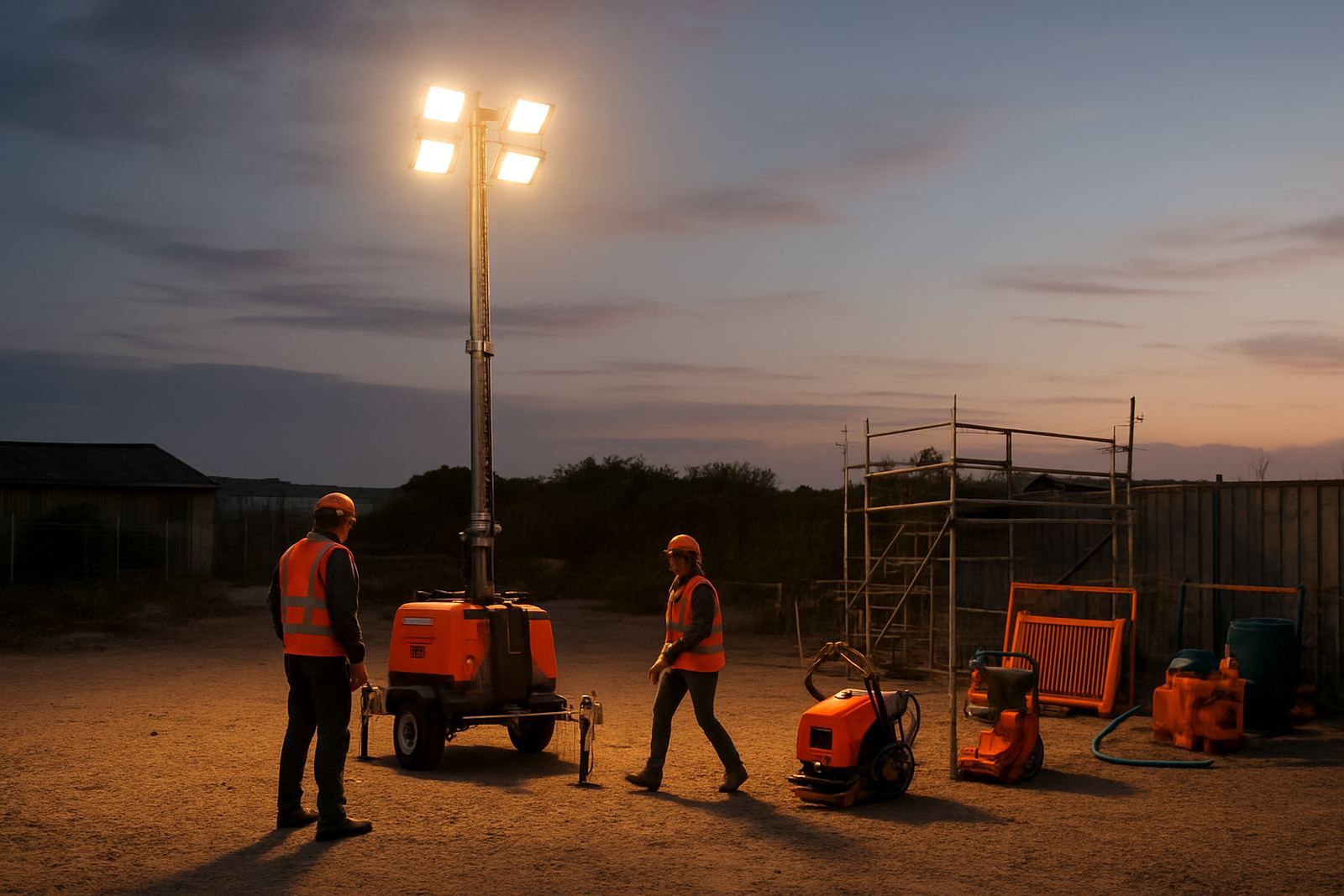
A lighting tower is a towable or liftable light unit fitted with high output lamps, a mast and its own power source. It is used when the job runs into the evening, when a yard needs safer movement after dark, or when an event area needs clear visibility for guests, staff and security. In East London and along the coast, that usually means wet weather, early winter sunsets and sites where permanent power is not yet ready. A proper unit gives wide, even light instead of a few weak lamps on extension leads.
Our towers are suited to builders, civil works teams, logistics yards, parking control, outdoor functions and emergency cover during outages. They can be placed on firm ground, levelled, raised and aimed to suit the work area. For windy or exposed coastal spots, setup and positioning matter just as much as the light output.
Sizes, lamp types and output you can choose from
Different jobs call for different tower sizes. Smaller units are useful for compact yards, walkways and event support, while larger towers cover open sites, loading areas and long access roads. Lamp count and mast height affect both spread and intensity, so it helps to match the tower to the size of the area rather than order the biggest one available.
- Mast height options: about 6 m to 9 m
- Lamp configurations: 4 lamp or 6 lamp heads
- Typical coverage: from small work zones to broad open areas
- Power options: diesel-powered self contained towers or units used with site power where suitable
- Portable format: towable frames or skid-mounted units depending on access
For event work, a softer spread may be better than a hard industrial beam. For building and security use, higher output and wider reach are usually the first concern. We can help match the tower to the site size so you do not overpay for light you will not use.
Where lighting towers work best in the Eastern Cape
Lighting towers are popular where crews keep working after load-shedding, after dark delivery slots or when a project has tight deadlines. In coastal areas around East London, Beacon Bay, Gonubie, Kidds Beach, Qonce and Port Alfred, they are also useful for outdoor gatherings, temporary parking, venue overflow areas and night security. Salt air and wind can be hard on equipment, so a stable base and regular checks are important.
- Construction and maintenance sites
- Roadworks, repairs and utility callouts
- Parking areas and security patrol points
- Outdoor functions, markets and sports events
- Warehouse yards and after-hours loading
If the ground is soft or uneven, let us know before the delivery. A tower that is fine on a hard slab may need extra care on gravel, grass or coastal sand. That small detail saves trouble later.
Setup, positioning and power requirements
Most lighting towers need a level surface, enough clearance for the mast and safe space around the unit. For diesel units, fuel must be checked before use and topped up as needed. Where a tower uses mains power, the supply must suit the load and cable runs should be kept neat and protected. Our team can assist with on-site setup, pre-hire briefing and event layout help so the light falls where it should.
Good placement matters. The tower should not blind drivers or guests, and it should not shine straight into nearby homes if a quieter edge position will do. We can also advise on generator pairing where site power is not available or where a backup plan is needed for long evenings.
- Level the unit before raising the mast
- Keep clear of overhead cables and trees
- Use suitable fuel and check levels during long hire periods
- Secure cables and avoid trip points
- Plan for wind, rain and safe access at night
Care, servicing and coastal conditions
Lighting towers work best when they are cleaned, checked and serviced regularly. Lamps, mast cables, fuel systems and wheel or stabiliser parts all need attention, especially on coastal jobs where humidity and salt can shorten the life of neglected equipment. A quick pre-use inspection should pick up loose fittings, damaged cables or a mast that does not raise smoothly.
Our workshop checks units before they go out and again when they come back. If you are hiring for a long-term project, tell us how many nights the tower will run and what sort of weather it will face. That lets us plan fuel needs, service intervals and backup support better. It also reduces the chance of a late-night breakdown when no one wants extra drama.
What to confirm before you place the order
The easiest way to get the right tower is to measure the area and think through how the site works after dark. A parking lot, for example, may need broad even spread, while a scaffold yard may need stronger task light on a smaller zone. If your job runs for more than one evening, weekend hire or long-term hire can be more practical than a short booking.
Before you order, please check the following:
- The size of the area to be lit in metres
- Whether the site has power or needs a self-contained unit
- The ground surface and any access limits for delivery
- The number of hours the tower must run each night
- Whether you need setup, fuel management or emergency callout cover
- If the tower is for work, security or event use
If you are not sure, send a quick note with the site details and we will talk it through with you. It is easier to get it right first time than to swap gear after the crew has already started.
Key facts
| Product type | Mobile lighting tower for site and event use |
|---|---|
| Mast height | Approx. 6 m to 9 m |
| Lamp heads | 4 lamp or 6 lamp options |
| Power source | Diesel self-contained or site power suited units |
| Hire options | Weekend hire, long-term hire and emergency callout |
| Service area | East London, Beacon Bay, Gonubie, Kidds Beach, Qonce and Port Alfred |