When roadside work needs a hire partner
Roadside maintenance jobs are often small in footprint but tight on time. A pothole patch on a busy strip in East London, drain cleaning near Gonubie, or verge repairs outside Qonce all need equipment that can be dropped off fast and used with limited space. Crews also have to work around live traffic, municipal rules and weather that changes quickly along the coast.
We help contractors, municipalities, security teams and civil crews who need plant that is easy to move and simple to set up. If the job runs after dark, on a weekend, or at short notice after rain has opened up a section of road, we can arrange delivery, fuel support and collection once the work is done. For roadside jobs the main aim is usually speed, control and keeping the site tidy so traffic can pass safely.
- Verge trimming and surface patching
- Drain and culvert cleaning
- Temporary shoulder repairs
- Barrier or sign support work
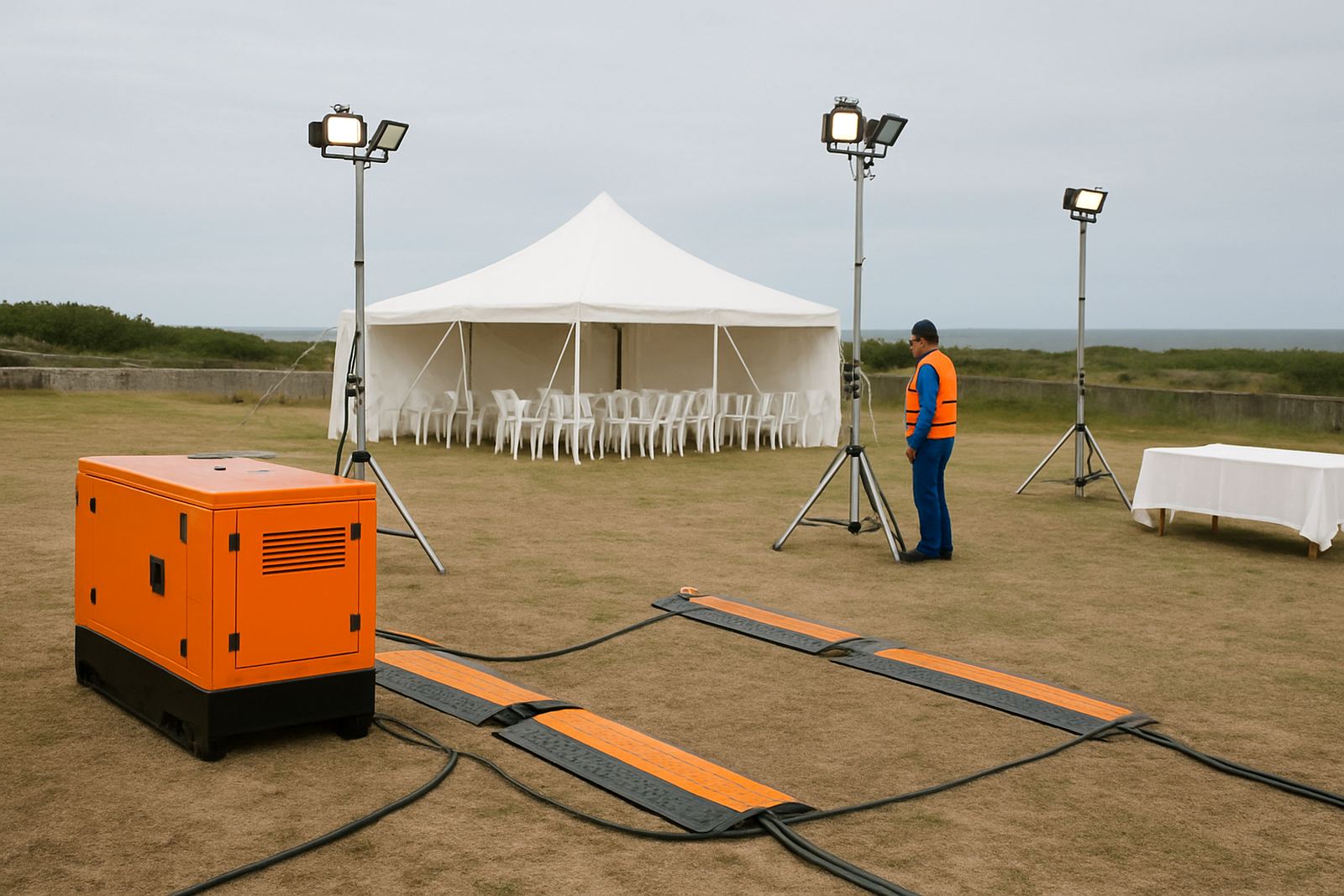
- Night shift repair work with lighting
Typical equipment for verge work and patching
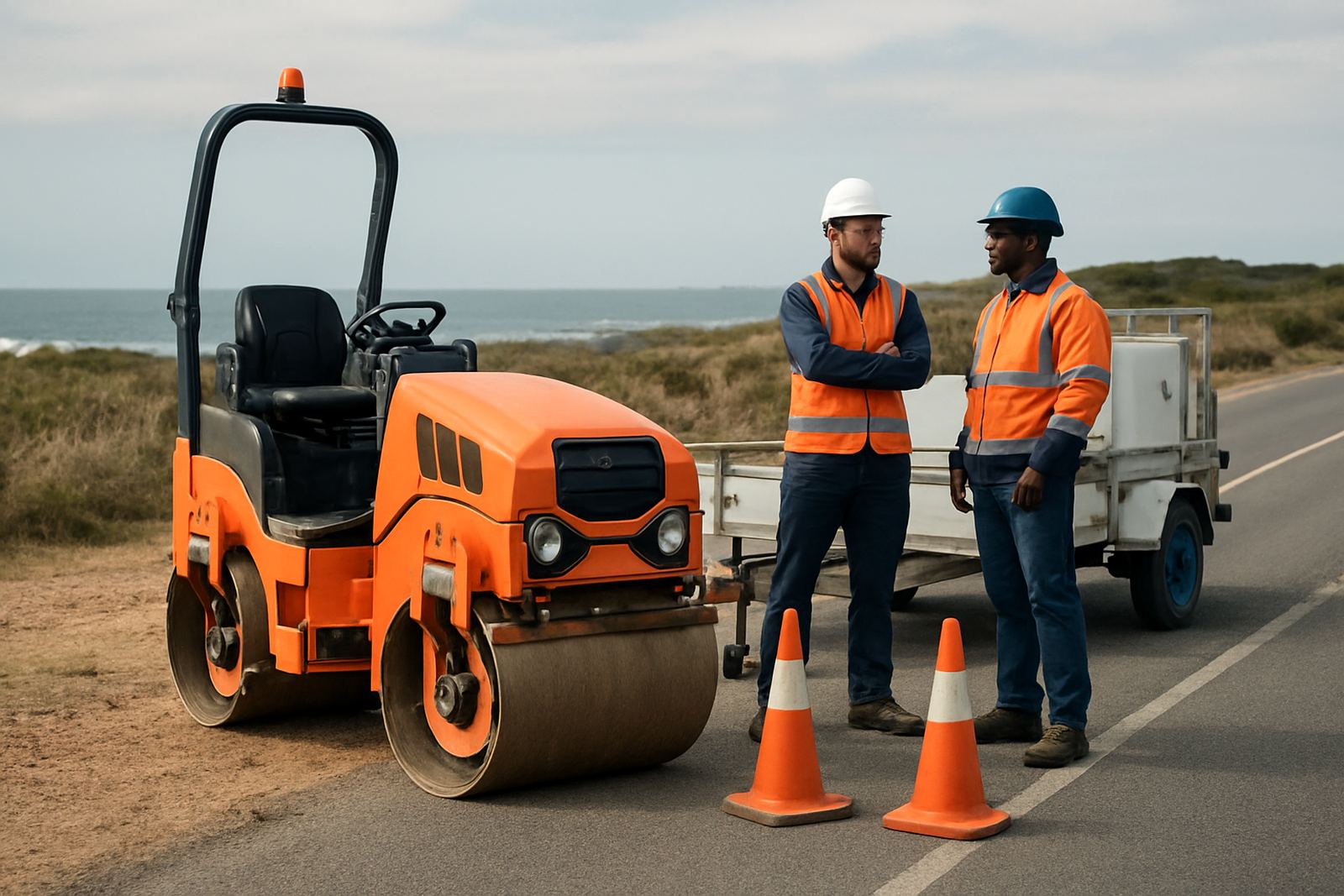
The best kit depends on the task, but roadside jobs normally benefit from compact machinery that can fit beside a lane or on the shoulder without taking over the whole site. For patching, a small compactor, hand tools and strong lighting are often the core of the setup. For wet areas or low-lying sections near the coast, a pump is just as important as the machine doing the repair.
Generators are useful where mains power is not available or where you need to run lights, small tools or a pump during load-shedding. Scaffolding is sometimes needed for sign repairs, bridge edges or access to raised roadside features, though it must be planned properly before delivery. For longer routes or repeated maintenance, it can save time to keep the same setup on hire for a few days rather than fetching and returning equipment daily.
- Compactors for patching and reinstatement work
- Portable generators for lighting and small tools
- Pumps for standing water and drainage problems
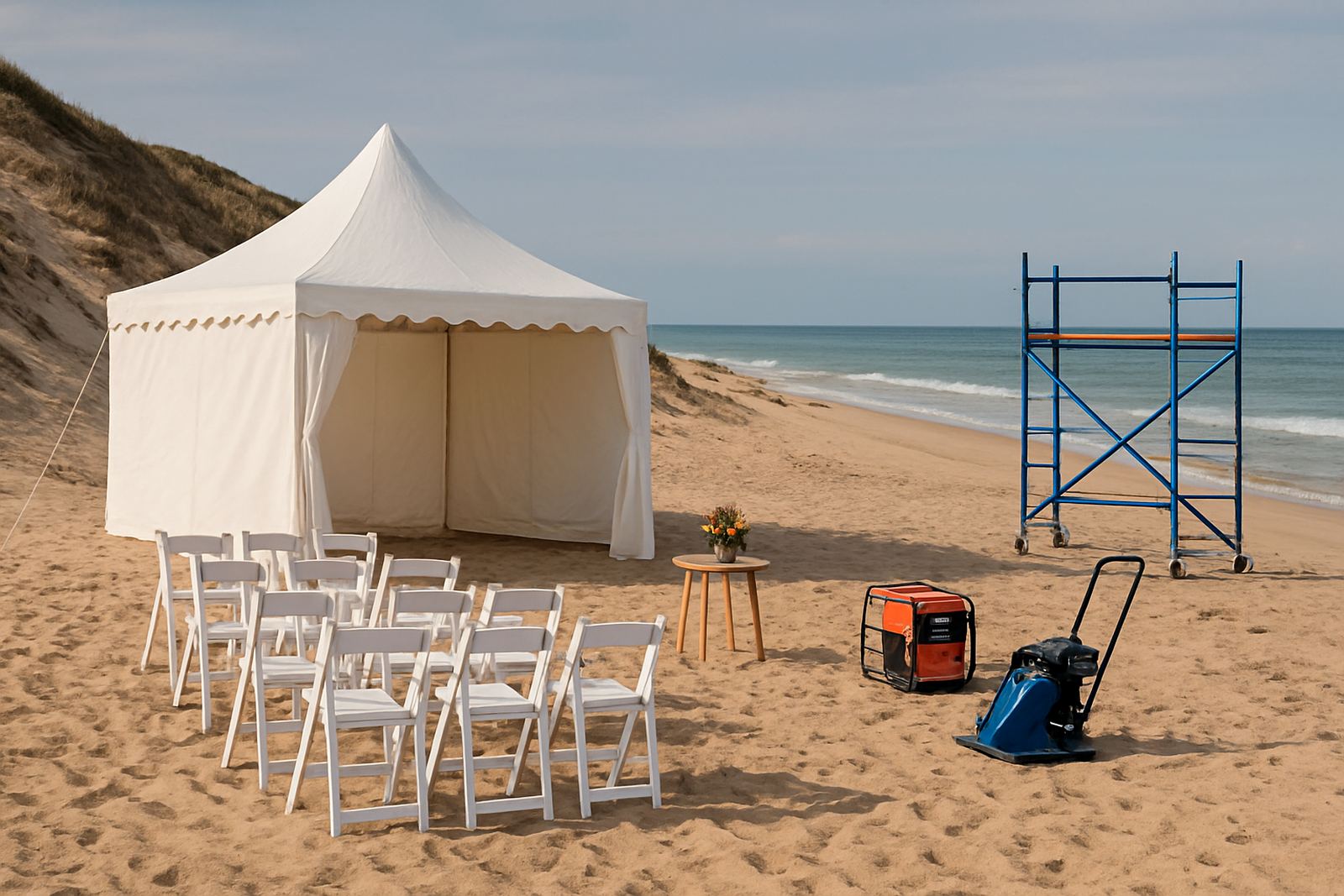
- Scaffolding for higher access points and sign work
- Party-style lighting units used as temporary work lights on short jobs
How to plan the layout before the first truck arrives
Roadside work is easier when the layout is planned before equipment reaches site. Measure the working area, check where traffic will pass, and decide where the plant will stand while not in use. On narrow sections, a machine that is a little too large becomes a problem very quickly, especially near bends or where the shoulder is soft after rain.
Tell us if the job is in Beacon Bay, Kidds Beach, Gonubie or further out toward Port Alfred so we can plan delivery times around traffic and access. If the site has low trees, overhead cables or uneven ground, mention it early. That helps us suggest the right lift points, towing needs or base setup. A good brief should also say whether the work will happen in daylight, after hours or over a weekend, and whether fuel management is needed on site.
- Confirm road width and shoulder space
- Mark where traffic control will sit
- Check for wet ground, sand or loose gravel
- Decide where lighting and power leads will run
- Let us know if the job needs emergency callout support
Common mistakes that slow roadside jobs down
One common mistake is underestimating how much lighting is needed. A small patch job might look simple in daylight but becomes risky after sunset, and poor visibility slows the crew down. Another issue is hiring a machine that is too heavy for a soft verge or too bulky for a narrow lay-by. That can damage the surface before the repair even starts.
Teams also sometimes forget that roadside work creates its own delays. Traffic build-up, late delivery, or a change in weather can push a simple task into a long shift. If the generator is not sized correctly, lights dim and tools underperform. If fuel is not managed from the start, the crew ends up waiting instead of finishing the job. A short briefing before hire usually avoids most of this.
We often see jobs go off track because nobody planned collection. On a coast road with wind and passing traffic, leaving equipment on site longer than needed increases risk. It is better to have a clear start time, finish time and handback plan, even for a one-day hire.
Budget ranges for roadside maintenance hires
Costs depend on the duration, the size of the equipment and how far the site is from our base in Beacon Bay. For a small roadside patching job, budget for a compact hire package from around R750 to R2,500 per day, depending on what you need on site. A generator and lights for night work may sit in the R600 to R1,800 per day range, while pumps and compactors are usually priced according to size and hire period.
For a few days of maintenance work, weekly hire can be better value than short daily bookings, especially if the site is far out or if the crew needs the same equipment each morning. Delivery, collection and setup are usually quoted separately based on area and access. If the job is urgent, after-hours or includes fuel management and on-site setup, the overall cost will rise, but it often saves time and stops the job stalling.
- Small day hire for compact plant and lighting: from about R750
- Mixed roadside setup for patching and drainage: often R1,500 to R4,000 per day
- Long-term hire for repeat maintenance work: usually quoted on request
- Emergency callout and after-hours support: priced on distance and urgency
Working safely near traffic and coastal weather
Roadside maintenance on the Eastern Cape coast has its own conditions. Salt air, sudden rain and strong wind can affect visibility and equipment stability. Lights need to be secured properly, cables kept clear of wet patches and any generator placed where spray and puddling will not cause trouble. In stormy weather, we recommend a little extra planning time because a job that looks simple in the morning can change by lunch.
Safety also depends on keeping the site orderly. Tools should be stacked away from the live lane, and any loose material must be managed so it does not end up in traffic. If the job involves a culvert, drain or shoulder washout, ask for a pump early and check whether the area needs temporary barriers or extra marking. We support crews across East London, Qonce and Port Alfred with practical hire advice that fits the job, not just the quote.