Why coastal sand causes more trouble than it looks
On a site near Beacon Bay, Gonubie or Kidds Beach, sand does not stay on the ground for long. It gets lifted by wind, carried by boots and tyres, and pushed into moving parts, hose ends, fuel caps and switchgear. That build up can make equipment harder to start, hotter to run and quicker to wear. On a busy coastal site, a small amount of grit can become a daily fault if nobody is watching it.
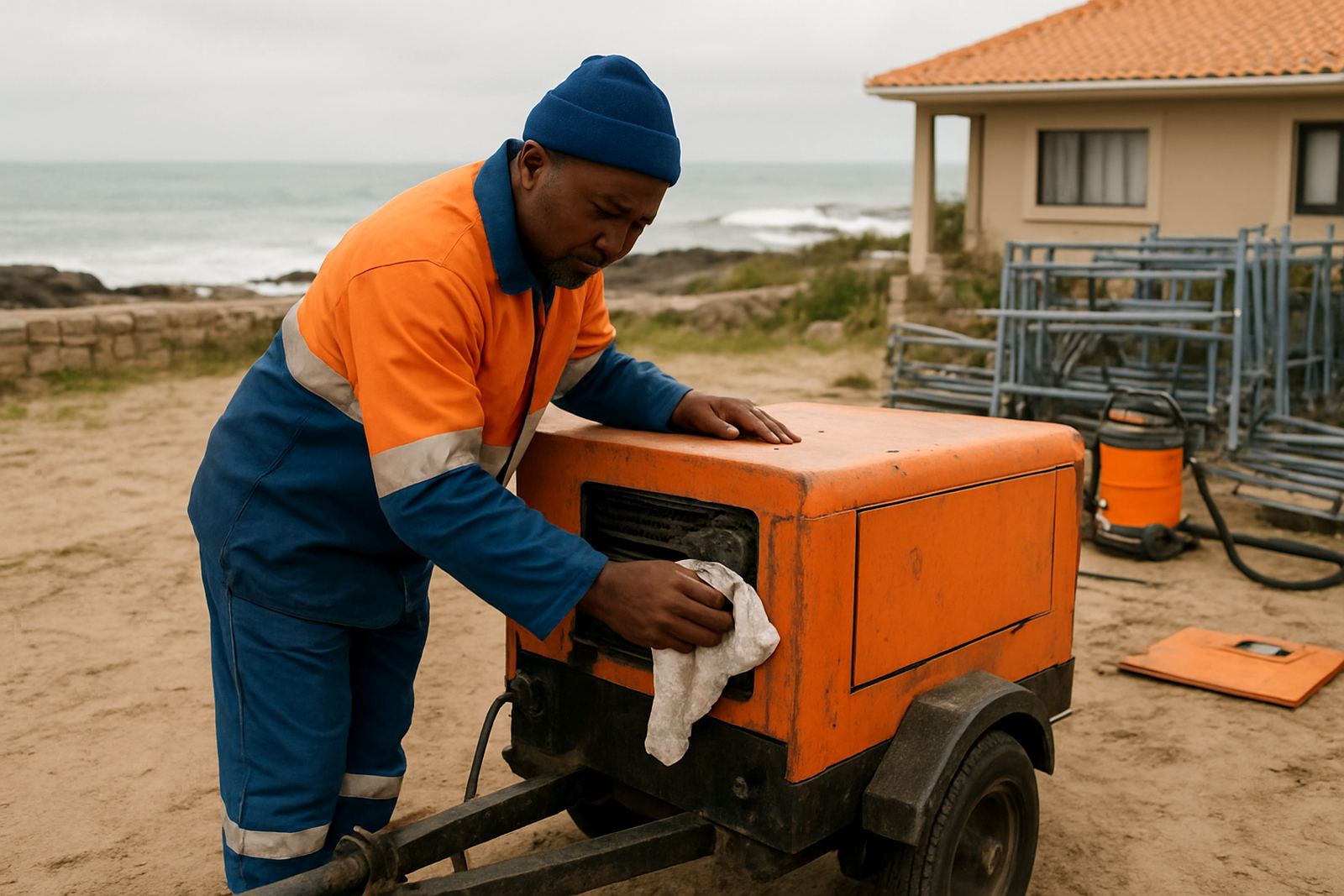
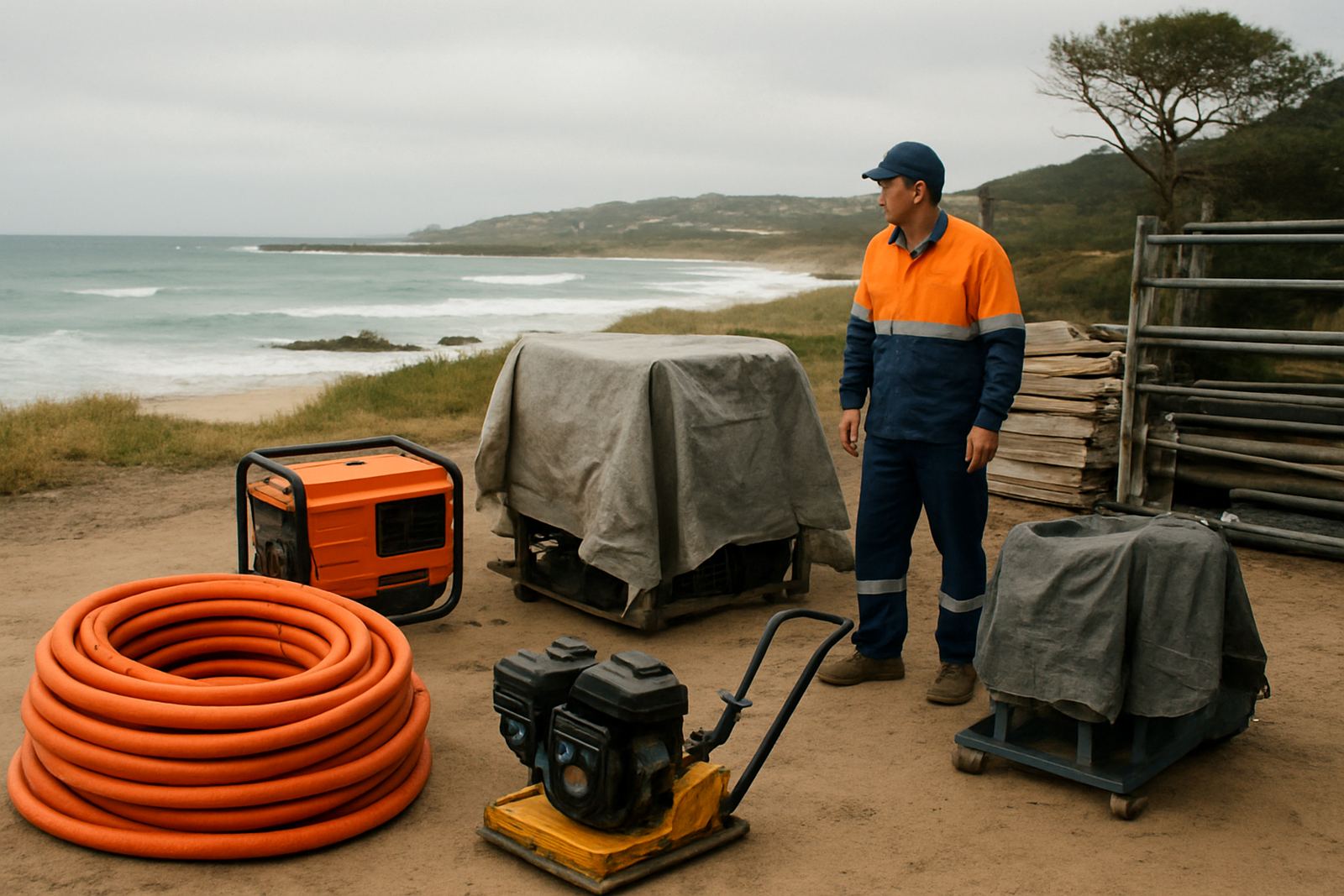
We see this most often on generator sets, water pumps, compactors and scaffolding access points. A machine that was fine in the yard can suddenly run rough after one windy afternoon by the sea. The fix is not fancy, it is routine housekeeping done every shift. If the crew treats cleaning as part of the job, not an extra, the kit lasts longer and keeps working when the weather turns.
Set up a cleaning point before the sand spreads
The best time to manage sandy site housekeeping is at the start, before the first load is unloaded. Put a brush, bucket, rag, basic degreaser and water near the laydown area. Keep a mat or pallet space for smaller tools so they are not dropped straight onto wet ground. If the site is on a windy corner in Port Alfred or open land outside Qonce, it helps to create a sheltered cleaning spot behind a container, wall or temporary barrier.
- Keep a stiff broom for coarse sand and a softer brush for control panels.
- Store hoses coiled off the ground and away from vehicle tracks.
- Use lids or caps on fuel and oil points as soon as filling is done.
- Wipe fittings before disconnecting them so grit does not travel inside.
- Assign one person per shift to do a quick end of day check.
That little bit of order saves time later. It also cuts down on the mess that gets taken into bakkies, offices and homes after the shift. On coastal work, housekeeping is really contamination control.
Keep moving parts and hoses free of grit
Moving parts do not enjoy sand. Bearings, rollers, couplings and guide points work best when they stay clean and lightly maintained. If a part starts making a dry scraping sound, stop and look before it turns into a bigger repair. Hoses also need attention because grit around couplers can damage seals and cause leaks. A hose with sand inside the outer folds can fail sooner than expected, especially where it bends often.
When equipment is hired for longer periods, ask for a pre-hire briefing on the weak points. That is useful for site foremen and for new hands who have not worked around coastal plant before. An easy rule is to clean first, then inspect, then start the machine. If someone rinses a part, let it dry properly before storage so you do not trap moisture inside. Eastern Cape humidity can make a clean part look dry when it is not, so allow a few extra minutes.
- Inspect hose ends for cracking, swelling or sand scoring.
- Check for noise around pulleys, chains and wheels after cleaning.
- Do not force moving parts that feel tight, find the cause first.
- After rain, wipe water and grit from fittings before packing away.
Generator and pump care on windy coastal sites
Generators and pumps often sit closest to the dust and spray, so they need the strictest housekeeping. Keep inlet and outlet areas clear and do not let sand pile up around the base. If a set is running near a walkway or loading zone, place it where tyres and foot traffic will not kick grit directly into vents. On an emergency callout in East London, we often find the problem is not the unit itself but the dirty area around it.
Fuel management matters too. A dirty funnel or open can brings grit straight into the tank, and that can lead to blocked filters or rough running. If fuel is being moved onsite, use clean containers and put caps back immediately. For pumps, check strainers often. A strainer full of sand and grass will pull poorly, which wastes time and can burn out the unit. On waterlogged sites near the coast, that problem shows up fast after a tide or storm. The team might think the pump is weak when in fact it is just clogged.
Scaffolding and access gear need daily housekeeping
Scaffold planning is not only about height and load, it is also about keeping access clear enough to work safely. Sand on ladder rungs, board surfaces and base plates turns a routine climb into a slip risk. Before the shift starts, check that access points are free of loose grit and mud. If the site is cramped, sweep each bay before moving materials through it. That small job reduces dropped tools and keeps the structure cleaner overall.
For projects in places like Beacon Bay or Gonubie where sea wind can be strong in the afternoon, it helps to secure loose wrapping, cords and offcuts before they blow into the scaffold line. Any loose plastic or packaging should be removed early rather than left until the end of the day. Housekeeping on access gear is not just about neatness, it is about keeping hands, boots and moving parts where they belong.
- Brush off boards before stacking them.
- Check base plates and castors for packed sand.
- Keep walkways clear of offcuts, cable and packaging.
- Store components in one marked area so pieces do not get buried.
Event sites need the same care as building sites
Party equipment and event setups are often forgotten in housekeeping talks, but they pick up coastal dirt just as quickly. Outdoor tables, chairs, cables, cords and small support gear should be cleaned before guests arrive, not after. If an event is being set up near the beachfront or on open ground in the Eastern Cape, wind can carry sand into folding joints, covers and cable runs in minutes. A few minutes of cleaning saves a lot of fiddling later.
Our events hire work often includes layout help, and that is where housekeeping starts to pay off. If the floor plan keeps movement channels open, cleaners and crew can get through without dragging dirt across the whole site. For mixed jobs where a build changes into a function, it is worth keeping separate cleaning cloths and storage areas for construction dust and guest areas. That simple split keeps the final presentation far neater, and less dusty.
A practical routine for East London crews
For most coastal jobs, a short routine is enough if it is done every day. At tea break, sweep the worst sand away from work zones. Before knock-off, wipe down the key machines, coil hoses properly and check that caps, covers and guards are back in place. Once a week, do a fuller inspection of wear points, filters and storage areas. If something is used in salt air every day, it deserves closer attention than kit used inland.
A builder working in Kidds Beach told us his site was losing time because the pump area kept clogging up after windy afternoons. Once the team started covering the unit between runs and cleaning the intake screen twice a day, the stoppages dropped off. Nothing special changed, just better habits. That is usually how sandy site housekeeping works on the coast, steady effort beats a big clean-up after a breakdown.
If you are hiring kit for a windy build, a weekend event or a longer job along the Eastern Cape coast, it helps to ask what needs the most attention before the first delivery arrives. A good briefing at the start makes the rest of the job easier to manage and keeps the equipment working the way it should.