Start with a straight line before you cut
Most hedge problems start when the first cut is made without a proper line to follow. For formal hedges, set your height and face line first using a string line, a taut builder’s line or a marked pole. On longer runs, check the line from a few steps back before you cut anything. If the hedge is along a boundary in Beacon Bay or Gonubie, it helps to confirm the edge first so you do not leave a scalloped finish where the wall or fence should read straight.
Work from the top down and keep the hedge slightly wider at the base than at the top. That shape lets more light reach the lower branches and helps the hedge stay full. If you cut the base in too tightly, the top shades the lower growth and you end up with thin patches that show through by winter.
Choose cutting times that suit the weather
On the East London coast, timing matters because wind and humidity affect how clean a trim looks and how much mess you have to chase afterwards. If you cut on a very windy afternoon, the clippings blow into beds, gutters and paving joints. On a damp morning, the leaves stick together and can clog your cutting blade faster than you expect. A calm, dry window gives you the cleanest result.
Try to avoid trimming hard in full midday heat, especially on exposed properties in Kidds Beach or near the beachfront. The hedge loses moisture quicker, the clippings dry out into tiny bits and cleanup takes longer. Early morning or late afternoon is usually better for both comfort and finish. It also makes it easier to see the line without glare from the sun.
- Pick a dry day with light wind if you can.
- Avoid cutting when the hedge is wet from mist or sea spray.
- Plan the job before the wind picks up in the afternoon.
Use the right tools for the hedge size
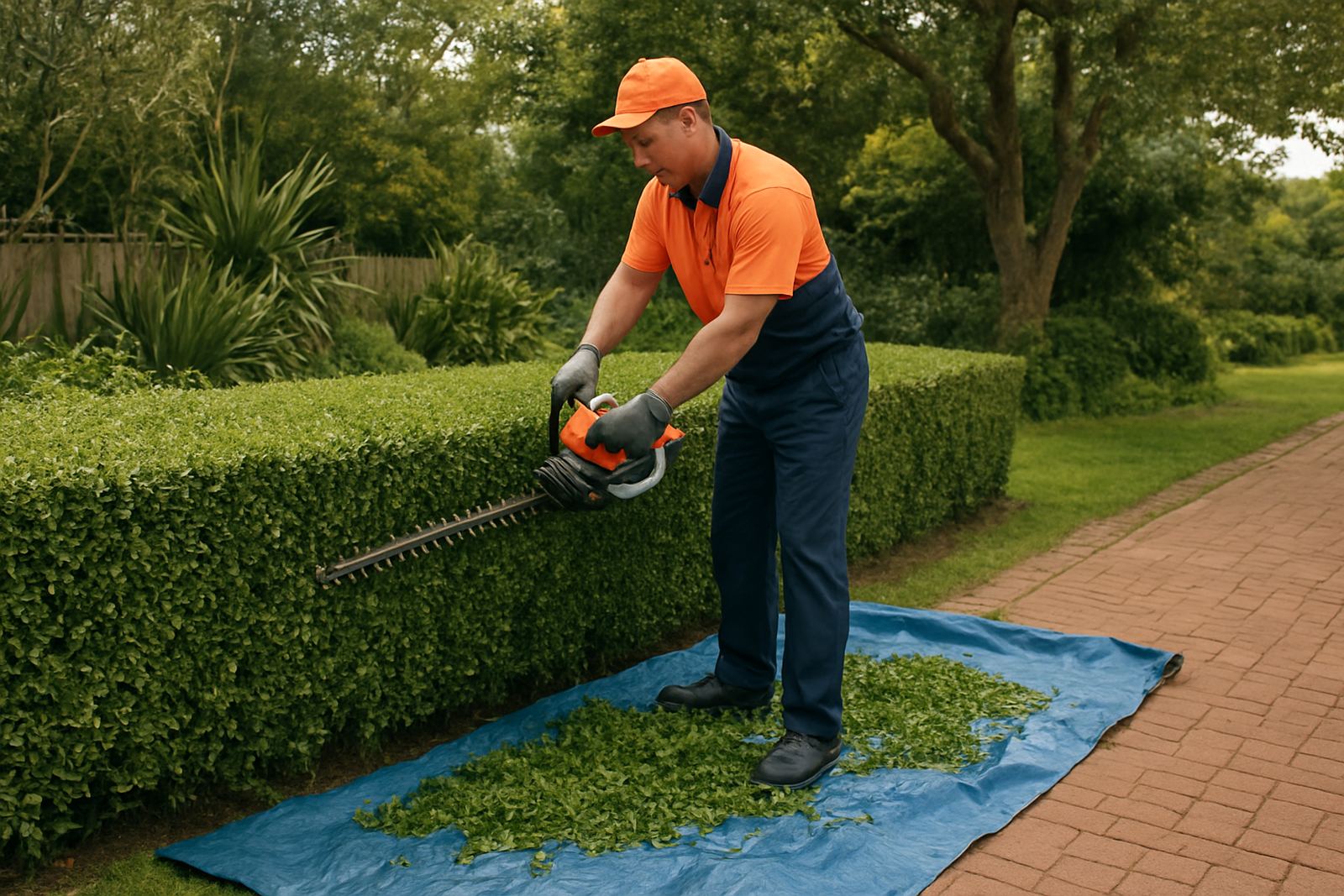
Clean trimming depends on matching the tool to the job. Small formal hedges can be handled neatly with hand shears, especially for final shaping and corners. For longer runs or thicker growth, a powered trimmer saves time, but the blade must be kept in good condition or it will tear the leaves rather than slice them. A blunt blade leaves ragged tips and that gives the hedge a brown look for days.
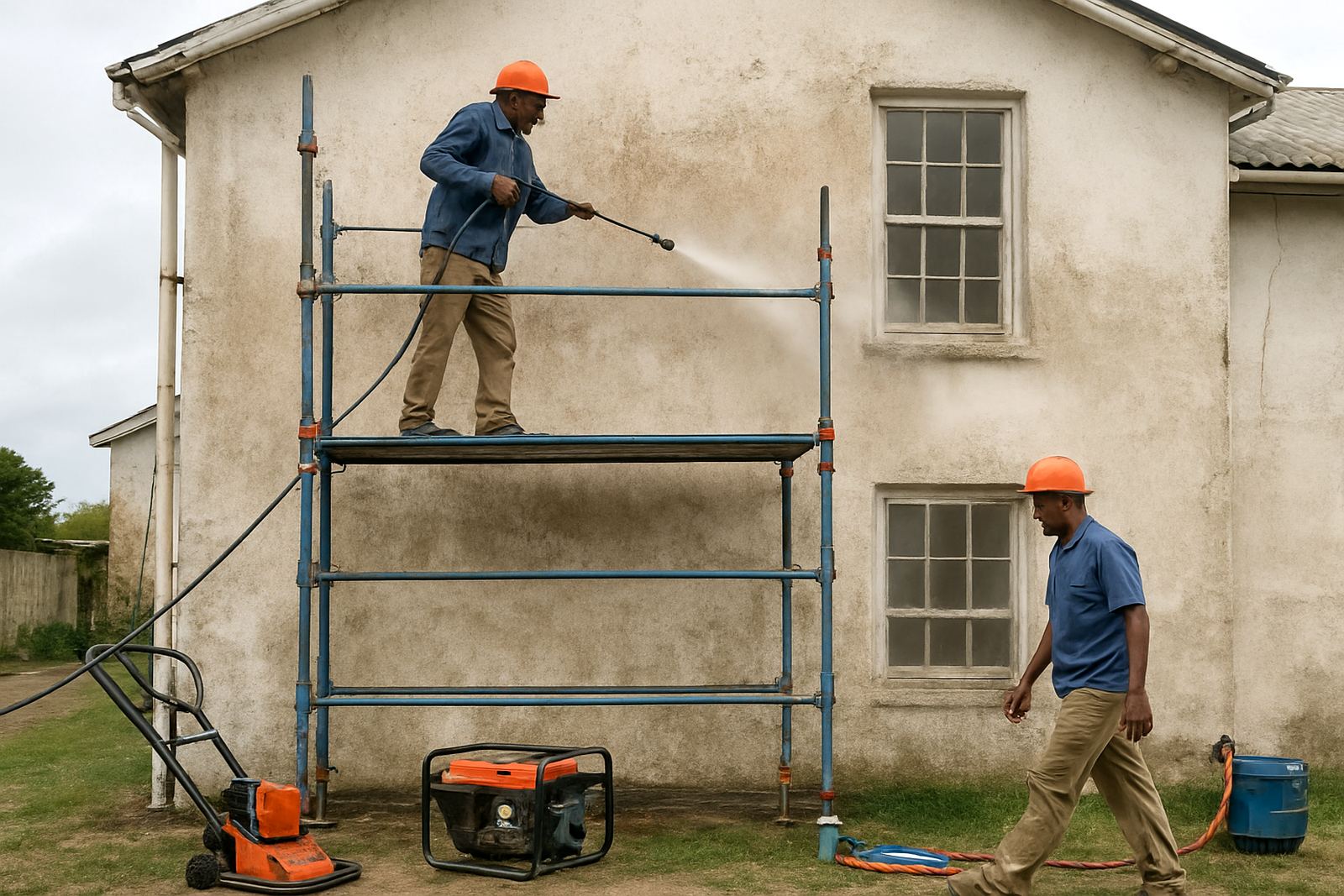
For taller sections, use stable access equipment and never stand on loose items. If the hedge reaches above shoulder height, a proper scaffold arrangement or work platform makes the line easier to keep and reduces wobble. On bigger properties, especially where there is a long street-facing hedge, a second person can watch the line from a distance and call out high or low spots before they become obvious.
- Use hand shears for detail work and edge correction.
- Keep blades clean and sharp so they cut, not rip.
- Use stable access equipment for anything above safe reach.
Contain the clippings before they spread
Mess control starts before the first branch falls. Lay sheeting or collection tarps along the hedge line so the cuttings do not end up in flower beds or drain openings. This matters in built-up yards where paving, pool edges and narrow paths leave little room for cleanup. If you are trimming near a driveway, work in short sections and clear as you go instead of waiting until the end.
A blower can help gather fine trimmings from paving, but it should be used with care around gates, neighbours’ yards and open windows. On windy days it can move debris into places you cannot easily reach, so a rake and broom are still useful. In older parts of Qonce, where drainage lines and footpaths can be close together, it is worth checking that no clippings are left in stormwater channels because they can wash down and block the flow after rain.
Keep the shape even from end to end
A formal hedge should look consistent from the street, not just from where you are standing. Step back often and check the whole line from both ends. It is easy to overcut one section while trying to make another section look level. When the hedge turns a corner, use the side closest to the road as your reference so the finish follows the property line, not the slope of the ground.
If the hedge has grown unevenly for a while, do not try to fix every fault in one day. Take a little off, wait for regrowth, then refine the shape on the next cycle. That approach keeps the hedge healthy and avoids bare patches that can take months to fill in. For owners in Port Alfred and along the wet coastal strip, it is also a better way to manage hedges that push hard after summer rains.
Plan the cleanup before you pack away
The neatest hedge jobs usually finish with the cleanest yard. Once the cutting is done, go back with a broom, rake and collection bags so the area around the hedge looks as tidy as the hedge itself. Check gate tracks, paving joints, drains and the base of walls. Even a small amount of clipped leaf matter can look untidy when it dries and blows back into view later in the day.
If the job includes a longer line, a second sweep after an hour is useful because a few bits settle after the first cleanup. This matters on coastal sites where a light breeze keeps moving loose material. For landlords and body corporates, a proper final sweep also makes it easier to hand over the property without complaints from tenants or neighbours.
- Clear drains and channels first so clippings do not wash into them.
- Bag cuttings before they spread across the yard.
- Do one last walk-through from the street side.
When the hedge is too high for ladders alone
Some hedges look simple until you reach the top and realise the line sits well above safe ladder height. That is where planning matters more than speed. A stable platform or scaffold arrangement gives you both hands free and helps keep the cut straight across long sections. It also reduces the chance of leaning too far and making dips in the line. For commercial properties, schools and event venues, a tidy hedge can be part of the whole site presentation, so a proper setup pays off.
In East London, many jobs are done between load-shedding windows, school pickups and weekend visitors. That means the work often needs to be organised quickly and neatly. When the hedge is high, wide or close to parked vehicles, the safest approach is usually the one that lets you control the cut and the mess at the same time. A careful setup takes longer at the start, but the finish is cleaner and the yard is easier to use afterwards.