Why a wheelbarrow still earns its keep on site
When you are moving rubble, sand, compost, bricks or event materials, a wheelbarrow gives you control where a bigger machine cannot fit. It is useful on tight plots in Beacon Bay, along narrow side access in Gonubie, and on sites where steps, soft ground or unfinished slabs make small loads easier to manage than one heavy lift. For builders it helps keep the pace moving. For event teams it is handy for carting crates, cables, décor boxes and packing after setup.
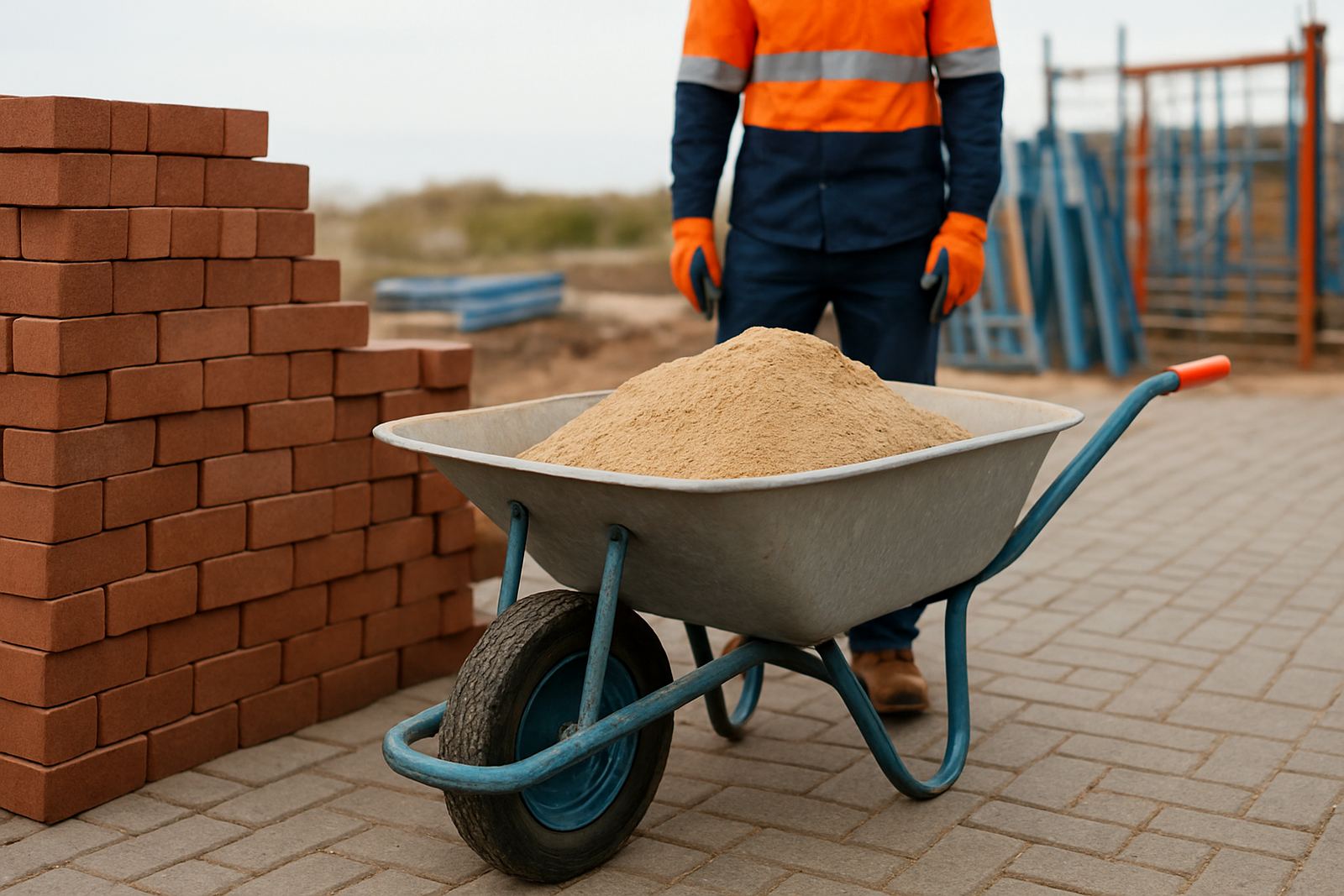
Our wheelbarrows are selected for general site use, with a sturdy steel tray, strong handles and a front wheel that rolls well on uneven ground. They are simple to use, do not need fuel or power, and can be kept working with basic care. That makes them a cost effective option for short jobs and longer hires alike.
Wheelbarrow sizes and what they suit
We supply wheelbarrows suitable for everyday moving jobs around building sites, gardens and event spaces. The most common hire choice is a single-wheel wheelbarrow with a deep tray, fitted for balanced loads and tight turning space. For heavier or repeated loads, some crews prefer a stronger frame and tyre setup that handles rougher ground a bit better.
- Typical tray capacity: about 60 to 100 litres depending on model
- Common load range: around 80 to 150 kg per load, depending on surface and operator
- Wheel type: pneumatic tyre for easier rolling on rough ground
- Frame: steel construction with grip handles
- Use type: rubble, sand, soil, compost, bricks, tools and event materials
If you are unsure which type suits the job, we can match the wheelbarrow to the ground conditions and the load you plan to move. A sand move on a flat slab is very different from pushing rubble over loose fill or a wet coastal yard.
Best fit for builders, gardeners and event crews
Wheelbarrows work best where loads are smaller but frequent. Builders use them for brickwork, mortar ingredients, sand and rubble removal. Landscapers use them for compost, topsoil, mulch and planting material. Event teams use them to move staging items, tables, packing cases and setup accessories from truck to venue.
- New builds and renovations where access is tight
- Garden clearing and compost delivery at homes and schools
- Event bump-in and bump-out at halls, churches and marquees
- Small municipal jobs where hand moving is still quicker than machinery
- Coastal sites where soft sand and narrow access paths slow larger equipment
In places like Kidds Beach and Port Alfred, where coastal weather can turn ground soft and slippery, a wheelbarrow is often the easiest way to keep material moving without damaging the site. It also helps on projects where machinery access is limited by gates, kerbs or neighbours close by.
No power or fuel needed
A wheelbarrow does not need installation, fuel or gas. There are no cables, start up checks or generator pairing to worry about. You can start using it as soon as it is collected or delivered, which makes it one of the quickest hire items to put to work.
That said, safe use still matters. Check the tyre pressure before loading, keep the handles dry, and avoid overfilling the tray so the load does not spill or throw the balance off. On sloped ground or wet coastal concrete, work with shorter loads rather than trying to move too much at once. It saves time and keeps the team upright.
Care, cleaning and service checks
We service our hire equipment between jobs so it leaves ready for work. For wheelbarrows that means checking the wheel, frame, handles and tray condition before hire. We also make sure the barrow rolls properly and that no cracks, bent parts or loose fittings are left unlooked at. A clean tray and working wheel make a big difference on a busy site.
If you are hiring for sand, compost or wet rubble, a quick rinse at the end of the day helps stop material building up and causing extra wear. Coastal moisture can cause rust if equipment is left dirty for too long, so it is worth giving the barrow a wipe down before return. Small care steps keep the unit in better shape for the next job and make handling easier for your team. If something feels off, let us know straight away so we can sort it before it becomes a bigger problem.
What to confirm before you order
Before you place the hire, it helps to confirm a few practical details so we can send the right wheelbarrow for the job. Tell us what material you are moving, how far it has to travel, and whether the ground is level, soft or rough. That lets us judge if a standard barrow will do the job or if you need a stronger option for repeated heavy loads.
- Type of material: rubble, sand, soil, compost or event stock
- Site access: gates, stairs, ramps, soft sand, gravel or slab
- Hire period: same day, weekend hire or longer term
- Delivery or collection: Beacon Bay base, East London or surrounding areas
- Need for setup help: loading advice, site planning or bulk equipment delivery
We cover East London, Beacon Bay, Gonubie, Kidds Beach, Qonce and Port Alfred, with delivery options to suit builders and event organisers. If you are also hiring other items like generators, pumps or scaffolding, we can help line up the timing so everything arrives when it should.
Key facts
| Product type | Single-wheel wheelbarrow for general site and event use |
|---|---|
| Tray capacity | About 60 to 100 litres depending on model |
| Load range | Around 80 to 150 kg per load depending on conditions |
| Wheel | Pneumatic tyre for uneven ground |
| Power requirement | None |
| Hire areas | East London, Beacon Bay, Gonubie, Kidds Beach, Qonce and Port Alfred |