What a wet vacuum does on site
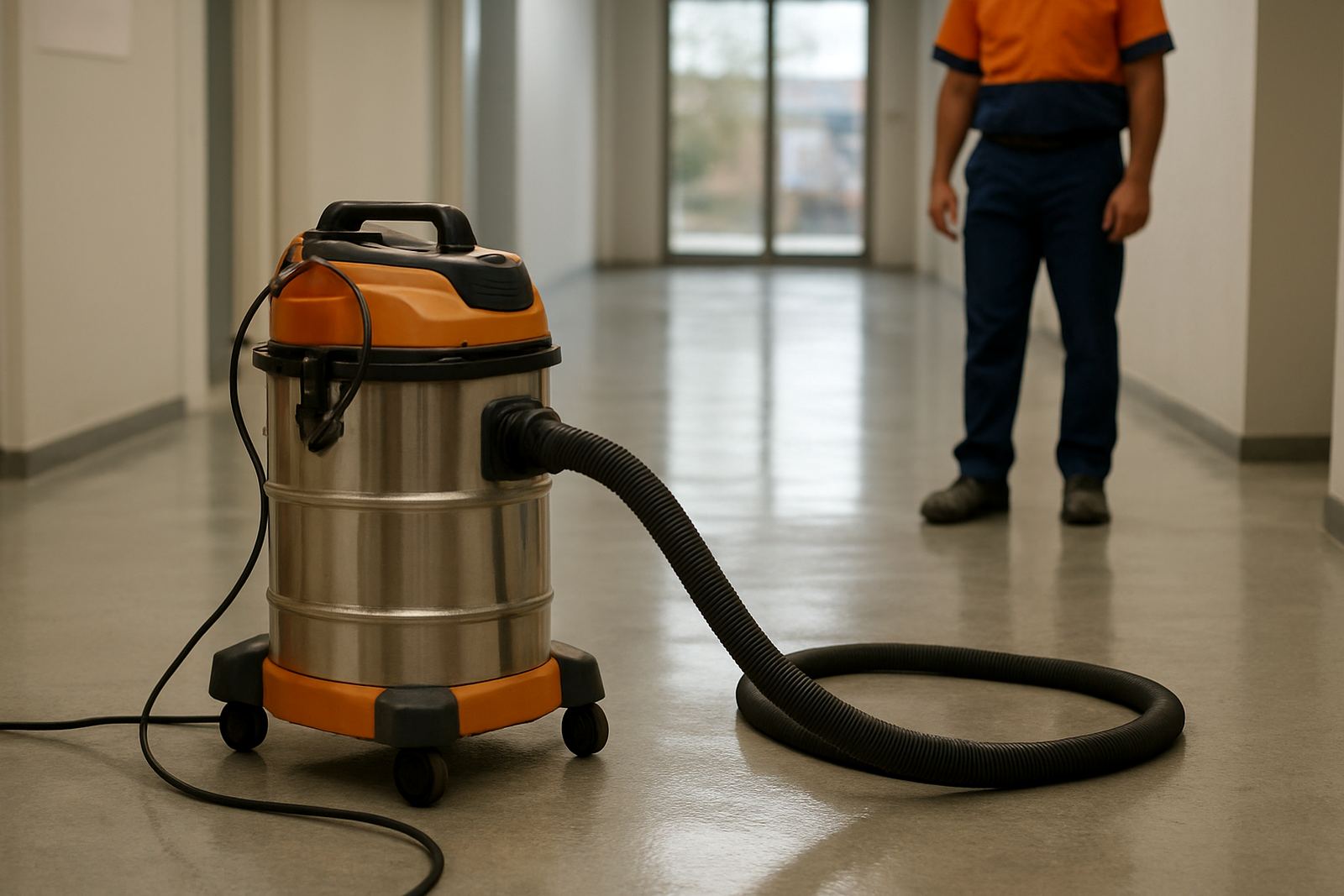
A wet vacuum is a heavy duty cleanup machine made for pulling up liquids and damp debris from hard surfaces. It can take on muddy water, tile grout washout, paint spill residue and the damp mess left behind after a marquee or function break-down. On building sites around East London and the coastal strip it saves time where normal cleaning gear just clogs or spreads the mess around.
For contractors it is useful after grinding, sanding or coring when fine dust has mixed with water. For events it helps when rainwater tracks into a venue, a cooler box leaks, or a bar area needs fast recovery before handover. The machine is usually fitted with a float shut-off so the motor stops pulling once the tank reaches capacity, which helps protect the motor and keeps the job moving.
Wet vacuum sizes and tank options
We supply wet vac units in practical site sizes, from compact 20 L to 30 L machines for quick clean-ups through to larger 50 L units for heavier recovery work. Smaller units suit tight access in homes, shops and conference spaces while larger tanks are better when you have a long corridor, a workshop floor or a spill that cannot be left standing. If you are working in Beacon Bay or Gonubie where access can be tighter, a smaller frame can be easier to move through doorways and up ramps.
- 20 L to 30 L units for domestic and light trade clean-up
- 40 L to 50 L units for builder’s mess, venue breakdowns and flood response
- Stainless steel or heavy plastic tank depending on the unit type
- Hose and nozzle fittings for floor work, corners and narrow edges
- Some units can switch between wet pickup and dry vacuum use
Choose the size based on how much liquid you expect to recover and how often you want to empty the tank. Bigger is not always better if the machine must be carried upstairs or loaded into a small bakkie.
Where it works best on the coast
This equipment suits builders, venue teams, schools and property managers across East London, Qonce and Port Alfred where weather, humidity and site conditions can change the job quickly. Coastal air means surfaces can stay damp for longer and that can make mud, dust and slurry harder to clear by hand. A wet vacuum helps keep floors usable when water has seeped in after rain or where washdown work has left a thin layer of slurry.
Typical uses include bathroom and kitchen renovations, post-plaster cleanup, tiled area washdowns, storm water recovery, workshop spill recovery and event site clean-up after a party or corporate function. If you are managing a venue in Kidds Beach or a site near the shoreline, the machine also helps with salt damp and tracked-in sand. It is not for large sewage jobs or materials that can damage the motor, so the type of spill should always be checked first.
- Renovation dust mixed with water
- Small flood water and storm ingress
- Slurry after cutting or grinding
- Event spills, drinks and rainwater inside marquees
- Workshop clean-up around sinks, drains and floor channels
Power supply and setup on hire
Most wet vac units run off standard 220 V mains power and plug into a normal South African socket. Where the supply is unstable, or load-shedding is a risk, let us know when you order so we can advise on practical use on site. A wet vacuum does not need water or gas to run, but it does need the right electrical supply and a safe, dry plug point. If you are using it near standing water the operator should keep the plug connection well clear and use proper site safety steps.
For event work the machine can be brought in once the main spill source is controlled and the floor is safe to work on. On a building site it often pairs well with brooms, scrapers and mops for the first pass before the wet vacuum does the final recovery. If you are not sure about the setup, we can talk through the power point location, cable run and access so the unit arrives ready for work.
Care, servicing and safe use
Wet vacs last well if they are emptied, rinsed and dried after use. Slurry and dirty water left sitting in the tank can smell bad and can block the hose, so a quick clean-down after hire matters. Check the filter arrangement before each job and make sure the float mechanism is working properly. If the unit starts losing suction, that is often caused by a blocked hose, full tank or clogged filter rather than a motor fault.
Our workshop team keeps the units checked between hires and handles hose inspection, motor testing and worn fitting replacement. That helps reduce down time when a machine is needed on short notice. In the coastal climate it is especially important to drain the tank fully and store the unit dry, because moisture left inside for days can cause extra wear.
What to check before you order
Before placing the hire, it helps to know what kind of mess you are dealing with and how far the unit has to travel. A wet vacuum for a small office spill is not the same as a machine for post-renovation slurry on a tiled hall floor. If you give us the right detail up front we can match the size and fittings better and avoid delays on delivery or collection.
- Type of liquid or waste to be recovered
- Approximate area size in square metres
- Whether there are stairs, lifts or narrow doors
- Power point location and cable reach needed
- Collection time, delivery time or emergency callout requirement
- Whether you need a single unit or more than one for a bigger site
For builders and event teams in East London, Beacon Bay, Gonubie, Qonce and Port Alfred, we can assist with delivery, collection and a pre-hire briefing so the unit is used correctly from the start. If the job is urgent, call out support can also be arranged where timing matters and the cleanup cannot wait.
Key facts
| Tank capacity | 20 L, 30 L or 50 L depending on unit supplied |
|---|---|
| Power supply | 220 V single phase |
| Motor use | Wet pickup with float shut-off |
| Typical hire use | Renovations, spill recovery, flood water, event breakdowns |
| Recommended surfaces | Tiled floors, sealed concrete, workshop floors and hard surfaces |
| Service area | East London, Beacon Bay, Gonubie, Kidds Beach, Qonce and Port Alfred |