What a trash pump does on a working site
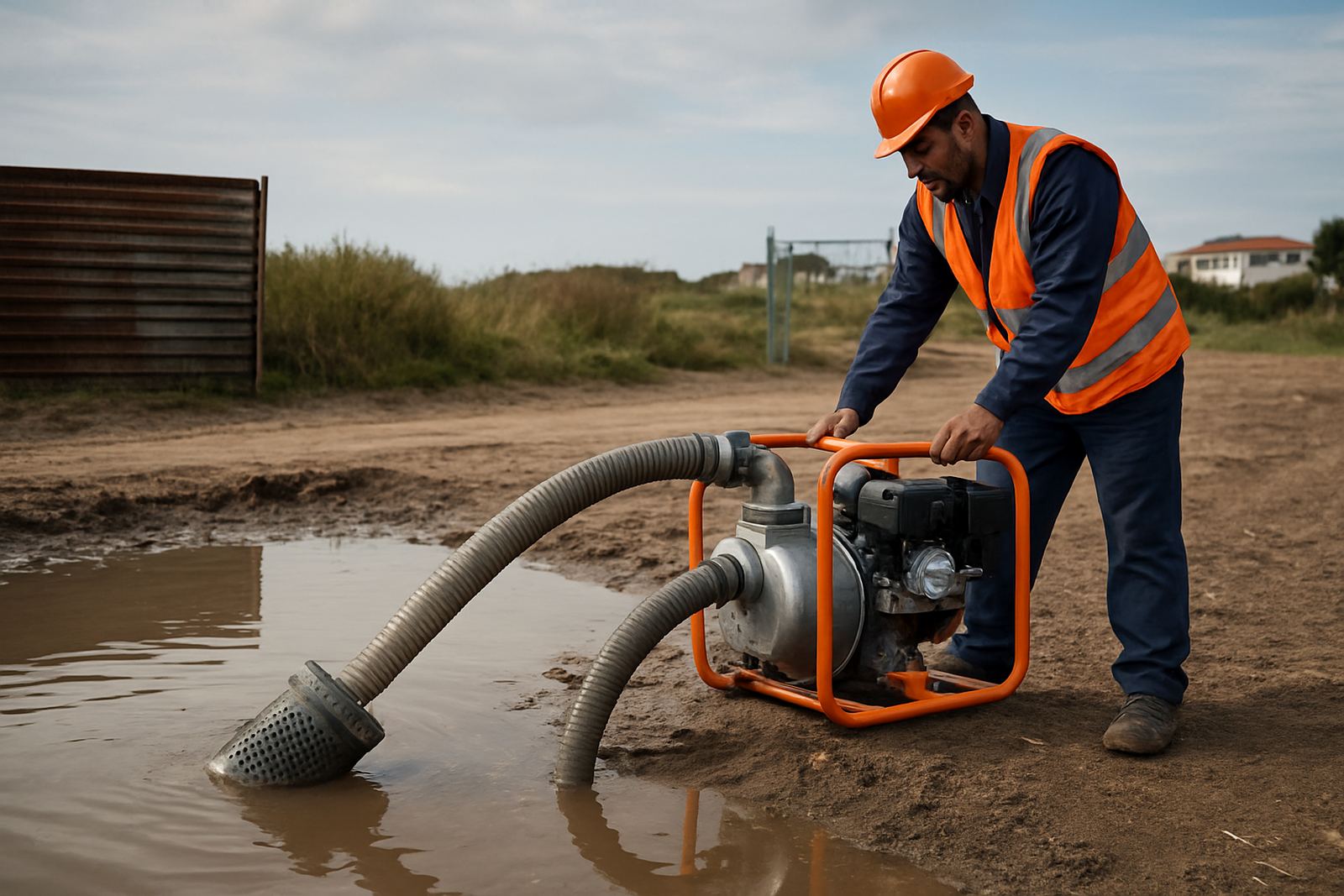
A trash pump is built to move dirty water where there is silt, sand, leaf litter, small stones or site runoff in the mix. On a building site in Beacon Bay or a coastal property in Gonubie, that often means stormwater, excavation water, trench seepage, or wash water after rain. A standard clean-water pump may stall or block in those conditions, while a trash pump is made with a wider passage and a harder working impeller.
These pumps are used when speed matters and the water is not neat and tidy. They are common on slab prep, foundation works, sewer and stormwater bypass jobs, flooded garages, and low-lying sites after a heavy downpour. If you need to clear a pit fast, or keep a trench dry long enough for work to carry on, this is usually the better option.
Sizes and options we supply
We supply trash pumps in practical sizes for builders, contractors and property owners. The exact unit depends on the flow you need, how far the water must travel, and how much debris is in it. A smaller unit can handle light site runoff, while larger pumps move serious volumes from deeper pits or flooded areas.
- 2 inch trash pump for smaller jobs, tight access and short transfer runs
- 3 inch trash pump for general site dewatering and mixed dirty water
- 4 inch trash pump for high flow work, larger excavations and flood response
- Diesel driven options for sites without reliable power
- Petrol driven options for quick setup and mobile use
- Hoses, strainers, couplings and suction lines supplied to match the job
For coastal work around Port Alfred, Kidds Beach or Qonce, we also take into account salt air and moisture. That can affect how the pump is placed and what sort of daily checks are needed, so we will talk through the setup before hire.
Where this pump suits best
Trash pumps are a good fit anywhere dirty water keeps getting in the way of progress. They are often hired for civil works, residential builds, driveway drainage, landscaping, farm yards, workshop pits and event ground prep after rain. If water carries mud or fine debris, a trash pump usually copes better than a small transfer pump.
They are also handy for emergency callouts after a storm, when drains back up or a yard starts pooling. In East London and the surrounding coast, heavy rain can come fast and the water does not always drain away in a neat line. Having the right pump on site can save hours of waiting and a lot of mess.
- Excavations and trenches on active build sites
- Stormwater and runoff control after rain
- Flooded basements, garages and plant rooms
- Temporary bypass pumping for maintenance work
- Road, yard and foundation dewatering
Power, hose setup and on-site installation
Most trash pumps need a strong prime and the right hose layout to work properly. We can advise on suction length, discharge length and the safest position for the pump so it does not draw in extra debris. If the water level is low, or the pump has to sit away from the pit, hose length becomes important very quickly.
Diesel units are useful where load shedding, no power, or site restrictions make electric pumping impractical. Petrol driven units are popular for shorter jobs and mobile use, while some applications may call for an electric unit if there is stable supply. Either way, the pump must sit level, on firm ground, with the suction line kept as short and straight as possible.
We offer site delivery, on-site setup and pre-hire briefing, so your team knows how to prime the pump, check the intake and keep the line clear. On busy jobs, that small bit of setup can make the difference between a pump that works all day and one that gives trouble at 9 the morning.
Care, servicing and coastal conditions
Trash pumps work best when they are checked daily and cleaned properly after use. Silt can settle in the casing, debris can wear the impeller, and suction lines can pick up grit. On coastal sites, the damp air and salt exposure can speed up wear if the machine is left dirty or standing in the weather.
Our workshop team services equipment between hires and checks for fuel, seals, hoses and general wear. If a pump has been used in muddy water, it should be flushed through before it is parked. Filters and strainers also need attention. It is a simple job but it saves problems later, especially on longer hire periods where the pump is expected to keep going each day.
If your site has a risk of floating debris or sand, tell us before collection so we can match the pump correctly and make sure the line protection is right. A little care goes a long way, and it helps the pump hold its flow through the full hire period.
What to check before you order
Ordering the right trash pump is mostly about the water itself. How dirty is it, how far must it move, and how high does it need to lift. If the job is in a trench, pit or sump, the depth and access will matter too. We will ask a few direct questions so the pump is not undersized or overkill.
- What type of water is it: stormwater, muddy water, runoff or flood water
- What size solids or debris are present
- How far the water must travel horizontally
- What vertical lift is needed
- Whether you have petrol, diesel or electrical supply on site
- Whether you need weekend hire, long-term hire or emergency callout
If you are not sure, send us the details and we will help you work it out. That is especially useful for builders juggling several trades at once, or event teams working on ground that has taken on water overnight. A quick pre-hire briefing can prevent the wrong unit being sent out.
Hire support across East London and the coast
Coastline Hire is based in Beacon Bay, East London and supports sites across East London, Gonubie, Kidds Beach, Qonce and Port Alfred. We handle site delivery, equipment collection, fuel management and emergency callout where needed. For longer jobs, we can also set up a hire plan that suits the pace of the site instead of forcing everything into one day.
Our team works with builders, maintenance crews, property owners and event organisers who need practical pumping equipment without fuss. If you need a trash pump for a dirty water problem, we will talk you through the flow, the hoses and the power source so the job starts correctly. Email hire@coastlinehire.co.za and we will sort the rest.
Key facts
| Pump type | High flow trash pump for dirty water |
|---|---|
| Common sizes | 2 inch, 3 inch and 4 inch units |
| Best use | Silt, debris, runoff and flood water |
| Drive options | Petrol or diesel, depending on job needs |
| Accessories | Suction hose, discharge hose, couplings and strainers |
| Hire support | Delivery, setup, fuel management and callout |