What a Water Blaster Does On Site
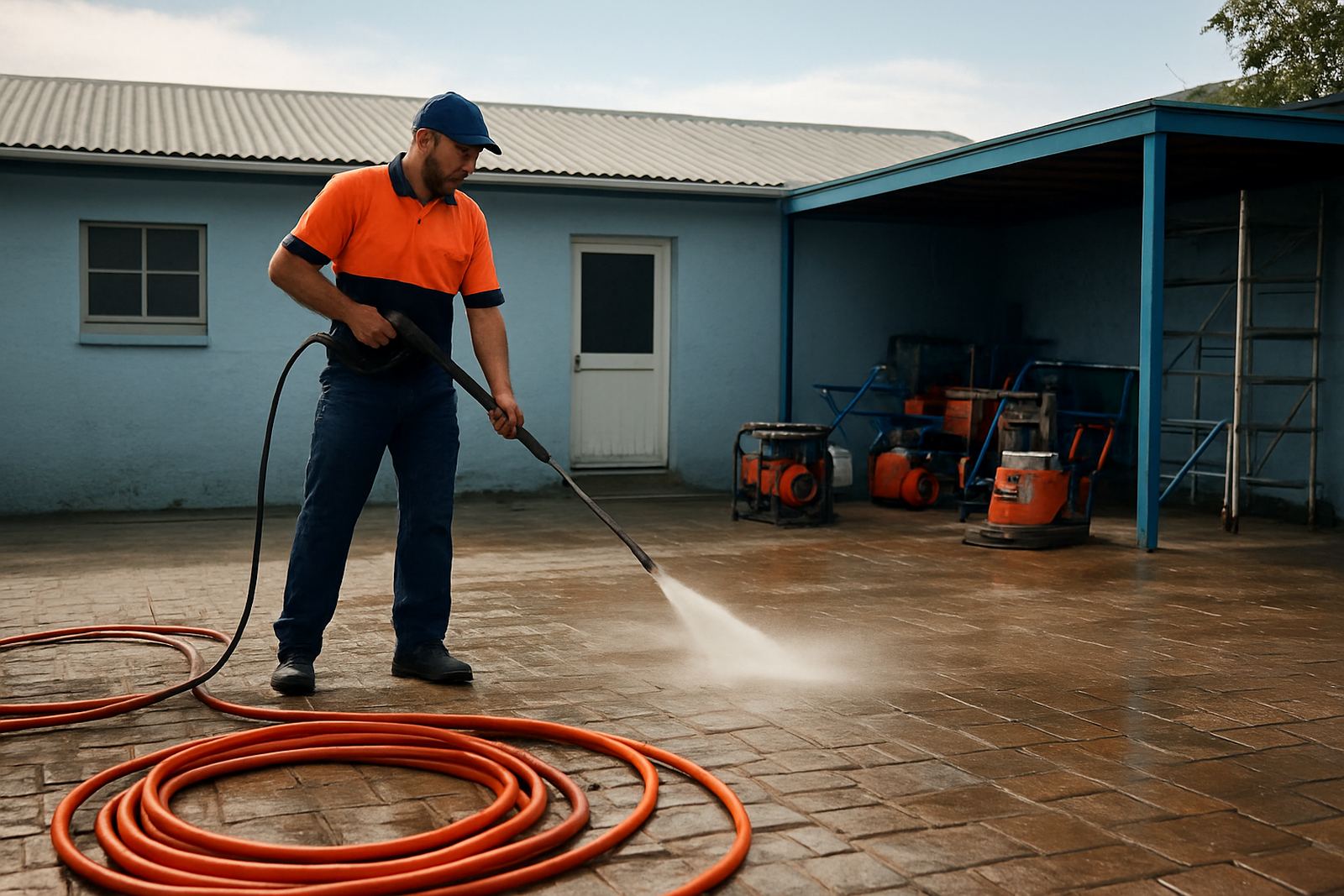
A water blaster pushes water through a narrow nozzle at high pressure so you can clean faster than with a hose pipe. It works well on paving, concrete aprons, boundary walls, dust-caked tools and site vehicles after a hard week in the coastal weather. For builders it helps with handover cleaning and for event teams it can clear slips, marks and loose dirt before setting up tables, stages or walkways.
Because the East London coast brings salt spray, damp air and fine windblown grit, surfaces can build up grime quicker than many inland sites. A proper pressure cleaning unit saves time on that kind of buildup, especially where water access is available and the area needs a thorough rinse rather than a light wash.
Typical Sizes And Cleaning Output
We supply water blasters in practical sizes for trade and event work, from smaller portable units to heavier machines for longer cleaning runs. The right choice depends on how much area you need to cover, how stubborn the dirt is and whether the unit will run from mains power or need a petrol or diesel engine.
- Working pressure: about 100 to 250 bar, depending on the unit
- Water flow: about 6 to 15 litres per minute
- Power options: electric, petrol or diesel driven
- Hose length: often 5 m to 15 m, with longer runs available on request
- Use type: light washdown, daily site cleaning or heavier prep work
- Water temperature: cold water units for general use
If you are cleaning paving at a venue in Gonubie or washdown equipment in Beacon Bay, a mid-range unit is often enough. For stubborn mud on a building site near Kidds Beach or a larger public area in Port Alfred, a higher pressure machine may be a better fit.
Where The Unit Suits Best
Water blasters are used on building sites, yards, events and maintenance jobs where a neat finish matters. They are useful before painting, before sealing paving, after rainy-day construction and before an event team starts laying out carpets, fencing or hire furniture. They also help when a client needs a cleaner work area for safety and presentation.
We often supply units for jobs around East London, Beacon Bay, Gonubie, Qonce, Port Alfred and nearby coastal areas. The unit suits places with hard standing, drainage and enough water supply to keep the machine going. If the area has poor drainage or soft ground, it helps to plan where the runoff will go so you do not wash dirt back across the same surface.
- Paving and forecourts
- Concrete slabs and loading bays
- Walls, steps and boundary areas
- Equipment washdown after site use
- Venue cleaning before setup or after pack-down
Power, Fuel And Water Supply Notes
Before hiring, check what power source you have on site. Smaller electric units usually need a standard 220 V supply and a socket that can handle the load. For load-shedding areas or remote sites, a petrol or diesel driven unit is often the safer choice because it keeps cleaning moving when mains power is unstable. If the unit is electric, a generator may be needed and that should be sized correctly to avoid nuisance trips.
Water supply matters as much as power. A water blaster needs a steady feed, not a stop-start trickle. In practical terms that means a tap, tank or hose connection that can keep up while the machine runs. Where municipal pressure is weak or water is limited, let us know in advance so we can advise on the best setup and whether extra storage is needed.
Care, Servicing And Safe Use
These units work hard, so basic care makes a big difference. The pump should never run dry, and the filter should be checked for grit before each use. Coastal humidity can also affect hoses, fittings and couplings, so after use it helps to drain the line, wipe the machine down and store it under cover. If a unit is returned muddy or with salt water in the system, servicing takes longer and the risk of damage goes up.
For safer use, keep the nozzle pointed away from people, soft timber and fragile finishes. A pressure washer can mark plaster, lift paint or chip weak concrete if the wrong nozzle or angle is used. If you are unsure, start with a wider spray pattern and move closer only as needed.
- Check oil levels before starting engine-driven units
- Use the correct nozzle for the surface
- Do not run the pump without water
- Flush the hose after use where possible
- Report any leak, loss of pressure or pulsing straight away
What To Check When Ordering
When you place an order, tell us what you are cleaning, how big the area is and whether the job is for a builder, a venue or general washdown. The right machine depends on pressure, flow rate, hose reach and power source. If the site has stairs, long access paths or limited water, those details matter too. That way we can match the unit to the job instead of sending a machine that is too small or too heavy for the space.
It also helps to confirm where the unit must go on arrival, whether you need site delivery, and if there will be someone on hand for a quick pre-hire briefing. For weekend hire, long-term hire or an emergency callout, we can help plan collection, fuel management and on-site setup so the machine is ready when your team needs it.
- Surface type and size
- Electric or engine-driven preference
- Water availability on site
- Delivery address and access details
- Length of hire and turnaround time
Key facts
| Machine type | High pressure water cleaning unit |
|---|---|
| Working pressure | About 100 to 250 bar |
| Water flow | About 6 to 15 litres per minute |
| Power options | Electric, petrol or diesel driven |
| Typical hose length | 5 m to 15 m, longer by arrangement |
| Main uses | Paving, walls, equipment washdown and venue prep |