Guest Services Could Not Stop for Load-Shedding
The client was a guesthouse in Gonubie, serving holiday visitors and business travellers along the East London coast. Their main concern was simple enough, but serious in practice: when Eskom cuts or local faults hit, reception still had to answer calls, fridges had to stay cold, lights had to stay on, and guests could not be left in the dark.
They had already felt the pressure of planned load-shedding and a few unplanned interruptions. In a hospitality setting, even a short outage can trigger complaints, spoil stock and upset bookings. Coastal humidity was another factor, because equipment stored near the sea needs proper handling and regular checks to avoid corrosion and starting trouble.
The brief asked for a backup plan that was practical, not overcomplicated. It had to suit a guesthouse with mixed electrical loads, be easy for staff to use, and allow for both short emergency runs and longer periods of support over a busy weekend.
The Brief, Constraints and Site Limits
We spent the first stage checking what had to stay live, what could be switched off, and how much starting power would be needed when the generator kicked in. The client wanted enough backup for essential guest services without running unnecessary loads. That meant we had to separate lighting circuits, small kitchen appliances, communication equipment and refrigeration where possible.
There was also a practical site issue. Access at the property was tight, with guest parking and vehicle movement to manage, so delivery and placement had to be done with care. Noise was another concern, as the guesthouse could not have a loud machine placed too close to occupied rooms or common areas.
- Planned outages on set days and surprise local interruptions
- Mixed electrical load from lights, routers, fridges and pumps
- Limited space for placement and cable runs
- Need for clean, safe refuelling and fuel tracking
- Low-noise placement away from guest areas
What We Supplied and How It Was Set Up
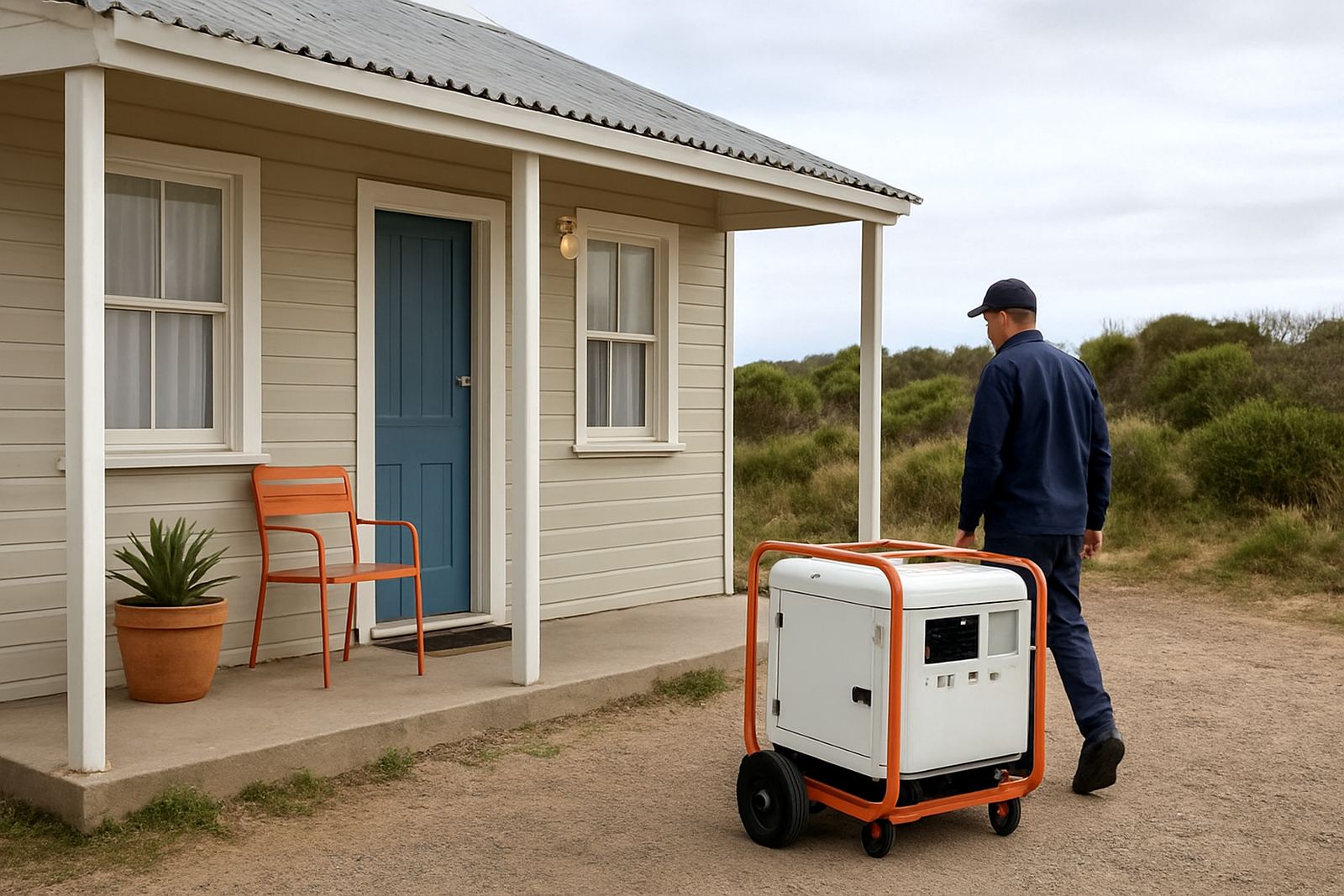
We supplied a suitably sized diesel generator set for essential backup, with enough output to cover the agreed guesthouse circuits and allow a sensible margin for start-up surges. The unit was delivered from Beacon Bay to Gonubie, positioned on stable ground and checked before handover. We also supplied the cabling and distribution support needed to connect the selected circuits safely.
The setup included a pre-hire briefing with staff, so they knew the start-up sequence, shutdown steps and what to watch during a running shift. Because the site would sometimes need attention after hours, we arranged emergency callout support and a clear fuel plan. The machine was kept at the right fuel level for the expected run time, which reduced the risk of stoppages during evening check-in periods.
- Diesel generator sized for essential guesthouse loads
- Site delivery and offloading in Gonubie
- Fuel management for longer evening and weekend runs
- Pre-hire briefing for reception and maintenance staff
- Emergency callout support if the supply failed or a fault was reported
Two-Week Rollout and Follow-Up Support
The project ran over two weeks. In week one we completed the inspection, agreed the load list, delivered the generator and tested the connection points under controlled conditions. We checked starting behaviour, noise position and cable routing before leaving the site in operation-ready condition. That test period was important because it showed where staff needed a simpler shutdown routine, and where the fuel checks had to be logged more clearly.
In week two we supported the first real outage periods and adjusted the running routine after the team had used the system for a few shifts. This is where the value of local support showed itself. When the weather changed and humidity rose, we gave the client a quick check over and advice on keeping the unit dry and clear of salt air. No fuss, just proper follow-through.
We also stayed ready for weekend hire needs, since guesthouse occupancy was expected to be higher and the client did not want a gap in service. The result was a setup that worked for both planned and unplanned interruptions without needing last-minute improvising.
Results for Guests, Staff and Bookings
The guesthouse was able to keep key services running through interruptions, which meant guests still had lighting, cold storage and working communication during outage periods. Reception stayed open, the main guest areas remained usable, and there were fewer complaints about power loss. For a coastal hospitality business, that matters because one bad night can affect the next booking too.
From the client side, the biggest gain was certainty. Instead of waiting to see when the next cut would happen, the team knew what to do and who to call. That reduced stress for staff on duty and helped avoid rushed decisions when power failed at an awkward time.
- Guest service continued during planned and unplanned cuts
- Reduced risk to refrigeration and booking systems
- Clear operating steps for staff on duty
- Less disruption to evening check-ins and overnight stays
- More control over backup costs through tracked fuel use
What We Would Repeat on the Next Coastal Site
If we were to do the same job again for another guesthouse or small lodge on the Eastern Cape coast, we would follow the same practical process. Start with load checking, keep the generator size tied to the real essential circuits, and confirm the fuel plan before the first outage. That avoids overspend and keeps the setup easy to manage.
We would also repeat the early staff briefing and the first-week follow-up. In hospitality work, a machine is only as useful as the team using it, so the handover has to be plain and direct. A small typo in a fuel log or a missed switch can cause trouble later, so simple written steps help a lot.
For coastal properties, we would again recommend protected placement, routine checks for moisture, and a backup contact for after-hours support. That approach has worked well for guesthouses, builders and event teams around Gonubie, Beacon Bay and East London.
Key facts
| Project type | Guesthouse backup power for planned and unplanned interruptions |
|---|---|
| Town | Gonubie, East London coast |
| Equipment supplied | Diesel generator, cabling and distribution support |
| Power target | Essential guest services only, including lights, refrigeration and communication |
| Timeline | 2 weeks from inspection to follow-up support |
| Support included | Site delivery, fuel management, on-site setup, pre-hire briefing and emergency callout |