Retail Refits Need Clean Access And Quiet Control
This project was for a local retail contractor working on an occupied shop in Cambridge, East London. The brief was simple on paper: strip out old fittings, complete new partitions and finishes, and keep the work area safe for staff, shoppers and the fitout crew. In practice, the job needed careful timing because the store had limited back-of-house space, narrow internal movement routes and no room for heavy kit sitting idle.
We were brought in to support the contractor with indoor access, power and cutting tools that could handle a busy shop environment without causing unnecessary disruption. The work had to happen in phases over 2 weeks, with some tasks done after hours and some done early in the day before the floor became active. That meant the hire plan had to be flexible, and equipment had to be easy to move, quick to set up, and reliable under load-shedding conditions.
What The Contractor Needed On Site
The main challenge was working inside a live retail space where dust, noise and open cables had to be controlled. The client needed safe access for ceiling work, signage changes, light structural adjustments and general finishing. There was also a need to cut boards and trim material neatly on site rather than sending everything off for off-site prep, which would have slowed the programme.
Because the site was indoors and partly operational, we focused on compact equipment that could be shifted by hand and stored overnight without taking over the floor. We also had to account for East London coastal humidity, which can affect electrical gear and cause materials to move if they are left unprotected. The contractor asked for a plan that would keep things moving without over-ordering equipment they did not need.
- Indoor access equipment for ceiling and upper wall tasks
- Temporary power support for tools and lighting
- Cutting tools for boards, trims and minor adjustments
- Safe cable routing and practical working space control
Equipment We Supplied And How It Was Used
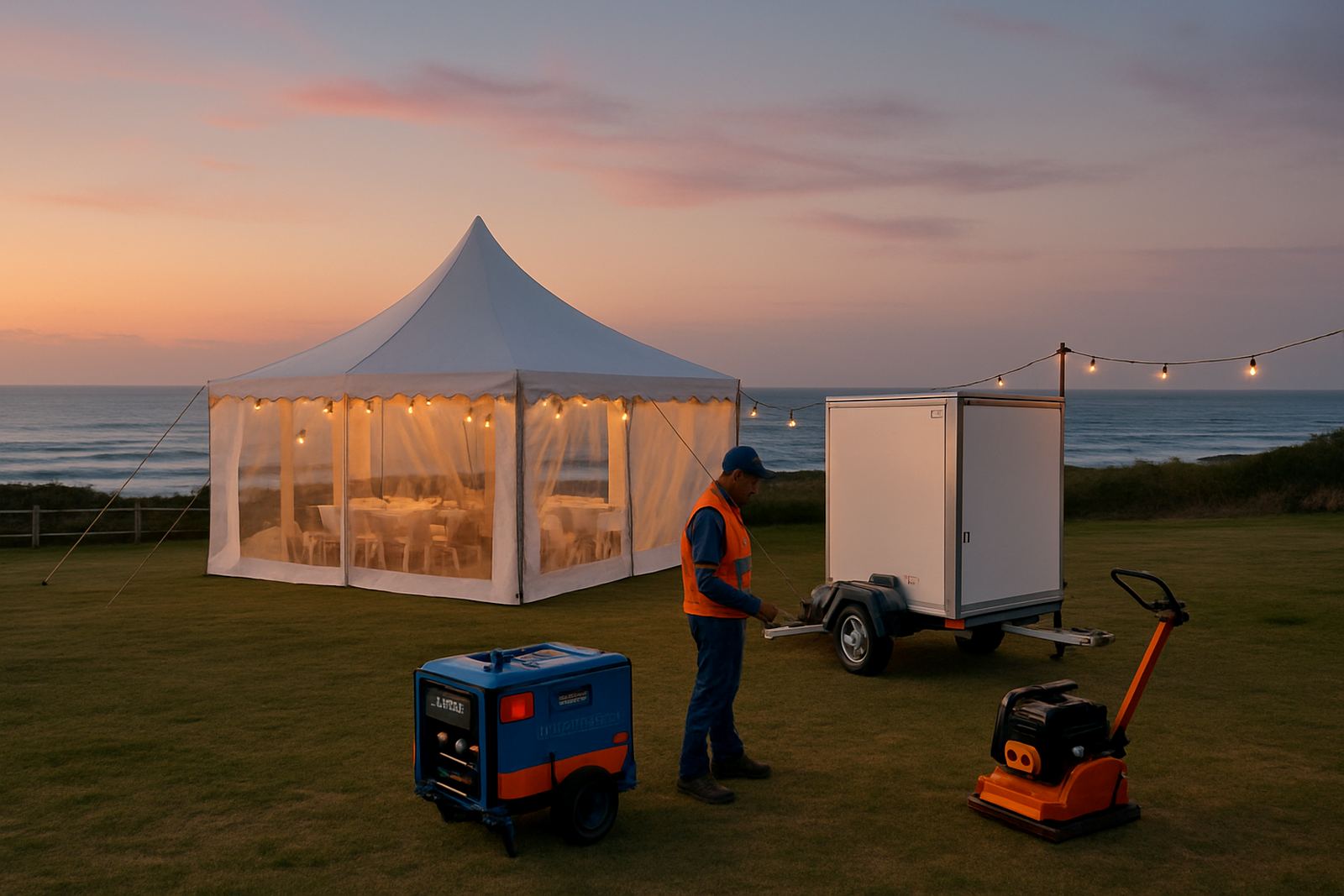
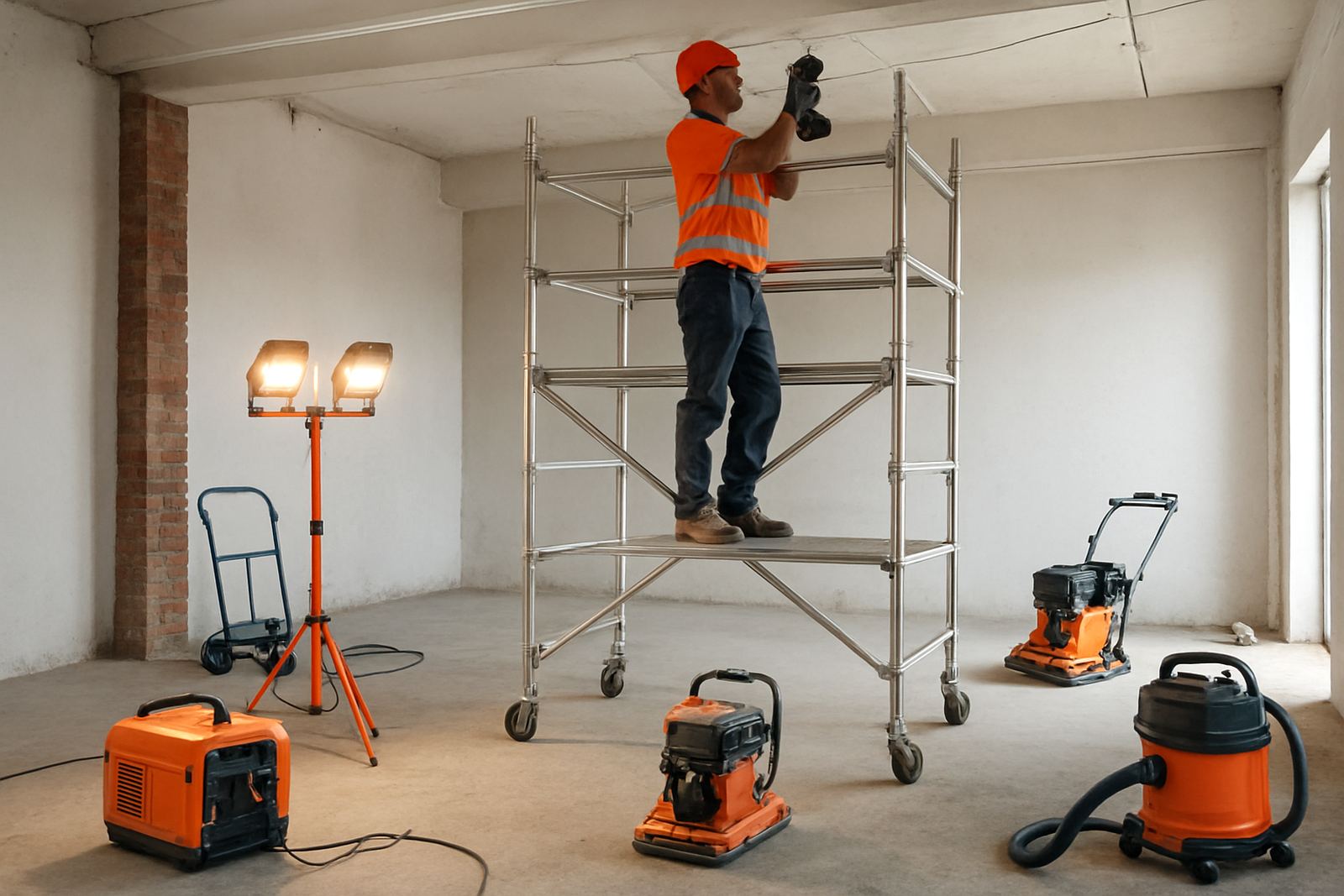
We supplied a compact generator set sized for small site tools and temporary lighting, plus extension leads and distribution support for controlled indoor use. Where mains supply was not reliable during the day, the generator kept the crew working through interruptions. For access, we provided scaffold components and mobile platform support suitable for indoor heights, with stable footing for repeat tasks at the same level.
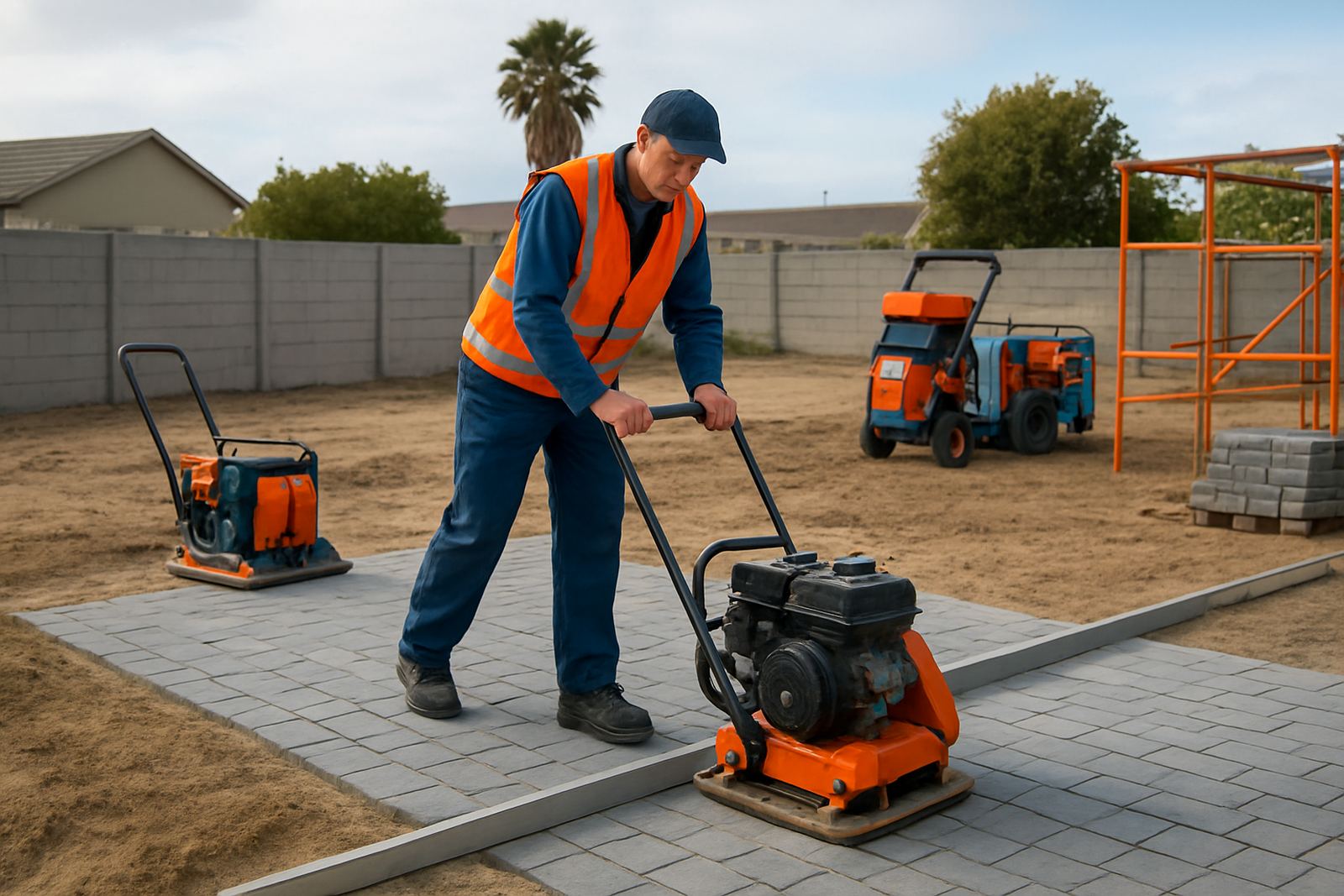
For cutting and trim work, we supplied handheld cutting equipment, dust management accessories and the consumables needed for short, accurate runs. The contractor also used site lighting in darker parts of the shop after trading hours. All equipment was delivered to the Cambridge site, positioned with the crew and then collected in stages as areas were completed. That made it easier for the fitout team to keep a clean sequence from one bay to the next.
- Temporary power for lighting and hand tools
- Indoor access support for ceiling level work
- Cutting equipment for boards, trims and fittings
- Delivery, setup guidance and staged collection
Working Around Trading Hours And Load Shedding
The fitout ran over 2 weeks and needed to fit around store access, material deliveries and the reality of load shedding. We helped the contractor plan the most power heavy work for the best available windows, and we kept a backup supply ready for periods when the building feed was unavailable. That kind of planning matters on the East London coast because a lost hour can turn into a missed day if the wrong tasks are lined up together.
We also arranged weekend hire so the team could push through the more disruptive sections when the shop was quieter. Weekend work reduced pressure on the client, kept customer movement away from the work zone and allowed the contractor to make real progress without rushing. A brief pre-hire briefing was done on delivery, covering safe refuelling, ventilation, access routes and the correct way to pack gear away overnight. The crew appreciated that bit of structure, because it cut down on confusion and saved time later in the job.
Practical Results For The Client And Crew
By the end of the project the contractor had completed the shop refit safely, with the work zones kept tidy and the store able to return to normal use on schedule. The client wanted a clean finish and less downtime, and that is what the equipment plan supported. Because the access and power needs were sorted early, the crew could focus on the actual build rather than juggling equipment problems.
The strongest result was not just the finished shop but the way the site stayed manageable during the refit. There were no long pauses waiting for power or for access gear to arrive, and the cutting work stayed controlled enough for indoor use. The contractor told us the combination of delivery, setup help and a clear return plan made the job easier to manage, especially in a tight retail environment where every square metre counts.
- Reduced downtime during load shedding and short power cuts
- Cleaner working conditions inside the retail space
- Faster progress on ceiling, trim and finishing tasks
- Better control of after-hours and weekend work
What We Would Do Again On A Similar Job
If we had to repeat this type of fitout, we would use the same approach again: keep the hire package tight, plan around the trading calendar and make sure the access gear matches the actual height and footprint of the shop. For retail work in Cambridge or anywhere along the Eastern Cape coast, small details like cable runs, storage space and overnight pack-down make a big difference.
We would also keep the temporary power plan separate from the access plan so each part of the job can be managed on its own. That gives the contractor more control if the schedule changes, and it helps avoid over-hiring gear that sits unused. In a shop fitout, especially one in a live environment, practical planning usually beats overcomplicating the job. One of the crew said it best on handover, the site stayed orderly and the tools just got on with it.
Cambridge Fitout Support From Our Beacon Bay Team
Coastline Hire is based in Beacon Bay, East London and supports builders, shopfitters and event crews across East London, Beacon Bay, Gonubie, Kidds Beach, Qonce and Port Alfred. For retail refits we can assist with site delivery, equipment collection, on-site setup, emergency callout and pre-hire briefing, which keeps a project moving even when the programme changes mid week.
If you are planning a shop fitout in Cambridge or anywhere on the coast, we can help you match the hire list to the task instead of guessing. That means the right access gear, the right power support and the right timing for the job at hand.
Key facts
| Project | Cambridge shop fitout |
|---|---|
| Location | Cambridge, East London |
| Duration | 2 weeks |
| Equipment | Generator, indoor access gear, cutting tools |
| Work type | Occupied retail refit |
| Support | Delivery, setup, weekend hire, collection |