Heavy rain, a flooded site and a short window to act
The brief came from a property site in Berea where a low-lying work area had filled with storm water overnight. The client needed water removed from the excavation and access routes cleared so trades could return to site without dragging mud into fresh work. There was also concern about soft ground around stacked materials, so the response had to protect both the build and the site’s remaining equipment.
We treated it as a same-week emergency rather than a standard hire. The site had limited turning space, slippery ground at the entrance and no tolerance for a slow start. Our team spoke with the site contact first, checked the likely depth and spread of the water, and matched the gear to what the site could actually use, not just what was available. That meant choosing pump capacity carefully and planning where hoses and discharge lines would run.
- Property site in Berea, East London
- Heavy rain and local runoff into a low point on site
- Need for rapid dewatering and cleanup support
- Access restrictions because of wet soil and narrow entry
What the site needed, and what could not happen
The main constraint was time. Water standing too long would have softened the base further, and the client could not afford unnecessary delay while waiting for dry conditions. The site also had safety limits around moving through muddy areas, so equipment had to be carried or placed in the right positions the first time. With coastal weather in East London, a second rain front was possible, so the response had to allow for ongoing pumping if the weather turned again.
Another issue was where to send the pumped water. On many coastal and suburban sites, you cannot just discharge anywhere without checking runoff paths and nearby drains. We worked around that by using a route that kept water away from freshly worked areas and by planning hose lengths to reduce trip points. The client also asked for cleanup gear because once the standing water dropped, there was still slush, silt and wet debris to remove.
- Limited site access and slippery ground
- Need to avoid flooding other areas during discharge
- Cleanup needed after the water level dropped
- Weather monitoring was important for follow-up callouts
Pumps, hoses and cleanup equipment supplied
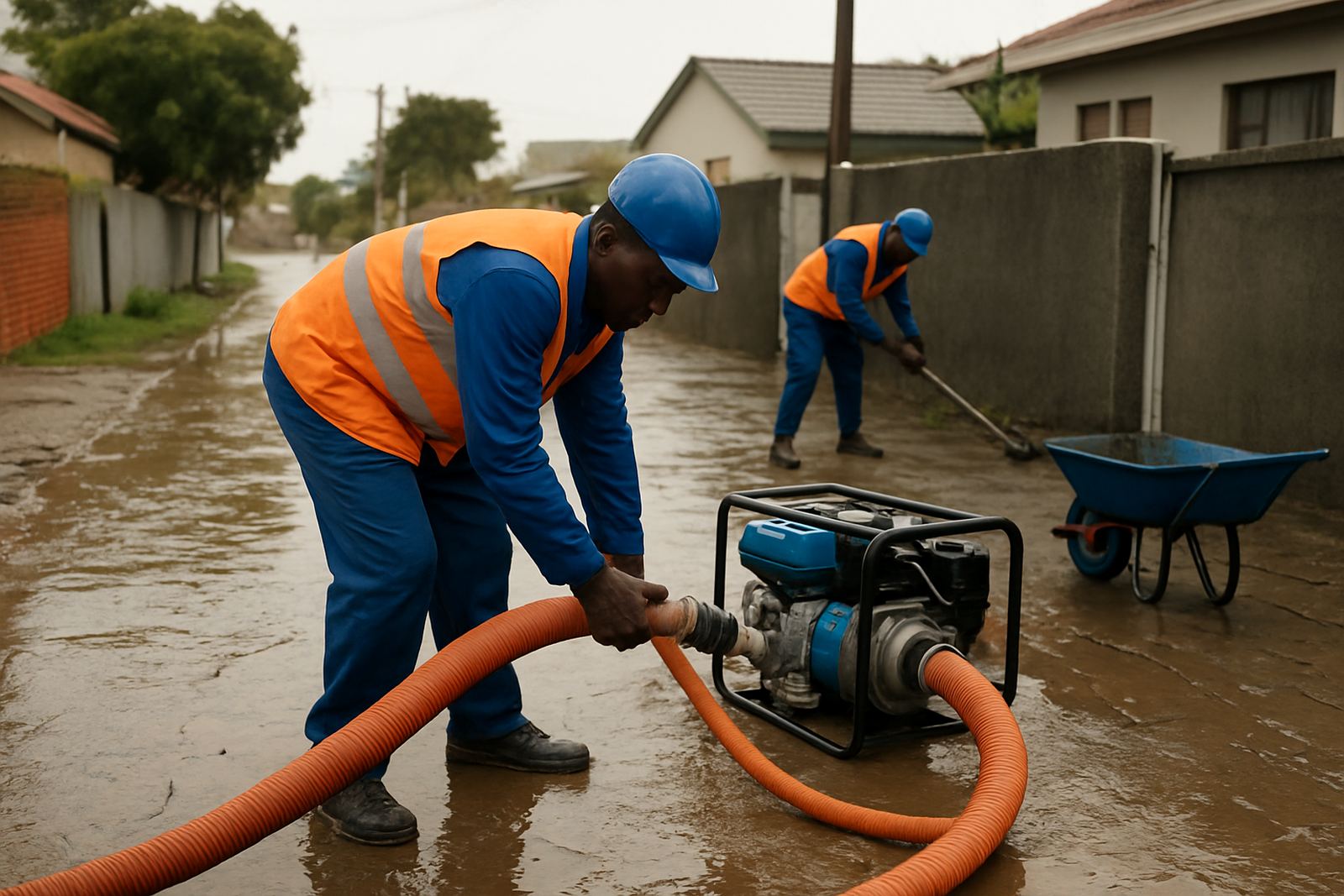
We supplied portable dewatering pumps with the right flow for a property site rather than a full-scale municipal setup. The kit included suction and discharge hoses, strainer ends and basic fittings so the crew could get started without waiting for extra parts. For cleanup we added wet-use cleaning gear, squeegee tools, absorbent material and practical site items for shifting sludge and washing down hard surfaces. The selection was simple, but that is often what works best in storm work.
Because the site was in a coastal part of the Eastern Cape, we also checked for corrosion risk and made sure the team had gear that could be rinsed down after use. Salt air and damp storage can shorten the life of equipment if you ignore it. The pumps were set up for regular monitoring, and the hoses were laid to keep them clear of foot traffic and wheel marks. The client did not need fancy extras, only kit that could run steadly and be collected once the job was stable.
- Portable dewatering pumps for storm water removal
- Suction and discharge hoses with fittings
- Strainer ends to help keep debris out of the pump
- Wet cleanup gear for sludge, silt and surface wash-down
Delivery and setup in the first week
We delivered the gear in the first week after the call came in, with the team working to a short turnaround from the Beaon Bay base into Berea. Once on site, the pumps were positioned at the lowest workable point and the discharge lines were checked before starting. The site contact was shown how to monitor flow, look out for blockages and shut the unit down if debris began to build up. That early briefing helped avoid stop-start issues and reduced the chance of damage.
Setup also included a quick check of the power and fuel plan. Where the site had its own supply available, we used that. Where power was uncertain, we arranged for fuel-managed operation so the pump could keep going through the period needed. This kind of storm response works better when the handover is practical and not rushed, because the person on site needs to know what to do if the water level changes or if loadshedding affects another part of the property. A short walk-through saved time later.
- Delivered and set up in week one
- Briefing given to the site contact before pumping started
- Monitoring plan agreed for debris and water level changes
- Fuel and power options checked before leaving site
Results once the water was under control
By the end of the first stage, the standing water had been reduced enough for the client to get back into the area safely. The cleanup gear then helped clear the heavier residue so surfaces could dry out faster. This mattered because wet silt left on concrete or compacted ground can turn into a slipping problem and slow the next trade. The client was able to resume work without waiting for a full natural dry-out, which in a coastal climate can take longer than people expect.
The property site stayed manageable through the rest of the wet spell because the team had a working pumping plan in place. There was no need for a long shutdown and no need to bring in oversize equipment that would have damaged the ground further. The client also had a clearer idea of what to do after the next heavy rain, which is often the real value of an emergency hire job. It is not only about removing water once, but about knowing how to respond again if needed. That kind of prep makes a difference.
- Water levels reduced quickly enough for safe access
- Residual sludge and surface water were cleared
- Work could restart without a long delay
- The site had a clearer plan for the next storm event
What we would repeat on the next storm call
If we were called to the same kind of storm response again, we would follow the same approach: assess the lowest point first, match the pump size to the actual volume, and keep discharge routing simple. For Berea and other Eastern Cape coastal areas, we would still check access, ground conditions and the chance of more rain before sending the first load. A rushed response can cause more trouble than the water itself, so a steady plan is usually better.
We would also continue to send cleanup kit with the pumping equipment instead of treating it as an afterthought. Storm jobs often finish in stages, and the second stage is just as important as the first. If the client needs ongoing support, we can extend hire for a few weeks, arrange a return visit, or set up emergency callout cover over a wet period. That gives the site some breathing room while repairs and dry-out work continue.
Useful on-site facts from this response
- Location: Berea, East London
- Project type: storm response for a property site
- Response period: first week delivery, with follow-up during the wet spell
- Equipment focus: dewatering pumps, hoses, cleanup gear and fuel support
Useful on-site facts from this response
The project showed how a quick, local hire response can keep a weather hit site moving. The work was not complicated, but it did need good timing, clear communication and gear that suited wet coastal conditions. That is the kind of job we handle regularly across East London, Beacon Bay, Gonubie, Kidds Beach, Qonce and Port Alfred.
- Location: Berea, East London
- Project type: storm response for a property site
- Response period: first week delivery, with follow-up during the wet spell
- Equipment focus: dewatering pumps, hoses, cleanup gear and fuel support
Key facts
| Area | Berea, East London |
|---|---|
| Client type | Property site |
| Main issue | Heavy rain and standing storm water |
| Core equipment | Portable dewatering pumps, hoses, cleanup gear |
| Response time | Delivered in the first week |
| Support options | Site delivery, on-site setup, fuel management, emergency callout |