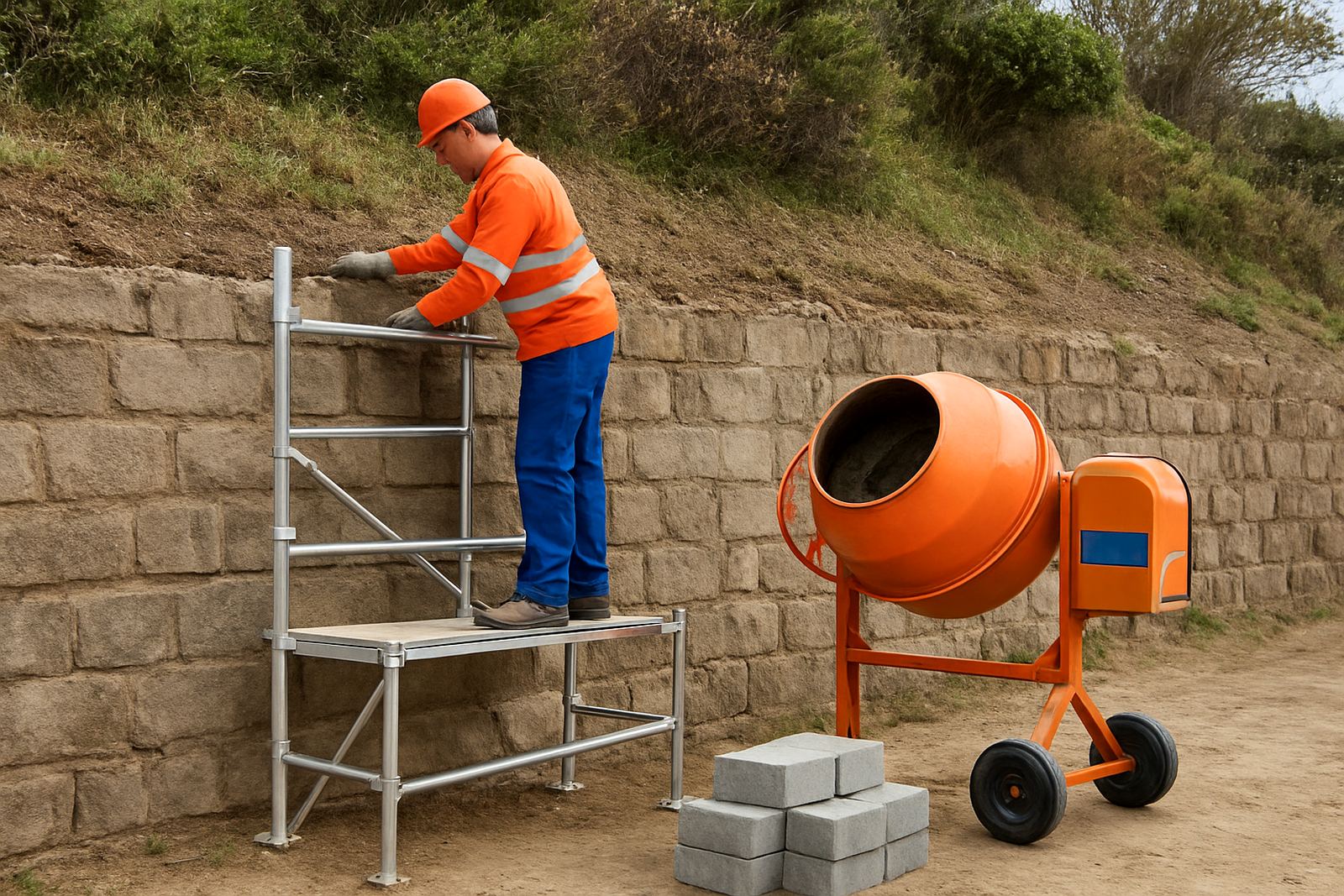
Retaining Wall Repair Callout in Dorchester Heights
The client was a residential property owner in Dorchester Heights, East London, dealing with a retaining wall that had started to crack and shift after heavy rain and regular coastal moisture. The brief was simple enough on paper, but the work itself needed care. They wanted the damaged section opened up, rebuilt in stages and finished without putting pressure on the surrounding garden and driveway.
The wall sat close to a narrow side passage, so getting men and materials into place was not straightforward. There was limited room for storing spoil, and the work area had to stay tidy because neighbours were right on the boundary. We walked the site with the contractor, checked the access points, and set out a hire plan that would keep the job moving without crowding the space.
What Made the Site Difficult
This kind of repair needs more than just tools off the back of a bakkie. The wall was on a slight slope, the working face was uneven, and the team had to strip out loose material before any rebuilding could start. A section of scaffold access was needed so the workers could reach the upper levels safely and keep both hands free for the repair. The job also had to fit around wet weather, because in East London you do not get to choose the rain.
The contractor wanted equipment that would hold up over several days, with no delays from flat batteries or weak output. Load-shedding was also part of the planning, so anything that depended on power had to be backed up properly. We arranged the hire so the crew could keep mixing and breaking even if the area went off supply.
- Narrow side access with limited turning space
- Uneven ground and a sloped working area
- Rain risk and coastal damp affecting curing time
- Need for safe scaffold access at wall height
- Power interruptions from load-shedding
Equipment Supplied for Controlled Repair Work
For the breakdown and rebuild stage we supplied a petrol breaker for opening the damaged sections, a site mixer for fresh mortar and concrete, and scaffold access equipment to keep the repair controlled from top to bottom. The breaker was chosen for enough impact to remove loose masonry without overworking the whole wall. The mixer gave the team a steady batch size, which helped keep the colour and consistency even across the repair.
We also supplied the extras that matter on a small repair job: extension leads where needed, fuel management support, and pre-hire briefing so the contractor knew what was coming, how to set it out, and what to check before starting. For this type of site, that bit of planning saves time. Megan from the events side did not need to be involved here, but the same habit of tidy set-up and clear timing still applied. The scaffold plan was checked by Themba, and Luyanda handled the collection and return window so the equipment arrived when the crew was ready.
- 1 site mixer for mortar and concrete batches
- 1 petrol breaker for controlled removal
- Scaffold access sections for wall-height work
- Fuel support for multi-day use
- Delivery and collection timed to the repair stages
Two-Week Programme From Strip-Out to Finish
The job ran over two weeks. In week one, the contractor stripped out the damaged section, cleaned back the face and assessed where the wall had moved. The breaker and scaffold let them work safely and quickly, so the area could be prepared properly instead of patched over. Once the damaged parts were removed, the crew mixed fresh material in smaller loads and started the rebuild in lifts.
In week two, the focus moved to finishing and curing. The team kept the site protected from too much water and checked the wall line before closing out the final section. Because the mixer was on hire for the full duration, they could work at the pace the repair needed rather than rushing to finish all at once. That made a real difference to the final result, especially where small adjustments were needed around the boundary.
Outcome for the Client and Surrounding Property
By the end of the repair, the wall was stable again and the cracked section had been properly rebuilt. The contractor could keep the work neat, and the property owner had a safer boundary with less risk of further movement. The access arrangement also meant there was minimal disturbance to the garden area and no unnecessary damage to the rest of the structure.
From our side, the job confirmed what works best for coastal repair sites in and around East London. Good equipment, clear delivery timing and enough support for the crew on site all make the difference. It was not a big flashy project, just a practical one done properly and that is usually the kind that matters most.
- Stable wall section restored
- Cleaner finish on the repair face
- Less disruption to adjoining areas
- Work completed on schedule over 2 weeks
What We Would Do Again on a Similar Job
We would set it up the same way again for another retaining wall in Dorchester Heights, Gonubie, Kidds Beach or anywhere else along the coast. Start with a site walk, check the access, match the equipment to the pace of the repair and leave room for weather delays. That approach keeps the job under control and avoids bringing more kit than the site can handle.
For contractors doing this sort of work, scaffold planning and fuel management are worth sorting early, not later. If the wall is close to a dwelling or a boundary, a pre-hire briefing helps the crew know exactly what is arriving and when. It sounds basic, but on a tight site basic is what keeps everything moving.
Coastline Hire works from Beacon Bay and supports repair work across East London, Qonce and Port Alfred with site delivery, collection, on-site setup and weekend hire where needed. If a wall repair or small civils job needs equipment that is ready to work, we can help put the pieces in place.
Key facts
| Project type | Retaining wall repair |
|---|---|
| Area | Dorchester Heights, East London |
| Duration | 2 weeks |
| Equipment used | Site mixer, petrol breaker, scaffold access |
| Service support | Delivery, collection, on-site setup, fuel management |
| Site conditions | Narrow access, slope, coastal moisture, load-shedding risk |