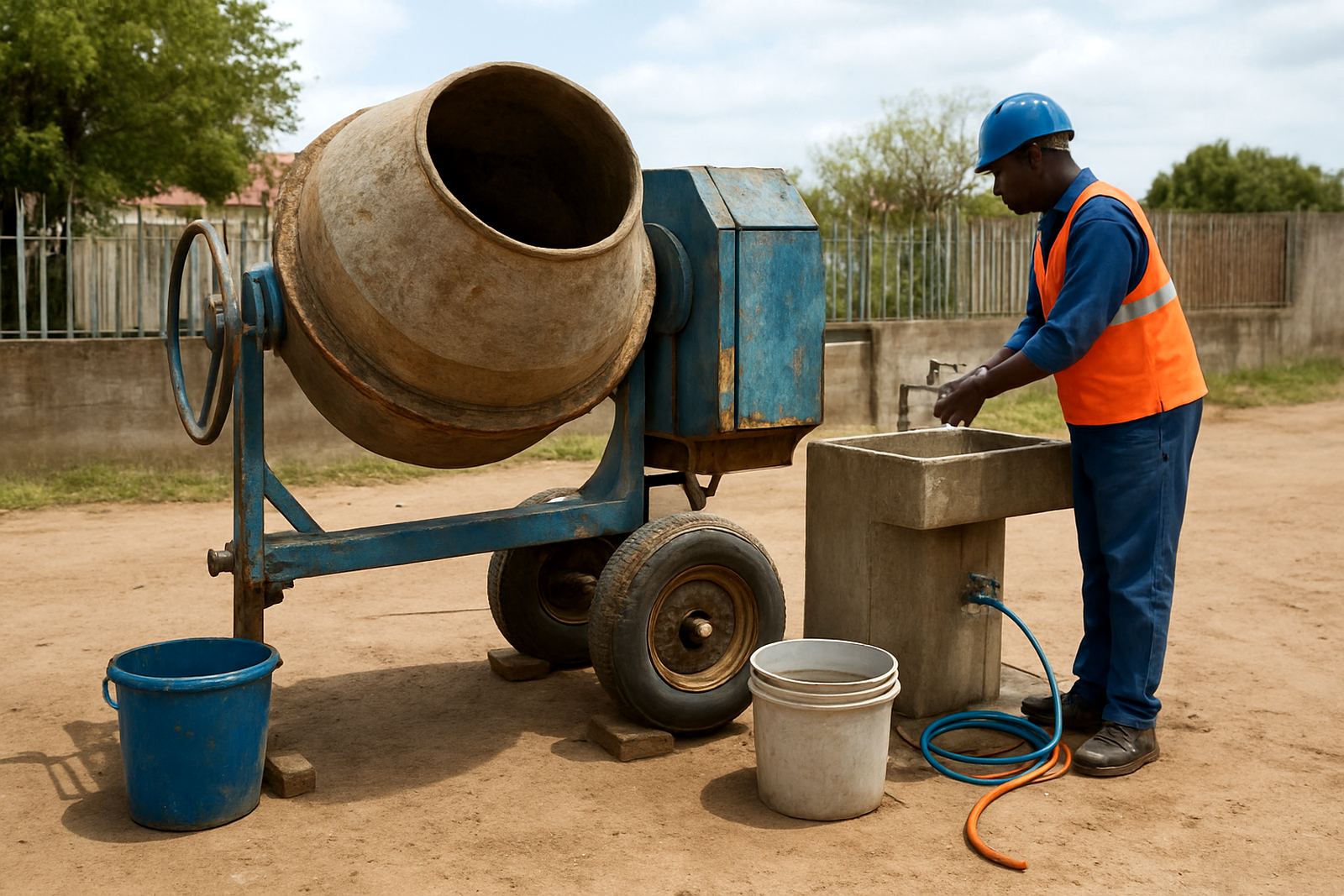
Check the mixer before you load it
Start with a quick inspection before the mixer leaves the yard or gets moved around site. Look at the frame, drum, handles, wheels or tow points, and make sure the guards are in place. If the mixer has a petrol or diesel engine, check for loose fuel lines, leaks, low oil and any build-up of cement around moving parts.
For builders working in Beacon Bay, Gonubie or Kidds Beach, damp air can speed up rust and seized bolts. Wipe off moisture and old mix before the unit is packed away. A mixer that looks clean can still have grit in the bearings or a cracked handle so give it a proper once-over, not just a glance.
- Check tyres or wheels for damage and correct pressure where fitted.
- Test that switches, belts and covers are secure.
- Remove loose tools, buckets and cords from the loading area.
- Make sure the drum is empty and settled before lifting or moving.
Load and secure it for transport
Small mixers are awkward if they are lifted badly. Use enough people or suitable lifting gear for the unit’s weight and shape. Do not drag a mixer by the drum or tip it onto its side unless the manual says it is designed for that. If it has been hired for a weekend job in East London or Port Alfred, secure it before the trailer or bakkie leaves the yard.
Keep the mixer low and stable, with the heaviest side supported. Use proper tie-down straps at the frame points, and avoid wrapping straps around guards or controls. If the site is on a slope or sand close to the coast, chock the wheels and keep the load balanced. A loose mixer can shift suddenly and damage the vehicle or injure someone nearby.
- Use the frame for lifting and tying, not the drum.
- Keep hands clear of pinch points when loading ramps are used.
- Check that ramps are dry, firm and rated for the weight.
- Recheck straps after the first few kilometres and after rough roads.
Position it safely before the first batch
Place the mixer on level ground where possible. If the ground is soft, use timber pads or flat boards under the feet so the mixer does not settle unevenly. On fresh sites in Qonce or along the coast, mud and sand can turn a small mixer into a wobble hazard very quickly. Keep it clear of walkways, gate openings and vehicle turning space.
Plan the work area so sand, stone, water and cement are close by but not piled where people walk. The operator needs space to tip into barrows or wheelbarrows without twisting. If the mixer is working near a power point or generator, keep cables away from wet patches and traffic routes. Never stand directly in line with the drum when it is loading or discharging.
Mix in the right order and at the right speed
Wrong loading order puts strain on the drum and gives poor mix quality. Start with a little water if the mixer and mix design call for it, then add aggregate, cement and the rest of the water in measured amounts. Do not overfill the drum. A mixer that is too full will kick, stall or spill, which is bad for the machine and the crew.
Let the mixer work at the speed it was made for. If the load is lumpy or too dry, stop and correct it instead of forcing the drum. Keep hands, shovels and scoops out of the drum while it is turning. Even a small mixer can grab clothing or gloves before someone realises what is happening.
- Measure batches instead of guessing by eye.
- Keep the drum rotation steady, no sudden changes.
- Stop the machine before adding corrective material by hand.
- Use clean water and avoid muddy buckets that weaken the mix.
Clean it before the cement sets hard
The best time to clean a mixer is straight after use. Once cement hardens, it is much harder on the drum and blades, and the cleanup takes longer. Rinse the drum with water and brush off residue while the mix is still wet. If the unit is hired out again the next day, make sure no grit, stones or dried lumps are left inside.
Switch off the machine and isolate the power source before cleaning. Never put your hands inside a turning drum. For stubborn build-up, use the right scraper or a wooden tool that will not damage the surface. On windy days around the East London coast, stand to one side when hosing so slurry does not splash back into eyes or over controls. Let the mixer dry fully before storage to cut down on rust and smells.
Pack away, store and hand back without damage
When the job is done, empty the drum fully and give the machine a final rinse. Dry the frame, check the handles and wheels again, and tighten any loose fittings before transport. If the mixer is going into long-term hire rotation or storage over a wet weekend, park it under cover with the drum open so air can move through.
Before hand-back, note any damage, wear or missing parts. That makes the next job easier and avoids delays on collection. A few minutes spent sorting the mixer now can save a full repair later. If the unit has been used on a municipal site or a busy event area, remove all waste water and debris so the area is left tidy and safe.
- Empty the drum fully and rinse while residue is fresh.
- Dry moving parts before loading for transport.
- Record faults, missing pins, guards or straps.
- Store on level ground under cover where possible.