What a proper paving base needs on the coast
When you are laying paving on sandy or mixed ground around East London, Beacon Bay, Gonubie or Kidds Beach, the base has to be firm, level and dry enough to hold its shape. A rushed base shows up later as sinking blocks, hollow spots and edges that start to move after heavy rain or a few hot summers. Coastal moisture and storm water can soften a base fast, so the ground below the paving needs proper compaction before the first layer goes down.
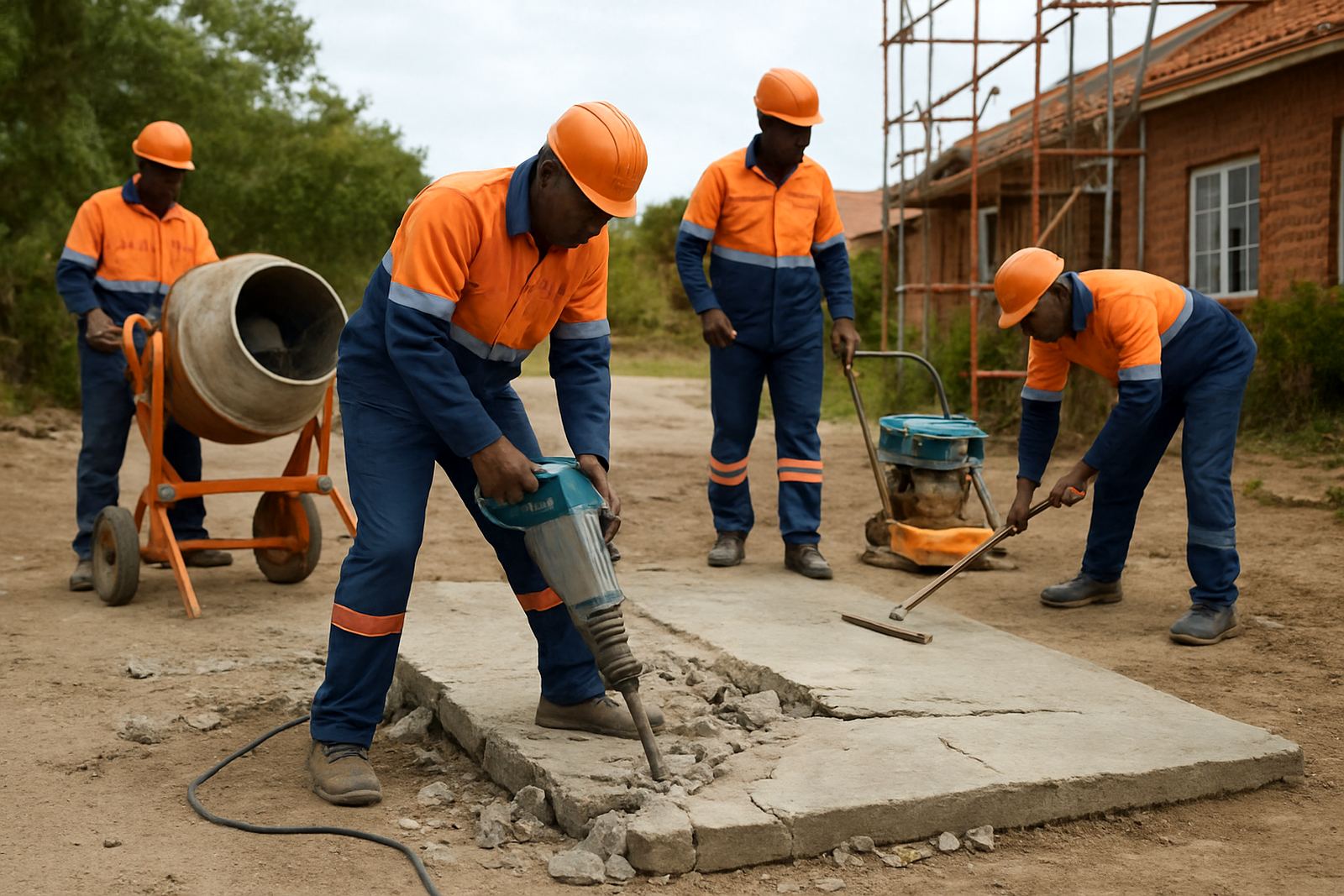
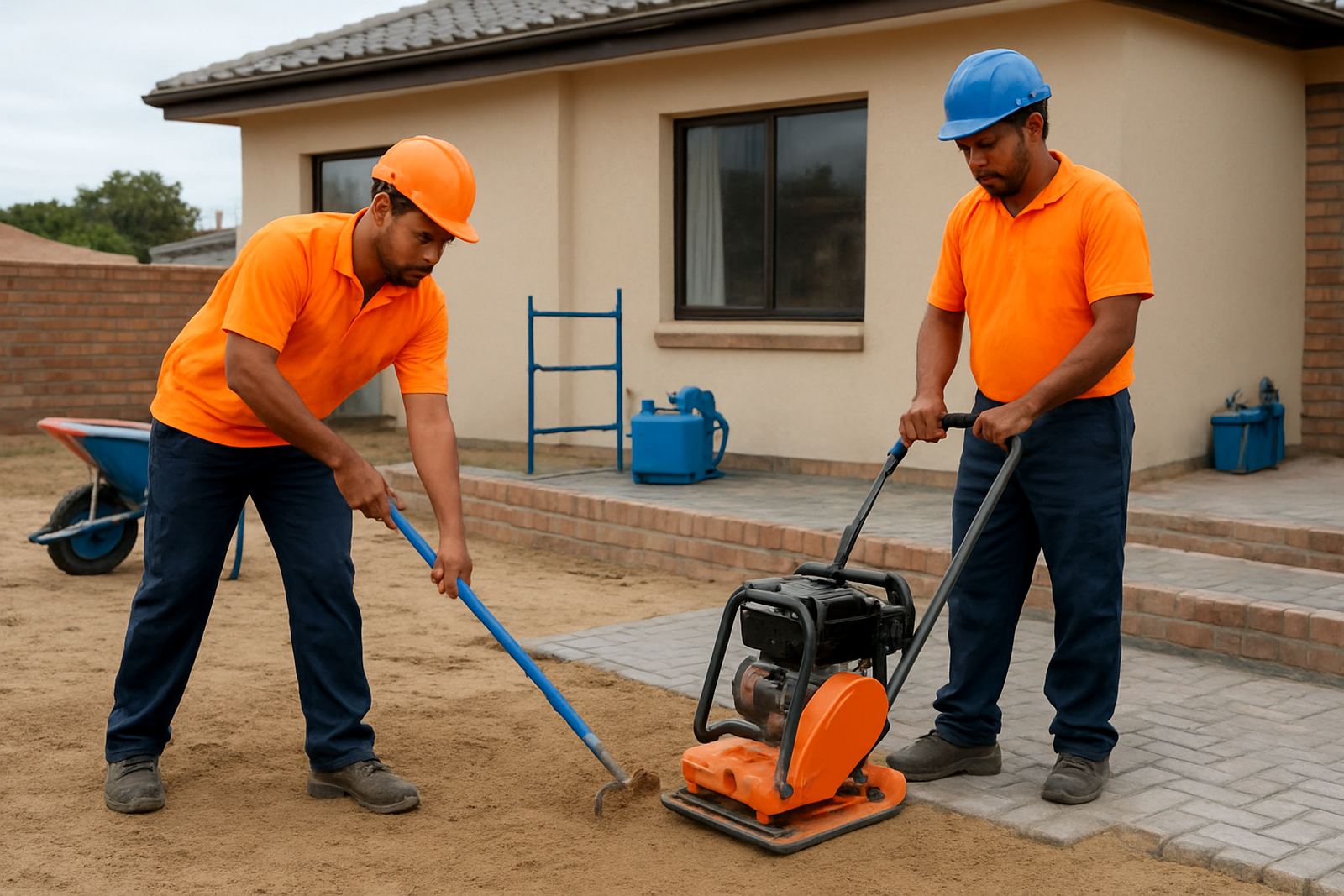
For driveways, walkways and patios, the work usually starts with clearing, excavating and compacting the sub-base in layers. If the soil is soft or recently filled, more passes with the plate compactor or a heavier machine may be needed. On bigger sites in Qonce or Port Alfred, access can also affect the plan, so it helps to know where the material will be stockpiled, where rubble will go, and how the machine will move without marking finished areas.
Typical hire kit for paving preparation
Most paving base jobs need a mix of compacting, cutting and site support equipment. The exact set depends on the size of the area, how much soil must be removed, and whether the job is a new install or a repair. We help builders, landscapers and owner-builders put together the right hire list so they do not pay for gear they will not use.
- Plate compactors for sand, stone and final bedding layers
- Compaction equipment for harder work where the base needs extra force
- Cutting equipment for trimming edge lines, slabs and kerbs
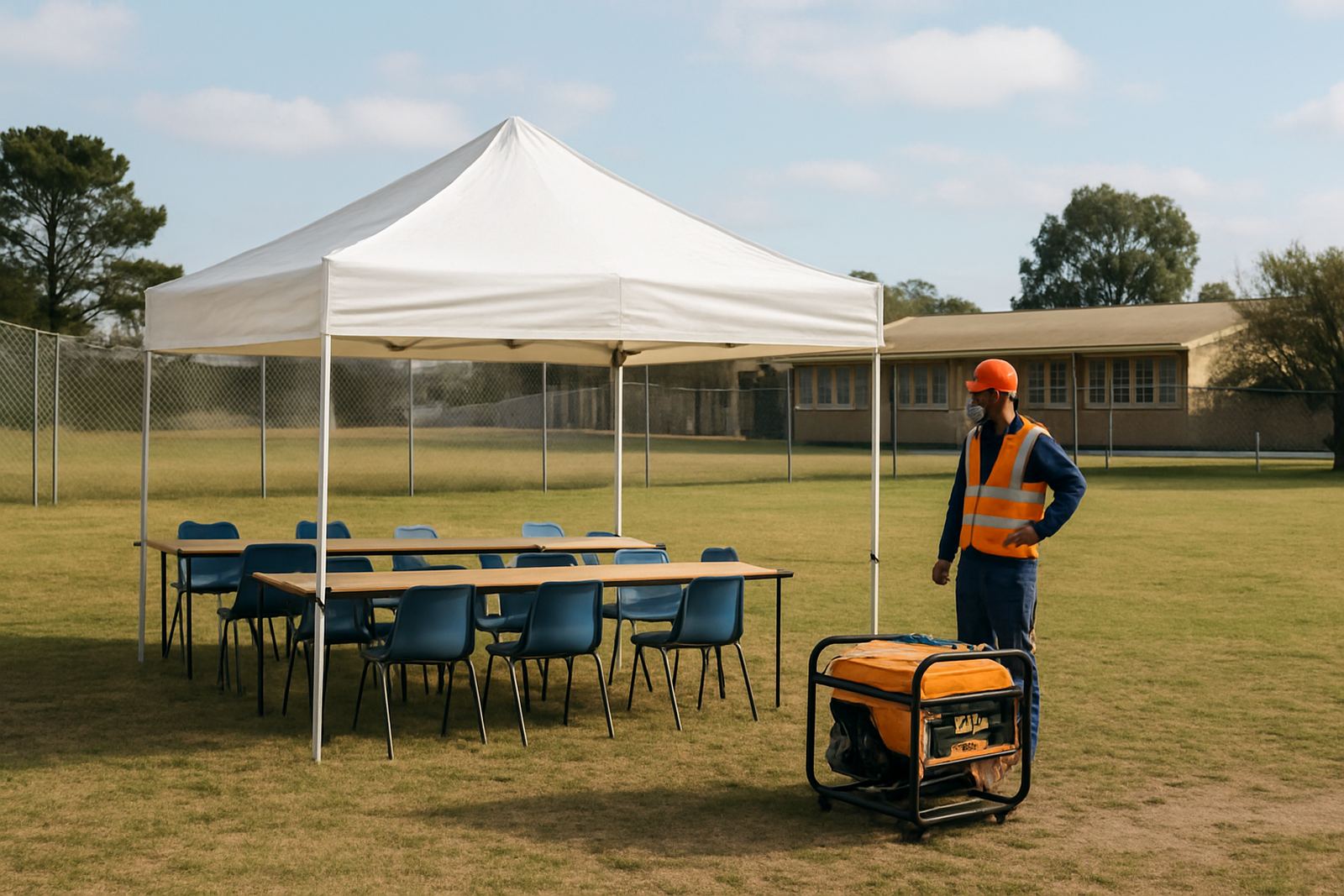
- Small generators where site power is not available or load-shedding interrupts work
- Pumps for dewatering if rain or groundwater leaves the excavation wet
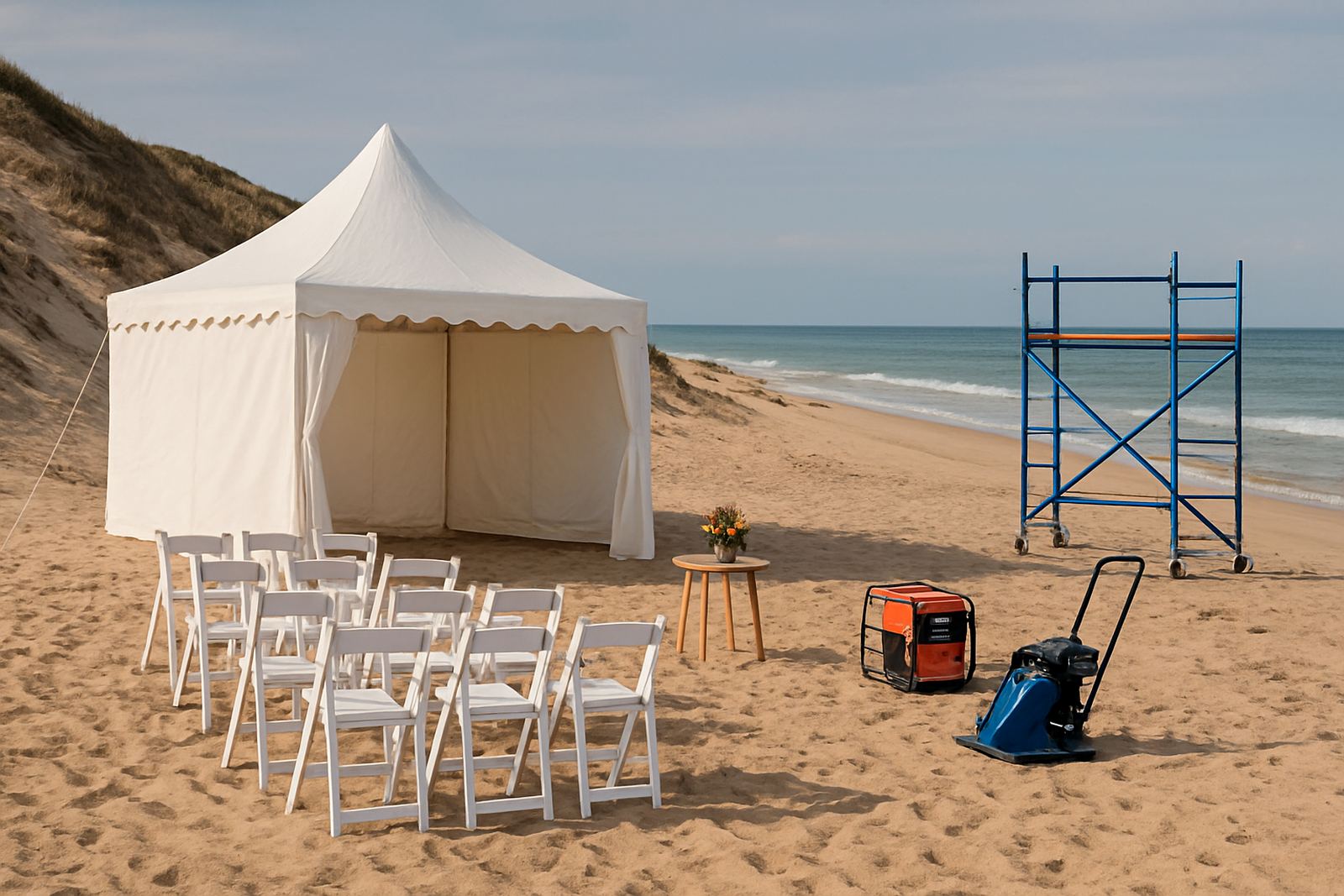
- Scaffolding for raised edging, retaining details or access around steps
For patio work in older suburbs, a small cutter often saves time when there are tight corners or existing concrete to trim back. On larger driveway bases, a second compactor may be worth hiring so the crew can keep moving while one area settles.
Layout and planning before the first compaction pass
Good planning saves hours on site. Before hiring equipment, measure the area in square metres and note the fall, access points and any manholes, drains or service lines that must stay open. A driveway near the coast should still fall away from the house and not trap water against walls or garage doors. If the site is low lying or prone to pooling, include a pump in the plan from the start instead of waiting until the trench fills.
We often advise clients to set out the finished level before compaction begins. Once the base is packed down, it is harder to correct mistakes without extra digging. A clean string line, straight edge and marked edge restraint line will help keep the job neat. For long runs in Gonubie or East London CBD areas, it is worth checking where deliveries can park and whether there is enough room for the machine to turn safely.
- Mark the full area and measure twice before you order stone or sand
- Check access width for compactors, cutters and delivery vehicles
- Confirm where water will run after rain or washing down
- Plan where spoil and offcuts will be stored or removed
Common mistakes that cause paving to fail early
The biggest problems usually come from poor base prep, not the paving itself. One common mistake is compacting only the top layer and leaving loose soil underneath. Another is working on ground that is too wet, which looks fine at first but settles later. A base that is too thin for vehicle traffic can crack and dip at the wheel tracks, especially on driveways that carry bakkies or delivery vans.
Cutting corners around edges is another issue. If the sides are not supported properly the paving spreads out over time and the joints open up. We also see jobs where the crew runs out of fuel or power halfway through a day, then the surface sits unfinished and gets rain damage before it is completed. That is why fuel management and emergency callout support can matter just as much as the machine itself.
- Do not compact wet clay or saturated fill without drying it first
- Do not skip edge restraint on driveways and patio borders
- Do not lay paving over loose backfill or rubble that has not been layered
- Do not start cutting unless you have measured the full pattern and waste allowance
Budget ranges for paving base hire in Rand
Hire costs depend on the size of the area, the number of machines, and how long you need them on site. For a small patio base in Beacon Bay, a short hire on a plate compactor and cutter may suit a weekend project. For a driveway in Kidds Beach or Port Alfred, a longer hire period is often better because there is more excavation, more material and usually more than one stage of compaction.
As a rough working budget, many small paving base jobs fall in the R800 to R2 500 range for basic compaction and cutting equipment over a short period. Mid-sized domestic driveways can sit between R2 500 and R6 500 when you add extra hire days, a generator or pump if needed. Larger sites, long-term work or multi-machine projects can move above R6 500 depending on delivery, weekend hire and whether on-site setup is required. It is best to price the equipment against the actual area, not just the number of days.
Why local support helps on the Eastern Cape coast
Coastal work needs quick decisions. Rain can move a schedule by a day, and load-shedding can slow cutting or compacting if there is no backup power on site. Our team in Beacon Bay supports jobs across East London, Gonubie, Kidds Beach, Qonce and Port Alfred with delivery, collection, setup and practical advice for the site conditions at hand.
For paving base preparation, that local backup helps when you need a machine swapped, an extra generator added, or a pump sent out before a trench floods. A short pre-hire briefing also helps the crew know what the site needs, how much area is being prepared, and whether the job will need weekend hire or a longer term plan. The aim is simple, keep the base moving and get the surface ready for paving without delay.
- Site delivery and equipment collection from Beacon Bay
- On-site setup for compactors, cutters and support gear
- Fuel management for longer jobs and weekend work
- Emergency callout when weather or power interruptions set you back