Trailer-Mounted Power For Jobs That Cannot Stop
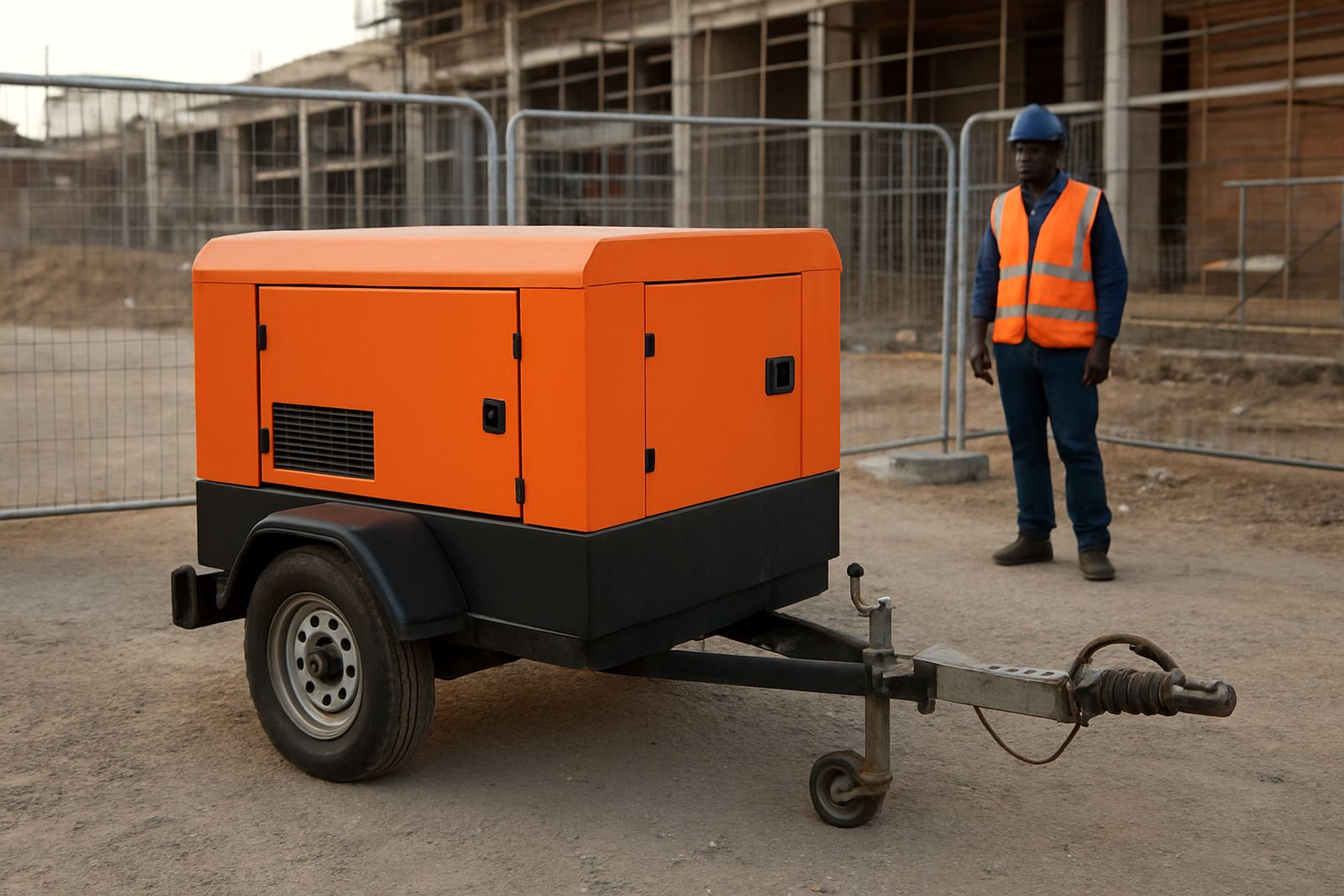
A towable generator is a trailer mounted power unit built for larger crews, longer running periods and sites where mains power is not ready yet. It is commonly used on building sites, outdoor functions, roadside work, markets and emergency supply jobs where you need steady electricity for lights, tools, pumps or sound gear. The trailer frame makes it easier to move between sites and position close to the work area, which saves time on cable runs and keeps setup neater.
In coastal areas like East London, Gonubie and Kidds Beach, the right unit needs to cope with humidity, salty air and day to day handling. That means proper servicing, clean fuel, good cable management and safe positioning off soft ground. We supply units that are checked before hire so you get practical site power, not guesswork.
Sizes And Output Options For Different Loads
Different jobs call for different kVA ratings and socket arrangements. Smaller towable units suit lighting, small tools and light event support, while larger sets can carry multiple machines, food prep equipment, sound systems or backup supply for longer periods. If your job has start up surges from pumps, welders or compactors, it is best to allow extra capacity so the generator is not running flat out the whole time.
- Compact towable units for light construction support and small event loads
- Mid-size units for mixed tools, site cabins, fridges and audio equipment
- Larger site power units for higher demand, longer duty cycles and multi-point supply
- Options for single phase or three phase supply depending on the application
- Socket layouts that can suit distribution boards, extension leads and site cable runs
If you are unsure, send us the list of equipment and the running order. We can help you work out the likely load and avoid under-sizing, which is one of the main causes of nuisance trips and poor performance.
Where A Towable Generator Works Best
These units suit sites where power must be mobile and dependable. Builders use them for slabs, steel work, temporary offices and finishing crews. Event teams use them for weddings, festivals, church gatherings and public functions where silent operation and clean cable routing matter. They are also useful for emergency callouts when a property, shop or venue loses supply and you need temporary power until the fault is resolved.
They are especially handy in areas where municipal work, trenching or private development means the grid is not yet available. Around Qonce and Port Alfred, we often see them used for temporary trading setups, pumps, and contractor work where access is tight and the job still needs to keep moving.
- Building and renovation sites
- Outdoor functions and event villages
- Pumping and drainage jobs
- Temporary backup during outages
- Remote or unfinished properties
Setup, Fuel Use And Safe Operation On Site
Installation starts with the right position. The unit should stand level on firm ground, with enough clearance for airflow and safe access to the fuel point and control panel. Keep it away from foot traffic, damp spots and enclosed areas. For event work, we also look at cable routes so guests and staff are not crossing loose leads. A simple briefing before start-up helps the operator check oil, fuel, breakers and load balance before power is switched on.
Fuel use depends on the size of the unit and the load being carried. As a general rule, a generator working hard for long hours will use more diesel and need closer attention. We can assist with fuel management on longer hires, which is useful when a site is running over a weekend or through load-shedding periods. If the job involves sensitive equipment, tell us early so we can talk through earthing, isolation and the best setup for the site conditions.
Care, Servicing And Why Coastal Conditions Matter
Towable units need regular checks if you want them to last. That means oil changes, filter changes, battery checks, tyre inspection, hitch checks and general cleaning after dusty or salty work. Coastal moisture can affect connectors and control gear if equipment is packed away wet or left standing in the rain, so good housekeeping matters. It is a simple thing, but it saves a lot of trouble later.
Our workshop team services equipment before and after hire, and we look closely at trailer condition, guards, sockets and running hours. If a unit has been on a long-term hire or used on a rough site, we inspect it before it goes out again. That is part of keeping power steady and avoiding breakdowns when the crew is already on site.
What To Check Before You Place The Order
The easiest way to get the right generator is to give us the facts upfront. Tell us what you are powering, how long you need it for, and whether the load is starting all at once or in stages. Also mention site access, parking space, towing needs and whether you need delivery, collection or setup help. A generator that is too small will struggle, while one that is too large can be wasteful and harder to place neatly.
- Equipment list with running watts or amps if available
- Single phase or three phase requirement
- Start up surges from pumps, compressors or tools
- Hire period, including weekend or long-term use
- Site address and access details in East London or nearby areas
- Need for fuel management, emergency callout or pre-hire briefing
If you are comparing options for Beacon Bay, Gonubie, Kidds Beach or surrounding areas, we can talk through what will work best for the job and the site conditions.
Delivery, Collection And Support Across The Coast
We are based in Beacon Bay, East London and support builders, venues and private clients across the Eastern Cape coast. That includes delivery, collection, on-site setup, event layout help and weekend hire where the job runs outside normal weekday hours. For longer projects, we can also help plan servicing windows and replacement timing so your crew is not left waiting on power.
Whether you need temporary supply for a renovation, event power for a crowd, or backup for an outage, our team keeps it practical and local. You get straightforward advice, proper equipment and people who understand what coastal work and municipal delays can do to a schedule.
Key facts
| Type | Trailer mounted generator for site and event power |
|---|---|
| Power range | Available in sizes suited to light, medium and higher demand loads |
| Supply options | Single phase and three phase depending on unit |
| Fuel | Diesel powered units for practical running hours |
| Mobility | Towable trailer frame with hitch and road wheels |
| Typical use | Construction, backup supply, outdoor functions and temporary power |